This Study Could Improve Global Clean Energy Plans
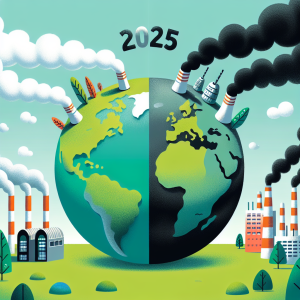
Every major climate pledge in the world talks about “net-zero.” But here’s the twist: net-zero still allows fossil fuels. As long as countries capture or offset their carbon emissions, they can technically keep burning oil, coal, or gas.
A new study in Nature Communications asks a radical question: What if a region actually tried to use zero fossil fuels—not net-zero emissions, but zero combustion?
And the surprising results might change how nations, researchers, and policymakers plan the next 25 years of the energy transition.
Why This Study Matters—From Los Angeles to Lisbon to Lahore
Whether you power your home with diesel generators in Nigeria, run a small solar business in India, or work in an engineering lab in Brazil, the energy transition is already shaping your world. Rising heat, unstable power grids, and shifting fuel prices connect us all.
And now the EU—one of the world’s biggest economies—is exploring what a complete fossil-free system might look like.
Act I: The Assumption We All Make About Net-Zero
For years, scientists assumed that reaching net-zero meant allowing some fossil fuel use, balanced by large-scale carbon capture and storage (CCS) or carbon-dioxide removal (CDR).
But CCS is expensive. It’s slow. And scaling it to the required levels is by no means guaranteed.
The study’s authors warn that relying too heavily on CCS creates “false expectations” that could delay real action. If industries assume future carbon capture will bail them out, they may avoid making tough changes today.
So the team ran scenarios using a detailed energy-economy model. What they found startled even experts.
Act II: The Plot Twist—Net-Zero Already Cuts Fossil Use by 90%
In the model’s least-cost scenario, fossil fuel use in the EU falls a stunning 90% by 2050… even without a strict fossil-free policy. Electricity replaces gasoline cars, gas boilers, and industrial heat. Solar and wind power dominate. But one stubborn 10% remains—mostly:
- Aviation
- Shipping
- Chemical manufacturing
- Some remaining gas boilers
In other words: the “hard-to-electrify” corners of the economy.
Act III: The Last 10% Is the Most Expensive 10%
To phase out fossil fuels completely, the model had to rely heavily on e-fuels—synthetic fuels made from:
- Green hydrogen
- Captured CO₂
- Lots of renewable electricity
This final step pushes marginal abatement costs from €460 per ton of CO₂ (already very high) to €630 per ton, and in some cases up to €1000 per ton. Why so expensive?
Because e-fuels require a mind-bending amount of energy. Replacing even a small portion of oil with synthetic liquids demands enormous new production capacity. To hit zero-fossil:
- EU e-fuel demand hits 1000 TWh per year—roughly equal to all current aviation and shipping fuel use in the EU.
- Global e-fuel production would need to grow as fast as solar power grew between 2003 and 2023—one of the fastest scale-ups in energy history.
If growth followed the pace of wind energy or oil refining instead? The world simply couldn’t produce enough. There’s the tension: We can decarbonize 90% of the system cheaply…but the final 10% behaves like a boss-level challenge.
Act IV: A Fork in the Road—CCS or E-Fuels
If the EU keeps using some fossil fuels, it needs CCS. If it wants zero fossil fuels, it needs e-fuels.
But both technologies are barely off the ground.
- As of 2024, only 1% of announced global e-fuel projects are operational.
- CCS isn’t much better: only 1% of European CCS projects are active today.
- To meet the study’s scenario, CCS in Europe must grow as fast as U.S. tight oil—one of the fastest industrial expansions ever recorded.
This is a rare moment where science reveals deep trade-offs:
- E-fuels reduce dependence on fossil fuels but require massive electricity and hydrogen production.
- CCS reduces the need for e-fuels but locks the economy into continued fossil use and long-term geological storage.
Either way, the next decade is the tipping point.
Act V: A Surprising Insight—The Economy Barely Notices
Even though the last 10% of reductions are extremely expensive per ton, the study finds the overall economic impact remains surprisingly small.
Why?
Because the expensive fuels sit in a few sectors, not the whole economy. Building heating, cars, local transport, and electricity—the vast majority of energy use—are electrified and don’t experience the high costs of e-fuels. So the authors argue: High costs in small sectors ≠ high costs for society overall.
That’s an important lesson for every country designing climate policy.
Act VI: The Global Takeaway—Electrify First, Argue Later
Across all scenarios—cheap, expensive, fossil-friendly, fossil-free—one conclusion never changed:
Electrification is the foundation of climate strategy.
After that, countries can debate how much to rely on:
- Green hydrogen
- E-fuels
- Bioenergy
- CCS
- Demand reduction
- Circular manufacturing
- Behavioral shifts
But without widespread electrification, the math breaks. This lesson applies equally to:
- India’s industrial zones
- Brazilian agribusiness
- African megacities are building new grids
- Gulf states investing in hydrogen
- Island nations need shipping alternatives
The EU may be the test case, but the implications are universal.
🌱 Let’s Explore Together
Here are a few questions to spark discussion:
- Would a fossil-free energy target work in your country—or would it create new challenges?
- If you were on the research team, what part of the model would you test next—e-fuels, CCS, or electrification?
- What is one everyday problem in your community that better energy planning could help solve?
If you want, I can also create: