
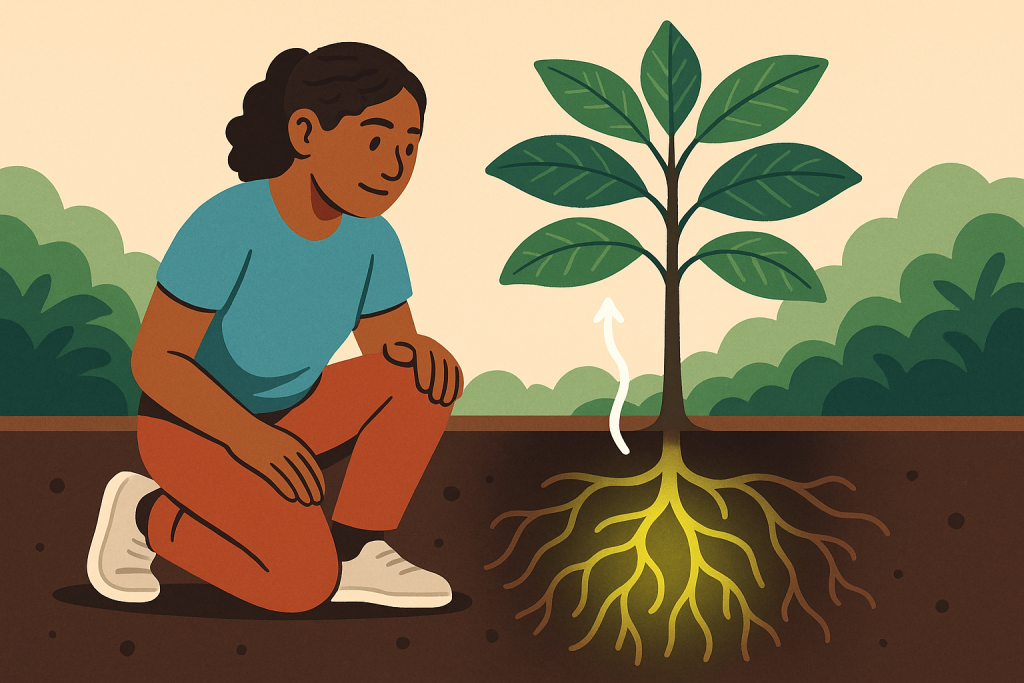
Amazonian Roots Adapt to Rising CO2 Levels
The dense green labyrinth of the Amazon forest is not just a sight to behold; it’s a vital component of Earth’s climate system. Yet, as carbon dioxide (CO2) levels rise, we must ask: Can the Amazon continue to be our planetary ally?
Rooting for a Solution
The Amazon is nicknamed the ‘lungs of the planet’ for its ability to absorb large amounts of carbon dioxide, a greenhouse gas linked to climate change. But its future role as a carbon sink is uncertain, especially with nutrient-deficient soils. A new study sheds light on how Amazonian plants might adapt their phosphorus (P) acquisition strategies in CO2-rich environments, potentially influencing forest resilience.
The Nutrient Tug-of-War
In the Amazon, many plants grow on soils nearly empty of phosphorus, a critical nutrient for growth. The puzzle: As CO2 levels rise, can these plants still thrive, or will they struggle under nutrient constraints?
Digging Deep: The Experiment
Researchers conducted an in-situ experiment using Open-Top Chambers that elevated CO2 levels by about 300 parts per million in an Amazonian understory forest. The aim: To observe how CO2 impacts root growth and their strategies for acquiring phosphorus, especially important in phosphorus-poor soils.
Unveiling the Results
The Amazon’s root systems showed contrasting responses. Roots in the litter layer boosted specific root length, signifying improved foraging efficiency. In soil, roots showed enhanced collaboration with mycorrhizal fungi—organisms that help plants access nutrients in exchange for carbon. Interestingly, the study noted a decline in soil organic P levels, suggesting intensified competition between plant roots and soil microorganisms.
Why This Matters
This study’s findings are crucial for updating climate models to incorporate more nuanced plant-soil dynamics, particularly regarding nutrient scarcity. If Amazonian plants successfully adapt their nutrient strategies under elevated CO2, they could maintain or even enhance their carbon-sinking role. This could be especially beneficial in environments with nutrient-poor soils.
Lingering Questions
However, while these adaptations are promising, they do not guarantee long-term sustainability. The CO2 fertilization effect may not indefinitely offset nutrient limitations, particularly as the rates of photosynthesis and growth accelerate without proportional nutrient replenishment.
Let’s Explore Together
Understanding the implications of these adaptive strategies under elevated CO2 levels could inform how we protect and manage tropical forests globally. These insights can aid in designing interventions that foster forest resilience in a high-CO2 world.
- Could these findings shape agricultural practices in nutrient-poor regions?
- How might interspecies competition affect Amazonian forest ecosystems under climate change?
- What strategies could be employed to monitor and support these adaptations in other vulnerable ecosystems?