Backpack Posture and Adolescent Back Pain
Almost school time! Picture this: a bustling schoolyard filled with vibrant, young students, each reveling in the excitement of another day of learning. But behind these energetic faces, a silent epidemic lurks. For many adolescents worldwide, back pain is an all-too-familiar companion.
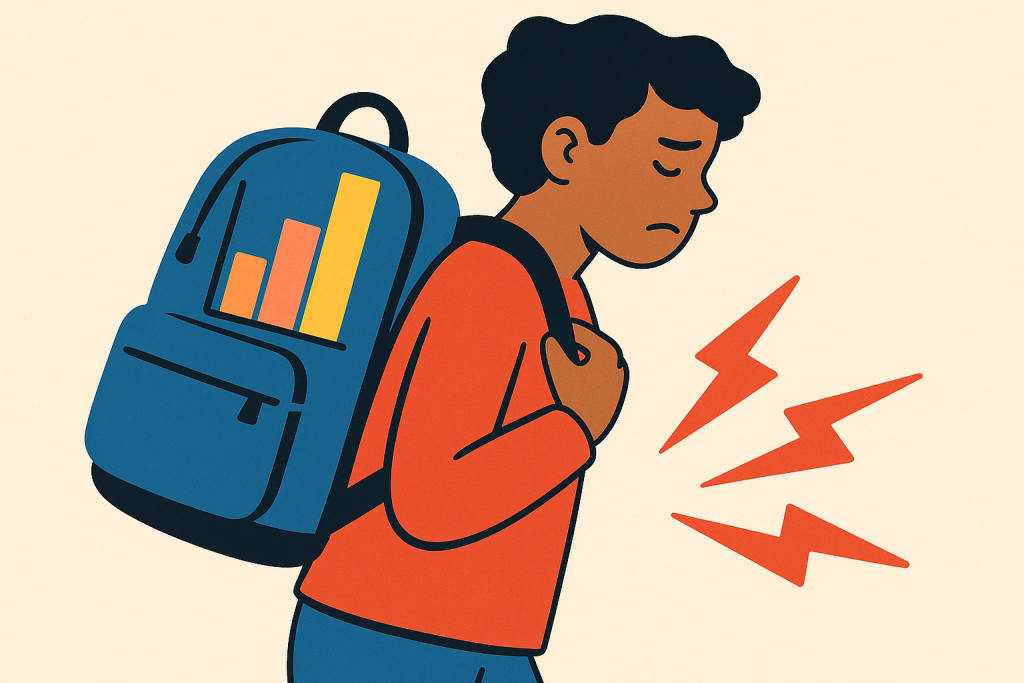
The reason might lie in something as everyday as how they carry their backpacks.
The Scientific Enigma
In recent studies focused on adolescents, the link between back pain and how students carry their backpacks has puzzled researchers. Particularly, they have been curious about the role of single-shoulder backpacks and incorrect posture. Could the way these bags are carried unknowingly be setting the stage for discomfort or even chronic pain?
Diving into the Research
A team of researchers took this question to heart, conducting a detailed study across nine provinces in China from 2021 to 2025. They aimed to solve this puzzle by exploring the connection between single-shoulder backpack carrying, improper sitting posture, and back pain. By analyzing data from over 3,400 students, the researchers employed sophisticated statistical models to tease apart the relationships.
What Did They Discover?
The researchers found that single-shoulder backpack carrying was indeed linked to back pain. Interestingly, improper sitting posture acted as a significant bridge in this association. In simpler terms, carrying a backpack on one shoulder was likely to encourage poor posture, which in turn increased the risk of back pain. In their analysis, improper posture accounted for over 37% of the link between how children carried their backpack and the presence of pain.
Why This Matters
Understanding this relationship holds broad significance. Adolescence is a critical period of growth, where habits form and bodies develop. By pinpointing backpack carriage and sitting posture as modifiable factors, this study highlights a straightforward intervention route. Educators and parents can advocate for using dual-shoulder backpacks and emphasize the importance of proper sitting posture, potentially reducing the risk of back pain in young students.
Unanswered Questions
Despite these illuminating findings, several questions remain. For instance, while the study highlights a correlation, we cannot yet say definitively that the backpack posture causes back pain. How exactly does posture influence spinal mechanics over time? Are there additional factors, such as physical activity levels, that interplay with these findings?
Let’s Explore Together
These insights offer a crucial step forward. Imagine a classroom where awareness about backpack carriage reduces future discomfort for millions of children. Such a small change could ripple outwards, impacting global health on a meaningful scale.
Reflect and Engage:
- How might better backpack designs influence students’ posture habits?
- What strategies can schools implement to promote ergonomic awareness?
- Could similar postural education be beneficial in your community?