
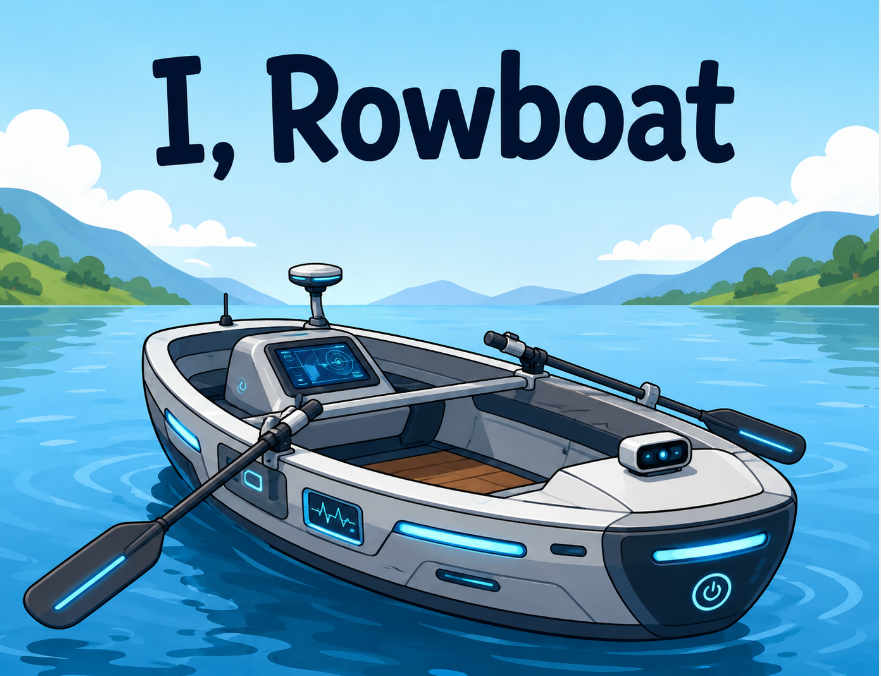
Self-Reconfiguring Robot Boats: A New Way to Navigate
The ocean holds mysteries, challenges, and untapped potential. Imagine if autonomous robotic platforms could navigate these vast watery expanses, adapting their shape and purpose to meet our ever-changing needs. This could transform marine exploration, search and rescue missions, and even the construction of temporary infrastructures.
Wait. What?
Unraveling the Science of Self-Reconfiguration
Meet FloatForm, a groundbreaking group of small, modular robotic boats designed to self-assemble and reconfigure in aquatic environments. Developed by a team at MIT, these robotic units represent a significant step forward in the realms of marine robotics and self-reconfigurable systems.
Previous modular self-reconfigurable robot (MSRR) systems have demonstrated impressive flexibility and scalability on land and in the air. Yet, applying these advances in water has been daunting owing to unpredictable hydrodynamics and environmental variables. FloatForm aims to overcome these challenges by combining minimal centralized planning with robust local autonomy.
How FloatForm Works
Each FloatForm unit is a small autonomous boat equipped with sensors, motion control, and communication capabilities. They can connect with neighboring robots to form larger structures, demonstrating the ability to create new configurations or break apart and reassemble as needed. The magic lies in their hybrid coordination framework that balances local decision-making with sparse centralized oversight.
In practice, this works through a sequence of steps. Initially, robots remain idle or perform individual tasks. Once a new shape command is issued, they converge toward a target configuration using potential fields—a method where each robot is influenced by ‘attractive’ and ‘repulsive’ forces to maintain formation and avoid collisions.
After forming the initial assembly, the robots engage magnetic latching systems to secure their configuration, which can then evolve or move as a cohesive unit. Unlike traditional systems, FloatForm robots use parallel coordination, allowing them to adapt and assemble synchronously without waiting for a central planner to dictate every move.
Why This Matters
Deploying FloatForm’s technology could revolutionize many operations traditionally hindered by logistical and environmental obstacles in aquatic settings. From oil spill containment to forming emergent platforms during disaster response efforts, the applications are vast and globally relevant.
Importantly, these robotic systems minimize ecological footprints by disassembling and reconfiguring, which aligns with sustainable practices in marine environments. They can be a vital tool for resource-limited regions—autonomous, flexible, and scalable, offering critical assistance without the infrastructure demands of traditional methods.
Limitations and Future Explorations
Like any new technology, FloatForm has areas to refine. While successful in controlled conditions, challenges such as localization loss and system saturation occur in more dynamic settings. Simulations with up to 64 robots have shown promise, yet real-world scenarios can induce complexities not covered in a test pool.
The system mainly relies on indoor localization technologies that need adaptation for open-water settings like GPS or vision-based alternatives. Other improvements include enhancing the latching mechanisms and incorporating robust communication systems to face real-world, unpredictable marine conditions.
Let’s Explore Together
FloatForm embodies the innovative spirit of science—taking on complex puzzles with practical, inspired solutions. As we anticipate this technology’s evolution, intriguing questions remain:
- How might these modular systems change coastal management practices worldwide?
- Can we integrate such technology seamlessly with existing maritime operations?
- What further innovations could ensure these robots sustainably contribute to oceanic explorations?
And no, we are not the first to make this job