AI Meets Blockchain for Cloud Security
Every minute, millions of files move through the cloud — photos, medical scans, research data, government reports. And every minute, someone is trying to break in. For years, cybersecurity experts have been playing catch-up, patching holes faster than hackers can find them. But what if our data could learn to protect itself?
That’s the bold idea behind a new study published in Scientific Reports by researchers at India’s Vellore Institute of Technology. Their work may mark a turning point in how we defend the digital spaces we all depend on.
From Firewalls to Self-Defending Networks
For a small business in Lagos, a hospital in São Paulo, or a university lab in Bengaluru, cloud storage is essential — and vulnerable. Traditional defenses, such as firewalls and signature-based intrusion detection systems, are designed to recognize known threats. They can’t always spot what’s new, unpredictable, or deliberately hidden. Worse, they’re centralized — meaning one breach can compromise everything.
This study proposes something different: a self-learning, decentralized immune system for the cloud. By fusing artificial intelligence (AI) and blockchain, the researchers created a multi-layered defense that detects intrusions, prevents fraud, and protects sensitive data during transfer — all in real time.
The Five Layers of Defense
The framework they built combines five advanced technologies, each addressing a specific weakness in today’s cloud security:
- Blockchain-Aware Federated Learning (BAFL-SMT)
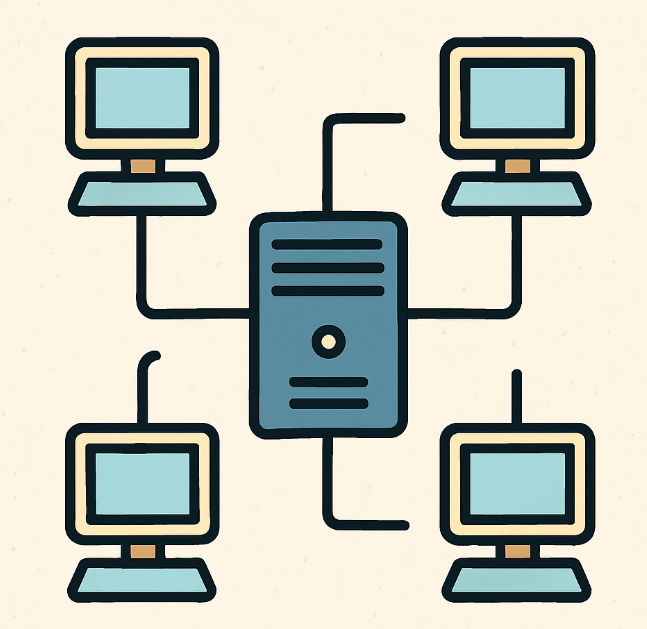
Instead of pooling data in one place, federated learning allows multiple cloud nodes — think of them as independent computers — to train an AI model together without sharing raw data. Each node learns from local data and sends only model updates to the blockchain, where smart contracts verify integrity before merging them. This setup resists data poisoning attacks and safeguards private information. - Graph Neural Networks for Adaptive Intrusion Detection (GNN-AID)
Network traffic behaves like a social network — with computers as “friends” sending messages. GNNs analyze these connections to detect odd behavior. If one “friend” suddenly acts suspiciously, the system flags it immediately. The result: 98.7% accuracy in intrusion detection and only 1.2% false positives, outperforming traditional deep learning systems. - Quantum-Inspired Variational Autoencoders (QI VAE-ZDAD)
Zero-day attacks — brand-new, unseen vulnerabilities — are a nightmare for defenders. This quantum-inspired model employs probabilistic reasoning to detect anomalies that have never been encountered before, achieving a 92% detection accuracy while reducing false alarms by two-thirds. - Self-Supervised Contrastive Learning for Blockchain Auditing (SSCL-BSA)
Fraudsters continually devise new methods to exploit smart contracts. This module trains itself on unlabeled blockchain transaction data, automatically identifying suspicious patterns and reducing fraud risk by 87%. It learns on the job — no human labeling required. - Hierarchical Transformers for Secure Data Migration (HT-SDM)
Transferring massive datasets across multiple clouds is risky. HT-SDM uses transformer models — similar to those powering language models — to detect anomalies in data transfers with 99.1% classification accuracy, ensuring that even large-scale migrations remain secure.
The Science Behind the Shield
The team didn’t just theorize — they tested everything on Google Cloud’s distributed network, simulating real cyberattacks including DDoS, botnets, and SQL injections. They trained their system on trusted datasets like CICIDS 2017 and TONIoT and verified blockchain transactions on Ethereum nodes distributed worldwide.
The results are striking:
- 65% faster intrusion detection than existing systems.
- 98% precision in identifying attacks.
- 99.2% model integrity, meaning the system resists adversarial manipulation.
- 1.2 seconds to process large-scale data migrations — faster than any tested baseline.
That kind of performance could mean fewer outages, less data theft, and more trust in cloud-based services — especially in sectors like healthcare and finance, where every millisecond counts.
Why This Matters Globally
Cybersecurity isn’t just a problem for big tech companies. A rural clinic in Ghana might store patient data in the cloud. A school in Manila may depend on online servers for attendance records. A fintech startup in Nairobi could lose millions if its blockchain is compromised. Centralized systems are often too costly or rigid to scale in these contexts.
This decentralized, learning-based model could change that. Because it doesn’t rely on a central server or human labeling, it can adapt and operate anywhere — even in low-resource settings. As the authors put it, the architecture “preserves massive robustness against adversarial interference” while remaining computationally efficient.
A Shift in How We Think About Trust
A decade ago, blockchain was mostly associated with cryptocurrency. Now it’s evolving into a trust fabric — a transparent, tamper-proof backbone for digital systems. Combine that with deep learning’s pattern-recognition power, and you get a network that can both record and reason.
The “quantum-inspired” part isn’t science fiction either. By borrowing ideas from quantum probability — where outcomes are described by probability waves rather than single numbers — the model can represent complex cyberattack behaviors far better than traditional algorithms.
Beyond the Lab: From Concept to Practice
Deploying such a complex system in the real world will require considerable effort. Blockchain verification still consumes energy, and maintaining decentralized consensus can slow down performance in large-scale networks. Yet, the study’s experiments show that with optimizations like Layer-2 rollups (batching multiple transactions together), the model can scale efficiently.
The researchers even tested it in a simulated financial cloud platform. The result: over 95% detection confidence across all attack types while sustaining 250 blockchain transactions per second. It’s not just academic — it’s production-ready.
Let’s Explore Together
If your data could defend itself, how much safer would your work be? Could decentralized AI frameworks like this protect small organizations as effectively as they do global firms? And what happens when quantum computing — the real kind — enters the mix?
Cloud computing gave us convenience. Blockchain gave us transparency. Deep learning gave us intelligence. Together, they might just give us the most powerful defense system the internet has ever seen.