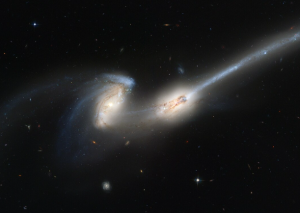

Is Dark Matter Finally Within Our Grasp?
For almost a century, the mysterious substance that constitutes the universe’s “invisible mass”—dark matter—has eluded scientists, only hinted at through the gravitational effects on galaxies we can observe. Yet, recent research may finally bring us closer to understanding what dark matter truly is. This prospective leap in cosmic discovery ignites both excitement and contemplation on a universal scale.
The Long Search for Dark Matter
The concept of dark matter was first introduced to explain certain galactic phenomena that couldn’t be accounted for by visible matter alone. The critical role dark matter is believed to play in the structure and fate of the universe has kept it center stage in astronomical research.
Despite the extensive efforts—ranging from particle accelerators to deep-space observations—it has remained undetected, a mere conjecture built upon its gravitational fingerprints left on galaxies, which move in ways that suggest unseen mass. But that might be about to change.
Breakthrough Observations: A Halo Revealed
Recent findings employed NASA’s Fermi Gamma-ray Space Telescope, with researchers detecting a halo of high-energy gamma rays that aligns strikingly with predictions for what would be released if dark matter particles were to collide and annihilate each other. The observation corresponds well with models of weakly interacting massive particles (WIMPs), the prime candidates for dark matter’s core.
Key Features of the Gamma-Ray Halo
- Energy Levels: Positive matches to theoretical models predicting the behavior of WIMPs.
- Intensity Patterns: The observations exhibit distribution patterns expected from a dark matter-induced process.
- Spatial Consistency: The shape and extent of the detected halo are consistent with longstanding hypotheses concerning the distribution of dark matter in space.
Implications and Future Prospects
This potential breakthrough opens a myriad of scientific paths. From confirming the particle nature of dark matter to tailoring more accurate cosmological models, each step forward from this point could unlock deeper layers of understanding about our universe’s composition.
Moreover, these findings suggest new strategies for particle physics and astronomy collaborations. Identifying and analyzing particles at extreme energy states might reveal more interacting properties of dark matter, ideally leading to its detection, and further enhancing our physical models.
The Broader Context: Dark Matter’s Place in Cosmology
While this research ignites hope, there is an enduring wariness in the scientific community given the historical difficulty in detecting dark matter. However, the convergence of theory and data paints a promising future where once speculative paths could become roads of certitude.
The continual refinement of observational technologies, along with an interdisciplinary approach that marries astrophysics, particle physics, and computational methods, positions us on the cusp of potentially validating a component of the universe that undergirds our very galactic infrastructure.
“The energy levels, intensity patterns, and shape of this glow align strikingly well with long-standing models of weakly interacting massive particles.” – Science Daily
Is this the breakthrough astronomers have been dreaming of? Only time, continued research, and collaborative scientific efforts will provide the answers. Until then, the universe remains humankind’s great puzzle.
For those interested in delving deeper into the dark, the cosmos may be preparing to yield one of its most enduring secrets.