Another Science Speed Limit
Every quantum system has a story to tell—but what if one of its most important chapters is about a speed limit? Not the speed of light. Not even the famous Lieb–Robinson limit for information.
This one emerges from the strange, turbulent journey a gas takes as it organizes itself into a coherent quantum state.
A new experiment from the University of Cambridge reveals a universal speed limit for the spread of coherence in a weakly interacting Bose–Einstein condensate (BEC). No matter how strongly the atoms interact, how large the gas is, or how chaotic the initial state looks, coherence spreads only so fast—and that speed depends only on ħ/m, the ratio of Planck’s constant to atomic mass. s
This is the kind of result that rewrites how physicists think about complexity.
Why This Matters—Whether You’re in Mumbai, Lagos, or São Paulo
If you’ve ever tried to cool a room full of people, you know it takes time for the cool air to spread. Now imagine trying to cool quantum noise itself until millions of atoms agree on a single wavefunction. That’s what a BEC is: millions of particles acting like one. A universal speed limit means something profound for global science:
- Quantum devices—clocks, sensors, simulators—may hit fundamental timing bottlenecks.
- Models of the early universe, which also undergo “coherence formation,” might need revision.
- Researchers in resource-limited labs, where tuning interactions is difficult, now know what can—and cannot—be improved.
No fancy equipment can break this limit. Nature enforces it
The Setup: A Gas That Starts in Chaos
The team traps potassium-39 atoms in a uniform cylindrical “box” of light. They push these atoms out of equilibrium—like shaking a jar full of marbles—so the gas begins highly disordered and incoherent. Then they turn on interactions that allow the gas to settle and gradually form a condensate.
They prepare three very different chaotic states. All messy, all different, yet all with the same energy.
Think of it like three kitchens after three different toddlers visited—each chaotic in its own way.
Despite these different starting points, all three systems ultimately converge on the same relaxation trajectory. Early behavior differs, but the long-time behavior—the part that matters for universal physics—is identical.
This alone is remarkable. But it sets the stage for the main discovery.
A Universal Coherence-Spreading Speed
Coherence in a BEC spreads through a process called coarsening, where small patches of order merge into larger, more extensive patches. The coherence length ℓ describes how far this order extends. The researchers measure the growth of ℓ by watching how the momentum distribution sharpens over time.
According to turbulence and nonthermal fixed-point theories, ℓ² should grow linearly in time during a self-similar scaling regime. The team confirms this beautifully: straight-line growth, regardless of the initial chaos. But the shocker comes next.
They vary the interaction strength from 50a₀ to 400a₀—an eightfold change.
Intuition suggests that stronger interactions should facilitate coherence spreading faster. And in the early stages, yes, a strongly interacting gas “organizes” sooner.
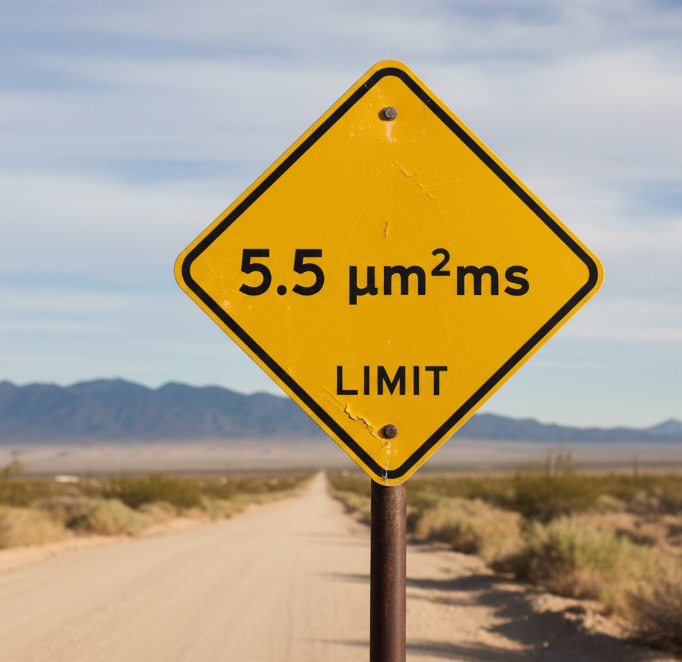
But once the system reaches the scaling regime, the growth rate of ℓ² is identical for all interaction strengths. The slope is always about 5.5 μm²/ms for potassium-39.
Not slower.
Not faster.
Universal.
This is equivalent to a speed set by the quantum of circulation—essentially the swirl strength of a quantum vortex. That’s like discovering that no matter how energetically you stir soup, the flavors can only blend at one fundamental maximum rate.
A Global Analogy: Why This Speed Limit Is Surprising
Picture three different farming villages—one in India, one in Kenya, one in Brazil. Each uses different irrigation techniques. You’d expect water to spread at different rates in each field.
Now imagine that after the first few minutes, the water spreads across all fields at exactly the same rate, regardless of soil type, slope, or pipe size.
That’s what the researchers saw. The “soil” (initial state), the “pipes” (interaction strengths), and the “field size” (trap volume) didn’t matter. The water coherence followed a universal spreading law.
Even More Intriguing: How the System Reaches the Limit
Weaker interactions don’t eliminate the limit—they only delay when the gas reaches it. The researchers demonstrate that the gas initially undergoes an exponential relaxation, followed by a transition into the universal regime. The time constant of this approach scales like 1/(na), exactly as turbulence theory predicts.
Once coherence patches become significantly larger than the healing length ξ, the gas reaches the speed limit and remains there. This means tiny, weakly interacting systems may never reach the limit. Large, strongly interacting ones reach it faster. But the limit itself? Untouchable.
Why Should You Care?
1. Quantum technologies
Whether you’re designing sensors in South Africa or simulating materials in Germany, this tells you:
You can’t make coherence spread faster than ħ/m.
You can only reduce the time it takes to reach that regime.
2. Turbulence, cosmology, and ultrafast fields
Coarsening happens in neutron stars, ultrafast plasmas, and early-universe reheating models. If coherence spreads at a universal speed in these systems too, theoretical predictions may need revision.
3. The future of ultra-cold physics
Researchers now have a benchmark for experiments aimed at probing nonthermal fixed points or quantum turbulence. But there’s an open question…
Can a fundamentally different preparation method—like melting a Mott insulator—break the limit? The team leaves this as a challenge.
Let’s Explore Together
Here are a few questions to inspire discussion, teaching, or lab-group debates:
- Could a different quantum system—fermions, long-range interactions—show a different universal speed limit?
- What would you test next if you were on this experimental team?
- Where in your own research or community might a “speed limit” for organization matter?
If coherence has a universal speed limit, what other invisible rules might be shaping the quantum world?
Let’s find out—together.