
When Race Isn’t Seen the Same Way
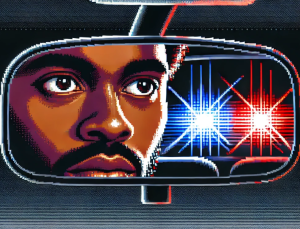
Police officers across three U.S. states stopped the same drivers multiple times — and didn’t always agree on the drivers’ race. That inconsistency turned out to be a scientific breakthrough. A new study shows that when a single person is perceived as Hispanic in one stop but white in another, their odds of being searched rise sharply. The same driver. The same behavior. But different treatment depending on how the officer perceives the race of the person they are dealing with.
This finding isn’t just about policing — it opens the door to a powerful new way to test for racial bias across health care, schools, child welfare systems, and workplaces. And it exposes a scientific blind spot: race isn’t fixed, even for the same person.
Race Isn’t a Fixed Label — and That Changes How We Measure Bias
For decades, researchers have wrestled with a tough problem: If two people of different races are treated differently, how can we be sure race — and not income, behavior, neighborhood, or other hidden factors — is the reason?
Traditionally, scientists compared groups and then tried to control for confounders. But in the real world, many of those confounders aren’t recorded. And some bias “tests” break down completely when key information is missing.
The new study takes a radically different approach: Don’t compare two different people. Compare the same person to themselves.
In other words: If Officer A sees the driver as white on Monday, and Officer B sees the same driver as Hispanic on Friday, does the treatment change?
Across Arizona, Colorado, and Texas, researchers found that it does — consistently.
But the most surprising part? This inconsistency isn’t a statistical glitch. Around the world, people’s perceived race changes by situation, observer, lighting, hairstyle, clothing, status cues, and even the demographics of the neighborhood they’re in. In Brazil, for example, many workers are perceived as lighter-skinned by employers than by family members. In the U.S., siblings have been categorized as different races on school or medical records.
Race, scientists increasingly recognize, is not just who you are — but who others see. And that opens a door.
The A-ha Moment: Turning Inconsistent Perception Into a Natural Experiment
Here’s the clever trick: If the same driver is treated more harshly when perceived as Hispanic than when perceived as white, that disparity cannot be explained by:
- Income
- Driving history
- Car model
- Personality
- Prior record
…because all of those characteristics stay constant. The only thing that changes is how the officer interprets their race in the moment.
The researchers analyzed 157,755 traffic stops involving 54,170 drivers whose race was recorded inconsistently across stops. That’s roughly 9% of all drivers who were stopped multiple times — a big enough sample to test bias without relying on assumptions or missing data. Across all three states:
- Search rates were 24% higher when the same driver was perceived as Hispanic.
- Arrest rates also increased when perceived as Hispanic.
- These patterns held even after controlling for location, time of day, officer identity, and lighting conditions.
- The effect remained when using alternative statistical models and when checking for possible data misclassification.
Even more striking: Officers were more likely to perceive a driver as Hispanic in counties with large Hispanic populations — a pattern consistent with global research showing that people adjust racial perception based on context.
In short, this wasn’t a fluke. It was a pattern.
Why This Matters Far Beyond Policing
The method used in this study can work anywhere that meets three criteria:
- The same person appears in the dataset multiple times.
- Their race (or gender, or other identity) is recorded based on perception, not self-report.
- Perception sometimes varies.
That includes huge systems around the world:
Health Care
Hospital staff often record a patient’s race based on visual perception. In large medical datasets, many patients have inconsistent racial classifications. This method could uncover whether the same patient receives different pain management, referrals, or diagnostic tests depending on how their race is seen that day.
Schools and Child Welfare
Social workers’ perceived race of a child can vary by case notes, home visits, or context. Researchers could examine whether the same child is treated differently based on perceived identity — especially in high-stakes decisions like removal or disciplinary action.
Employment and Labor Markets
In Brazil and parts of Latin America, workers are paid differently depending on how managers perceive their race. These datasets already record race per employer perception — perfect for this new test.
Courts and Criminal Justice
Court clerks, judges, and jail intake staff frequently assign race visually. If the same person is classified differently across interactions, this method can detect disparity in sentencing, bail amounts, or detention decisions. In all these areas, inconsistent perception — once seen as a problem — becomes a powerful source of insight.
Why This Approach Works Globally
This method is especially valuable in countries where:
- self-identified race is uncommon
- racial categories are fluid (e.g., Brazil, South Africa, India)
- government records rely on observer classification
- datasets lack socioeconomic details
- formal discrimination tests are rare or politically sensitive
The key innovation is simple: Measure how treatment changes when perception changes. Not across groups — but within the same person. It’s a kind of natural experiment hiding in plain sight.
Let’s Explore This Together
This study doesn’t just show bias — it shows a new way to see bias. Here are a few questions to spark conversation:
- Could this method work in your country or community?
- Where else do you think perception changes in ways we haven’t considered?
- If you were designing the next study, what kind of identity (gender, caste, tribe, class markers) would you test?
Bias is complex — but new tools like this help us understand it with more clarity, more precision, and more humanity.