
AI, Microgrids, and Boosting Home Energy Efficiency
Every day, millions of homes lose power, not because the grid fails, but because renewable energy doesn’t always show up when people need it most. In coastal cities, the wind peaks long after sunset, and the sun disappears just as air-conditioners switch on. But a new study suggests that a single household can learn to balance its own energy like a miniature brain without waiting for the grid to catch up.
Across the world, researchers have been searching for smarter ways to control renewable systems that behave more like weather than machinery. Solar panels don’t negotiate. Batteries don’t plan ahead. Traditional controllers react after the problem has already happened. The result? Wasted energy during the day, voltage instability at night, and expensive over-engineering to compensate for uncertainty.
A team of engineers in Saudi Arabia has designed a residential microgrid that thinks—using artificial neural networks to manage solar, wind, and battery power in real time. Instead of treating each device like a separate machine, the system functions as a coordinated hierarchy, much like the human nervous system: fast reflexes at the edges, long-term decision-making at the top.
Why This Breakthrough Matters Everywhere
If you walk through a neighborhood in Lagos, Mumbai, or Recife, you’ll see a familiar pattern—homes with rising demand, unstable grids, and soaring energy costs. Diesel generators fill the gaps, but they’re loud, expensive, and polluting. Meanwhile, solar and wind potential remains enormous but underused because storage and control remain the missing link.
Even in high-income countries, microgrids struggle with the same underlying physics: energy arrives when demand doesn’t. The real problem isn’t a lack of renewable supply—it’s coordination. This study shows what happens when a home stops reacting and starts anticipating.
A Microgrid That Learns From Its Environment
The researchers built a fully renewable system for a residential villa in Jeddah—a coastal city with blazing sun during the day and stronger winds late at night. The system includes:
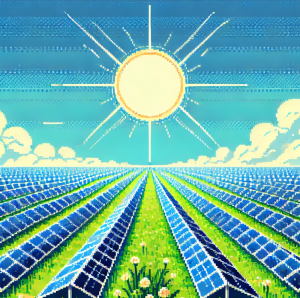
- a 36 kW solar array
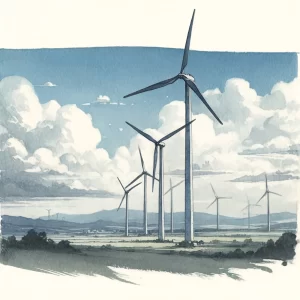
- 10 kW of wind turbines
- and a 100 kWh lithium-ion battery, sized to support 10 hours of autonomy
The daily energy demand? A striking 177.5 kWh, driven mostly by air-conditioning—an energy profile that will sound familiar to anyone living in hot, rapidly growing regions.
Instead of relying on standard PI controllers, the team embedded neural networks at every control layer:
- MLP neural networks extract maximum power from solar and wind
- A NARMA-L2 controller keeps voltage stable by managing the battery
- An intelligent Energy Management System coordinates everything in real time
The result is not just automation—it’s adaptability.
The Aha Moment: Turning Variability Into Stability
Traditional methods struggle when sunlight flickers or wind speeds ramp up suddenly. They hunt for the maximum power point by trial and error, leading to lost energy and electrical oscillations. The neural network–based controllers in this study learned the system’s behavior so well that they could predict the right response instead of guessing.
According to the simulations:
- the MLP-based controller improved power tracking efficiency by up to 12% compared to conventional methods
- the NARMA-L2 controller reduced DC-bus voltage error by roughly 10%, leading to smoother recovery and fewer fluctuations s41598-025-29034-x_reference
In other words, the system didn’t just work—it performed better under stress. This distinction matters for places where power quality isn’t a luxury but a barrier to education, refrigeration, or medical care.
A 24-Hour Story Told in 10 Seconds
To test the system, the researchers compressed a full-day simulation into ten seconds. Solar irradiance rose and fell. Wind increased toward evening. The household load spiked at midday and again as people returned home. During these shifting conditions:
- the battery charged when solar surplus peaked
- discharged during evening demand
- and avoided unnecessary cycling during mild conditions
The system met 99.8% of the total load, with almost no mismatch between supply and demand. For a single home, that’s impressive. For a remote clinic, a rural school, or an islanded community, it’s transformative.
Beyond One House: A Blueprint for the Future
It would be easy to assume this work only applies to wealthy homes with swimming pools and electric vehicle chargers. But the core contribution has nothing to do with luxury and everything to do with resilience. The architecture is:
- scalable—local controllers handle fast decisions without heavy computation
- fault-tolerant—no single point of failure
- ready for expansion, including hydrogen fuel cells and cloud-based monitoring
And while the economic payback is slow under Saudi Arabia’s low electricity tariffs, the picture shifts dramatically where diesel generators dominate. In many regions, replacing diesel could cut emissions by over 48 tons of CO₂ per year and slash operating costs within a few years.
The takeaway is simple: intelligent control—not just generation—is the missing piece of the renewable transition.
What This Means for Early-Career Scientists
Whether you’re modeling wind turbulence, training neural networks, or studying energy policy, this research highlights a growing shift: The future of clean energy will not be built only by adding more panels and turbines—but by making systems smarter, not bigger.
And that opens a new frontier where electrical engineering, AI, and real-world sustainability collide.
Let’s Explore Together
As microgrids move from research labs into neighborhoods, the next questions become even more exciting:
- Could a system like this stabilize power in your community?
- If you were on this research team, what feature would you test next—forecasting, peer-to-peer sharing, or predictive maintenance?
- What everyday energy problem do you wish science could solve in the next five years?
Share your thoughts—because the transition to smarter energy won’t be driven by technology alone, but by the people who imagine what comes next.