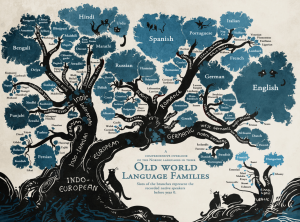

The Underlying Symmetry of Languages
Did you know that symmetry might be hidden in the way we name our days or even our seasons? Newly uncovered research suggests that symmetry is a key factor in how languages across the globe organize these categories. When we speak different languages, it’s easy to assume that terms like ‘tomorrow’ or ‘spring’ should translate directly into another language. But the reality is far more intriguing.
Making Connections
Think about the structure of your day. We easily talk about ‘yesterday’, ‘today’, and ‘tomorrow’. This setup feels natural because it’s balanced. But when you consider languages worldwide, not all systems are equal in this neat, odd-numbered format. Many systems accommodate two or four terms for day names assisting in compression and simplicity.
The Research Breakthrough
Dr. Charles Kemp and his team at the University of Melbourne further explored this. They examined various domains like deictic day-naming and tense-marking systems. The study showed a preference for odd-numbered categories in certain systems and even-numbered categories in others, promising to reshape our understanding of language organization.
Why Symmetry Matters
In rural areas where languages change subtly from valley to valley, symmetric systems could enhance communication by providing clarity. Having equal terms for past and future days helps preserve history and enable future planning, thereby promoting cultural cohesion.
The Universal Thread
Imagine you’re baking a cake. Ingredients must be balanced for the perfect outcome. Similarly, in language, symmetry ensures that categories are not only logical but also easy to learn and adapt to.
Where This Gets Exciting
Symmetry isn’t just about numbers; it’s about cognitive simplicity. Systems with symmetry are easier to remember, much like how a song with a balanced rhythm sticks in your mind.
Far-Reaching Effects
This research encourages us to reassess how language systems evolve—are they environmentally motivated or do they stem from an innate cognitive bias? This understanding might pave the way for more efficient language teaching or AI language processing.
What Can We Do?
The potential of leveraging symmetry in designing better educational tools or computational models is significant. Computational linguistic models, for example, could use these symmetry principles to enhance machine-language translations.
Let’s Explore Together
What applications of symmetry do you see in your community’s communication systems? Could this inspire more effective language programs or tools?
Would you test if cognitive bias towards symmetry plays a greater role than environmental structures in other domains?
Could this concept of symmetry help solve communication challenges within multilingual nations?