“Regular” Black Holes and Dark Matter Mysteries
Did you know that the mysterious dark matter, making up about a quarter of the universe, could potentially be composed of regular black holes? That’s right! Recent research explores this captivating possibility, diving deep into the world of primordial black holes not plagued by singularities.
In many corners of the world, especially in rapidly developing regions, the quest to understand what dark matter is as thrilling as watching a starry sky transform at night. Just like how our ancestors stared at the stars and wondered about the universe, scientists today are peeling back layers of cosmological mysteries.
What are Regular Black Holes?
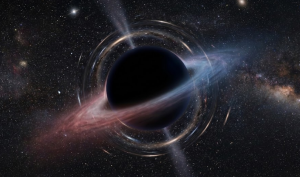
For the longest time, black holes were considered terrifying celestial objects with singularities where gravity crushes all. But what if they aren’t so scary? Enter regular black holes. Unlike their terrifying counterparts, these are free of the dreaded singularities due to influences from quantum theories like loop quantum gravity. Imagine a volcano without its catastrophic eruptions, harboring secrets rather than destruction.
The Science Behind the Discovery
A group of scientists at the University of Trento delved into various theoretical metrics influenced by loop quantum gravity. In their studies, they came across three regular metrics, the most interesting being the D’Ambrosio-Rovelli spacetime, which balances between black holes and white holes—a thought experiment that could solve the puzzling information paradox.
Why does this matter, particularly for countries dealing distinctively with cosmic events? In regions where resources are limited, understanding the universe might hold the key to unraveling natural phenomena that affect agriculture, climate, and energy resources.
An Exciting Aha Moment
The team’s research highlighted something extraordinary. They found that these regular black holes could very well account for a significant portion of dark matter, challenging previous beliefs that counted them out due to singularity-based assumptions.
Just as thrilling as watching a storm change directions, nature defies expectations. In theoretical terms, these results indicate that a slightly different set of properties of primordial regular black holes (PRBHs) could widen the permissible mass range for them to be viable dark matter candidates.
The Broader Impact
Why does this all matter to you?
Imagine a small village in South Asia where understanding gravitational waves could enhance natural disaster predictions. Or a bustling city in Brazil where space-time studies fuel educational fascination and advancements in technology. The implications of these findings can ripple across nations, fostering innovation in fields ranging from computing to climate science.
Potential of Primordial Regular Black Holes
The new studies show that evaporation constraints – an essential cosmic measurement – have been less restrictive when applied to these regular metrics. This newfound flexibility opens a wider ‘asteroid mass window’ in which dark matter could be entirely composed of primordial regular black holes.
Think of it like discovering the perfect climate for growing vines in an unexpected region, thanks to a shift in weather patterns. Likewise, these findings could reshape the hunt for dark matter.
But here’s where it gets interesting… This could be the gateway to finally reconciling general relativity with quantum mechanics, a holy grail in physics.
Let’s Explore Together
The study gives us much to think about and explore.
- Could the idea of regular black holes solving dark matter mysteries work in your town’s scientific labs?
- If you were on the research team, what unconventional metric would you test?
- What cosmic mystery do you hope science will solve next?
As we connect these cosmic findings to our Earthly experiences, there’s excitement in being part of a global scientific conversation, spanning continents from the bustling streets of Lagos to the tech hubs in Bangalore, unlocking the universe’s secrets bit by bit.