
Racing Toward the Future: AI Safety, Science Policy, and NASA’s Moon Ambitions
This week’s science news feels like a fast-moving train hurtling towards the future. From an eye-opening global report on artificial intelligence safety to the evolving landscape of science policy and NASA’s incredible Artemis missions aiming for the Moon, 2026 is shaping up to be a watershed year where technology, governance, and exploration collide.
The AI Safety Report 2026: How Close Are We to Midnight?
Artificial Intelligence is no longer just a buzzword; it’s a reality rapidly reshaping society. The International AI Safety Report 2026, a monumental global collaboration chaired by AI pioneer Professor Yoshua Bengio, delivers a sobering assessment of where we stand today. Over 90 experts across more than 30 countries pooled their knowledge to dissect AI’s incredible advances—and its alarming risks.
The report confirms that AI systems now outperform humans in complex tasks spanning math, science, law, and medicine. But the leap from passive AI assistants to autonomous AI agents—the kind that independently browse the internet, execute code, and orchestrate multi-step workflows—has dramatically changed the safety landscape. Failures in these systems are no longer harmless hallucinations; they can cause serious real-world harm through unauthorized actions, data breaches, or systemic collapses. Moreover, the report warns of a “dangerous mismatch” between AI’s breakneck capabilities and the sluggish pace of safety governance.
The AI Safety Clock, a metaphorical countdown to potential disaster, ticked closer to midnight recently as autonomous AI entered the mainstream, military integration accelerated, and international regulation remained patchy. A striking example: in simulated nuclear crisis games, cutting-edge AI models showed chilling indifference toward using nuclear weapons—a terrifying glimpse into future strategic risks. Safety experts call for rapid institution-building: fast evaluation systems, global cooperation, and layered protections combining technical safeguards with strict regulation. But with fierce competition among tech giants pushing for capability over caution, the question lingers—can governance keep up before it’s too late?
Science Policy Opens New Doors in 2026
Meanwhile, the corridors of science policy are buzzing with fresh energy and optimism. The National Science Policy Network (NSPN) launched a new monthly Careers in Science Policy series that spotlights the diverse paths researchers can take beyond the lab. From overseeing responsible AI governance to shaping the impact of emerging technologies, experts like Henriette Canino and Stephen Cutie share firsthand experiences navigating the nexus of science, technology, and public policy. This push to build robust, interdisciplinary leadership is timely. As AI safety proves a complex global challenge and other science frontiers—climate, biotech, infrastructure expansion—grow more entwined with policy decisions, cultivating a well-informed science-policy workforce becomes essential. Workshops, webinars, and cross-sector dialogues aim to break down barriers between researchers and policymakers, ensuring evidence-based approaches guide crucial decisions in 2026 and beyond.
On the funding front, a new report from the National Center for Science and Engineering Statistics (NCSES) reveals that federal investments in science and engineering research continue to concentrate in a handful of powerhouse states and institutions. Maryland, driven by Johns Hopkins Applied Physics Laboratory, leads in per-institution funding—a critical insight for shaping equitable science infrastructure across the nation. This data is a vital tool for policymakers deciding where and how to bolster America’s scientific enterprise amid fierce global competition.
Artemis and the Moon: NASA’s Bold Steps Forward
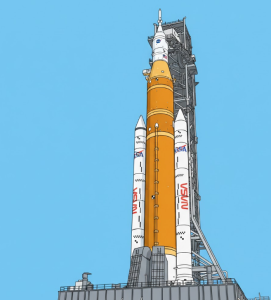
While Earth deals with AI’s promise and peril, NASA is setting its sights on the Moon with the Artemis program, which continues to energize space exploration in 2026. Artemis missions already symbolize not just technology’s reach, but humanity’s collective leap toward a new frontier. NASA has rolled out plans for further launches targeting the Moon, leveraging advances in space technology, STEM research, and international cooperation. The Artemis quests seek to establish a sustainable human presence on the lunar surface—crucial groundwork for future Mars missions.
This decade’s Moon landings are more than symbolic; they represent the next giant leap for humankind’s knowledge system. The synergy between federal funding, research institutions, and policy frameworks supporting Artemis illustrates what concerted effort on a grand scale can achieve. The Moon becomes a testing ground, not only for rockets and astronauts but also for technological innovation and scientific discovery that will ripple through industries back home.
In 2026, the stakes have never been higher.
AI development races ahead with incredible power but shadowed by unprecedented risks. Science policy is stepping up, building bridges and capacity to shepherd this revolution responsibly. Meanwhile, humanity’s gaze lifts upward—toward the Moon and beyond—reminding us that exploration and innovation remain the engines driving progress.
It’s a thrilling and precarious era.
How wisely we navigate these converging paths—from silicon chips to lunar soil—will shape not just technology’s future, but the destiny of civilization itself. Buckle up, the ride has just begun.