
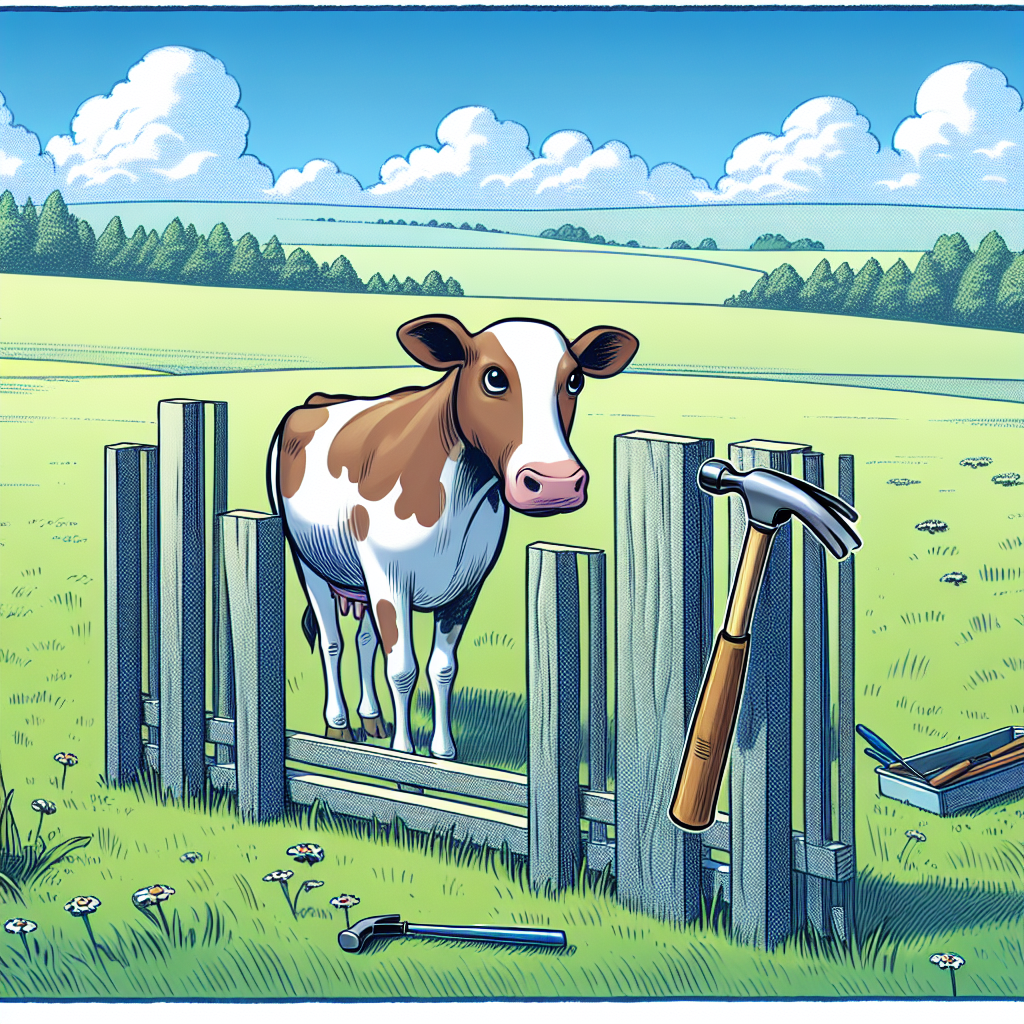
The Revolutionary Impact of Cows Using Tools: Rethinking Animal Cognition
The recent discovery of cows using tools has sparked significant interest in the scientific community, raising questions about animal cognition and behavior that were previously overlooked. This finding not only challenges the traditional perception of farm animals but also prompts a re-evaluation of their cognitive abilities and environmental interactions. In this blog post, we’ll explore the implications of this discovery, the broader impact on scientific understanding, and the potential future applications.
The Groundbreaking Discovery
In a startling revelation, researchers observed a cow named Veronika using a broom to scratch her back, marking the first scientifically documented case of tool use by a cow (BBC). This behavior suggests that cows may possess greater cognitive capacity than previously thought. Tool use in animals is a significant marker of intelligence, typically associated with primates and birds.
Scientific Validation
The findings were published in the journal Current Biology and have been widely covered in the media, including The New York Times. Validation by esteemed publications underscores the credibility and importance of this discovery.
Rethinking Animal Cognition
This discovery is not limited to cows; it also informs our understanding of animal behavior across species. For too long, farm animals have been underestimated with respect to their mental capacities. Observations such as Veronika’s indicate a need to rethink and expand our understanding of what animals can achieve cognitively.
Implications for Animal Welfare
Cows, often viewed predominantly as livestock, are now seen as complex beings capable of problem-solving and tool use. This shift in understanding advocates for improved animal welfare standards. Recognizing the cognitive abilities of cows can lead to better treatment and environments that enrich their lives.
Learning from the Past
This isn’t the first time animal cognition has surprised scientists. In the past, ravens and chimpanzees have demonstrated remarkable problem-solving abilities. The current finding with cows fits into a long history of discoveries that push the boundaries of how we see animal intelligence. Each discovery adds a new layer of understanding, urging us to reconsider the potential of all animals.
Applications and Future Research
Understanding animal cognition not only enriches our knowledge but also has practical applications. In farming, it could lead to innovations in animal husbandry and welfare practices. Moreover, exploring how animals use tools could inspire new technologies in robotics and artificial intelligence, drawing parallels from nature to solve complex problems.
Potential Studies
- Further research into other species that may use tools.
- Studies on the impact of improved environments on animal cognition.
- Investigating the potential for domestic animals to learn and adapt to new challenges.
Conclusion
The discovery of a cow using tools marks a significant milestone in the study of animal cognition. It reaffirms the importance of viewing animals not just as beings driven by instinct but as sophisticated creatures capable of adaptation and innovation. This narrative from the natural world not only enriches our scientific knowledge but also underscores the importance of empathetic and informed interaction with all living beings.
Understanding these aspects of animal behavior drives us toward more innovative and humane practices across disciplines, from agriculture to technology. As we continue to observe and learn, let us commit to a future in which respect and curiosity toward all life forms guide our actions and discoveries.