Latest Insights & Research

Stay informed with the latest public health research, insights, and evidence-based analysis from our team of experts.

Environment

Shaping a City’s Ecological Future

Every year, fast-growing cities lose vital natural space without even noticing it. But a new study shows that a smarter design of ecological networks could reverse the damage—if cities act fast. That bold claim comes from fresh research in the Guangdong–Hong Kong–Macao Greater Bay Area (GBA)—one of the most urbanized and economically powerful regions on […]

Read more →
News

Next Week in Science, December 11, 2025

We spend a wonderful few days in Qatar learning about the true globlal implications of implemenation science. You can read all about it over at our sister site. Here’s what we’re seeing in the news and the research Black Hole Eats Star: NASA Missions Discover Record-Setting Blast Scientists recently observed a gamma-ray burst (GRB) on […]

Read more →
Biology

When Weather Hits Predator–Prey Systems

A single cold snap can silence an entire hillside of insects in a matter of hours. But here’s the twist: the real danger isn’t the sudden drop in temperature—it’s what that shock does to the delicate choreography between predators and the invasive prey they’re meant to control. A new study in Scientific Reports digs deep […]

Read more →
Biology

The Brain’s Great Bridge

Every thought you have—reading this, feeling curious, moving your eyes across the screen—depends on a thin arch of tissue buried deep inside your brain. It’s called the corpus callosum, and it’s the largest bridge of nerve fibers connecting your brain’s two halves. For decades, scientists have known that when this bridge falters, thinking, feeling, and […]

Read more →
Physics

Why Nothing Can Go Faster Than the Speed of Light

Ever heard that nothing can travel faster than light? It’s true, and it’s one of the most fascinating rules in all of physics. But why does the universe even have a speed limit? The Fastest Thing in the Universe Light moves at about 186,000 miles per second (or nearly 300,000 kilometers per second) in a […]

Read more →
Astronomy

What Is a Gravastar? The Strange Star That Might Replace Black Holes

A recent idea in astrophysics suggests that some objects we call black holes might actually be something very different — and much stranger. For decades, black holes have been the “end of the road” in astronomy. When a massive star collapses, its gravity becomes so strong that nothing, not even light, can escape. That creates […]

Read more →
Biology

The Hidden Ingredient Making Webs Stronge

Every day, millions of spiders hang their survival on a single thread—literally. What’s astonishing is that this thread is stronger, stretchier, and tougher than many human-made materials. But here’s the surprise: scientists just discovered that a newly evolved tiny peptide—only a few dozen amino acids long—secretly boosts the power of spider silk. And it evolved […]

Read more →
Biology

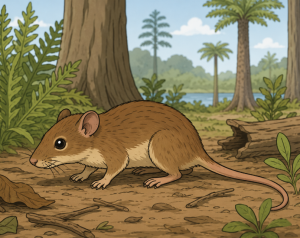
Hidden Ecosystems of the Ordovician

Every fossil story begins with loss. Sediment buries life, time hardens it, and chance decides what survives. For the Ordovician Period—roughly 485 to 444 million years ago—that loss has long been severe. While the Cambrian Explosion left us famous sites like the Burgess Shale, its Ordovician successors seemed strangely quiet. Paleontologists saw only fragments of […]

Read more →
Announcements

Next Week in Science, December 4, 2025

And what’s in the news The role of theory of mind in how increasing preschoolers’ self-esteem affects their materialism: an experimental study A new study involving 239 Polish preschoolers shows that enhancing self-esteem in areas of competence and peer acceptance can reduce materialistic tendencies, but only in those with a well-developed Theory of Mind. This […]

Read more →
Biology

What Really Drives Support for India’s Cheetah Comeback?

Less than a century ago, the cheetah vanished from India—hunted to extinction by 1947. Today, the species is back, but the biggest challenge isn’t only ecological. It’s emotional. A new study shows that whether the cheetah thrives again in India may depend as much on people as on prey. Across India’s towns and villages—from Jaipur […]

Read more →

Get the science breakthroughs you need—
every Tuesday morning.

We scan 70+ journals so you don't have to.
One email. Zero jargon. Unsubscribe anytime.

🔒 No spam. 1-click opt-out. Privacy-first.