
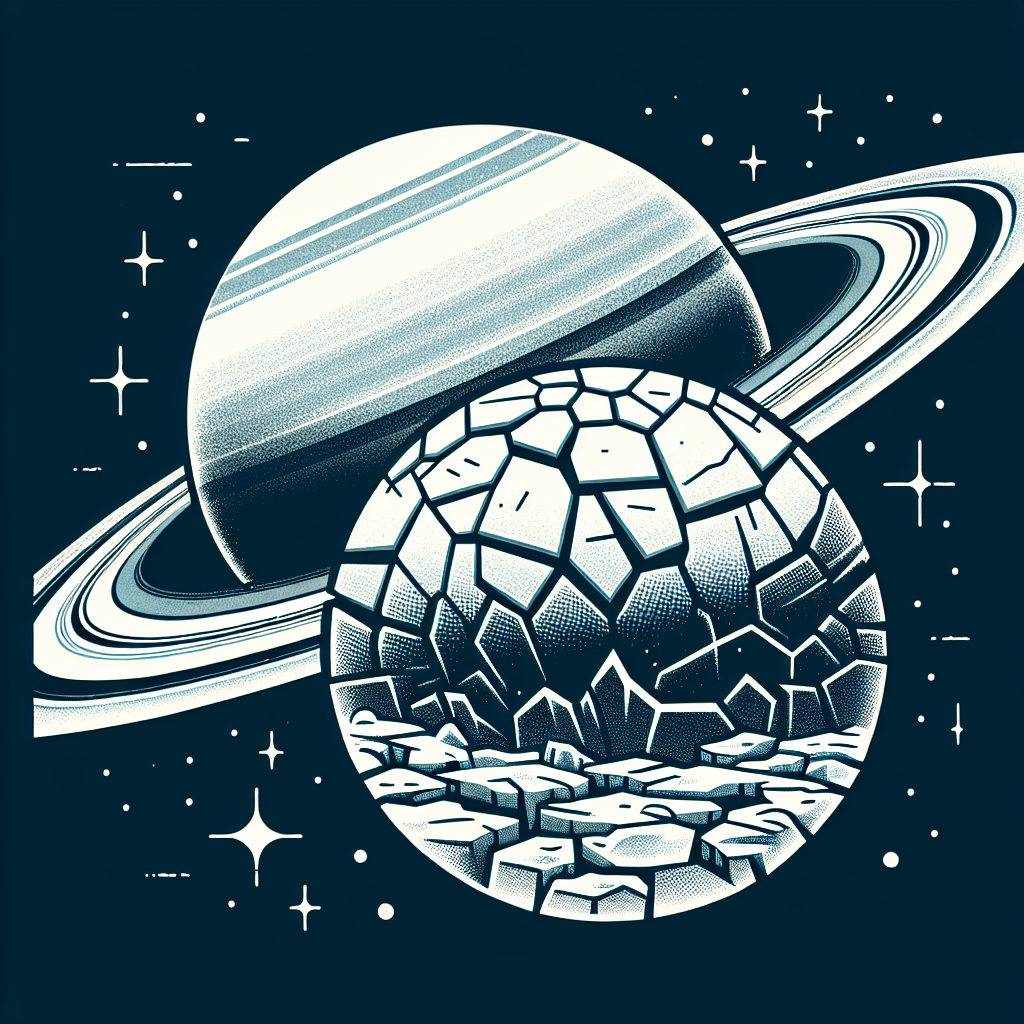
Enceladus: The Ocean World Under An Icy Surface and Its Potential for Life
The enigmatic moon of Saturn, Enceladus, has captivated scientists for decades, primarily due to its subsurface ocean and the tantalizing possibility that it might harbor life. This fascination stems from data revealed by NASA’s Cassini spacecraft, which orbited Saturn from 2004 to 2017, sending back insights that have reshaped our understanding of this small moon. As we delve deeper into Enceladus’ mysteries, we encounter a celestial body where conditions may be ripe for life—a hypothesis that continues to ignite scientific discourse.
The Cassini Revelation
Cassini’s mission to Saturn provided crucial data that turned astronomers’ attention towards Enceladus. The spacecraft’s observations confirmed the existence of a global ocean beneath its icy crust, as evidenced by plumes of water vapor and icy particles ejected through fissures in the moon’s surface. These measurements suggested significant geothermal activity beneath the surface, possibly sustaining an environment conducive to life (NASA Science)
A Chemical Soup for Life
One of the more groundbreaking findings came when Cassini data identified molecular hydrogen, a potential energy source for microbial life, in Enceladus’ plumes. This was complemented by the detection of organic molecules, such as methane and characteristic phosphorus-carrying compounds, crucial components needed for life’s chemistry (NASA). The presence of these building blocks has led scientists to hypothesize that Enceladus could host microbial life similar to extremophiles found on Earth in deep-sea hydrothermal vents (Scientific American.)
Geothermal Paradise
The warmth needed to sustain this potential ecosystem is another focal point. Enceladus’ internal heat may result from tidal forces exerted by Saturn, creating the geothermal conditions necessary to maintain its ocean in a liquid state (Jet Propulsion Laboratory). This heat produces energy through hydrothermal vents on the ocean floor, much like Earth’s mid-ocean ridges, where life thrives despite the absence of sunlight.
The Astrobiologists’ Dream
With its vast ocean and rich chemical environment, Enceladus sits high on the list of potential places within our Solar System where life might exist. Future missions could include spacecraft capable of collecting and analyzing plume samples to look for signs of life, such as amino acids or complex organic molecules. Such missions are critical to our understanding of life’s universality and could answer the age-old question of whether we are alone in the universe.
The Road Ahead
Enceladus continues to be an object of wonder and curiosity. The scientific community continues to advance plans for more detailed exploration and understanding of this moon’s potential to harbor life. As we look to the future of planetary exploration, Enceladus provides a beacon of hope that life, as we know it or otherwise, might just thrive elsewhere among the stars, promising new realities in astrobiology (ESA.)