
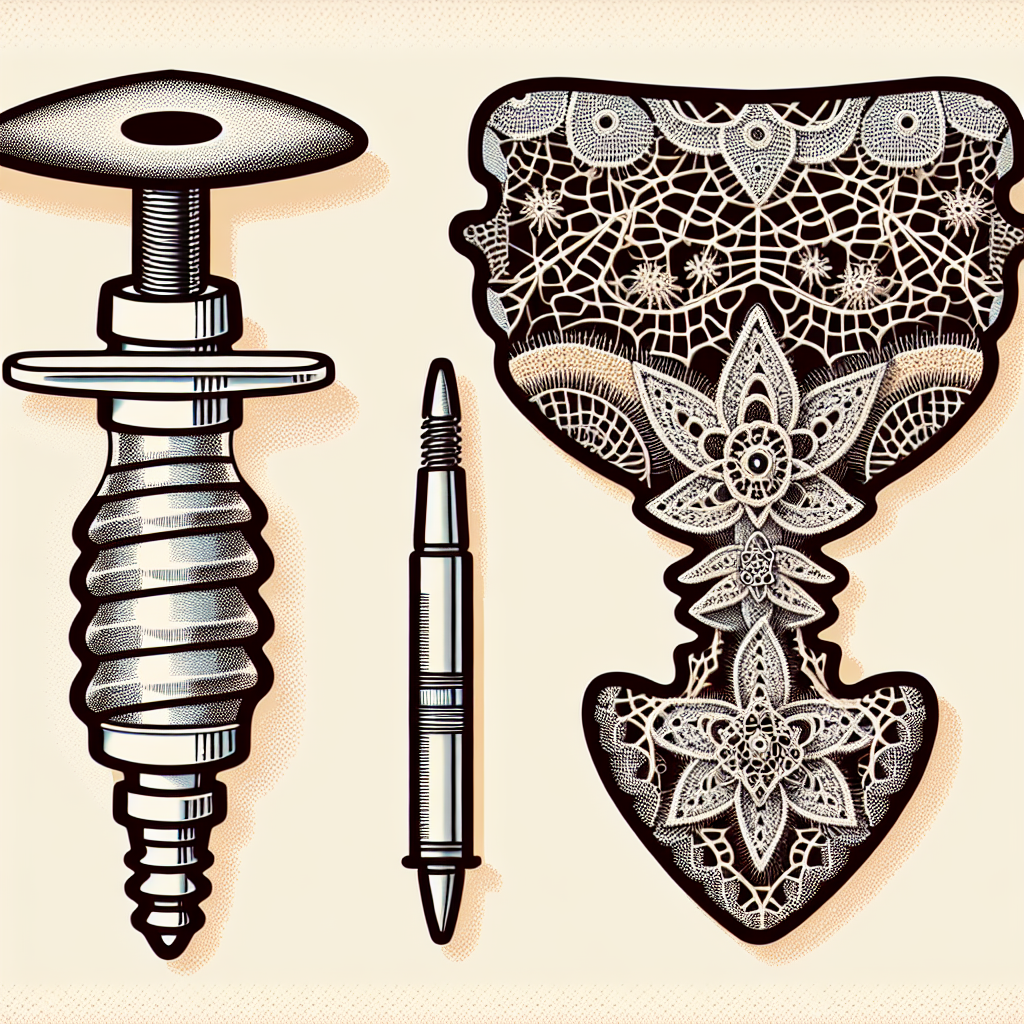
Lace Embroidery Transforms Surgical Implants
Thousands of surgeries could change with a remarkable twist: transforming a traditional art into high-tech medical devices.
Lace embroidery, long a cultural artifact in fashion and handicrafts, has found its way into the operating room, offering a revolution in surgical mesh implants.
Picture embroidery—a sewing craft passed down through generations to create intricate patterns on fabrics. Now imagine this craft enhancing modern medicine. A study led by Robert Tonndorf explores the creation of 3D surgical meshes using free-standing lace embroidery, blending tradition with cutting-edge technology.
Historically Art, Now Science
Embroidery once took pride of place on wedding dresses and tablecloths, weaving stories and symbols into fabric. Today, this same technique offers a solution to the wrinkles and misfits of flat surgical meshes that struggle on curved surfaces. Embroidery brings precision, allowing medical textiles to be tailor-made, quite literally.
Embroidery creates these meshes stitch-by-stitch, using thread pathways digitally programmed to form specific shapes. This precise approach preserves the cultural depth of embroidery, while also breaking new ground in patient-specific medical solutions.
The Discovery: A New Dimension in Medical Textiles
The ‘aha’ moment arrived when scientists noticed the potential in embroidery to create mesh pockets without the drawbacks of conventional sewing, like wrinkles and excess material. By combining traditional methods with modern technology, researchers found that lace embroidery could produce strong, custom-shaped meshes.
These embroidered meshes are lightweight and versatile. The craft itself allows for experimenting with thread diameter and density, creating a bespoke balance of strength and flexibility tailored to individual patient needs.
Beyond the Operating Room: Real-world Implications
For those in resource-limited settings, the implications are profound. The flexibility of embroidery enables designers to rapidly prototype and adjust surgical meshes to fit any patient, potentially reducing surgical costs and improving recovery outcomes worldwide.
Standardization can be replaced with personalization, changing how surgeries are performed in various conditions—whether in urban hospitals or remote clinics. This is akin to a chef adjusting a country’s traditional recipe to fit whatever ingredients are locally available, thereby honoring tradition while embracing innovation.
A New Beginning in Surgical Meshes
No longer just decoration, free-standing lace embroidery is bridging the gap between art and advanced science, much like weathering transitions from season to season using tradition and foresight. This innovative approach allows surgeons to provide a more precise implant fit, directly benefiting patients in terms of safety and comfort.
Moreover, the adaptability of embroidery offers another exciting prospect: sustainability. By minimizing excess material, there’s less waste, which is good for both the economy and the planet.
Let’s Explore Together
This exciting research invites us to explore further. How might this new use of embroidery influence medical practices in your region? Could local artisans contribute to healthcare by applying their skills to medical textiles? And what other traditional crafts might we reimagine for modern science?
The possibility here is as boundless as the sky, embracing not just the statewide or national but global potential for innovative healthcare solutions.