
Cosmic Clues and Earthly Mysteries: This Week’s Science Revealed
Science often feels like a detective story—peeling back layers of the unknown to uncover astonishing truths about our universe, our planet, and even the plants around us. This week’s discoveries take us from ancient star explosions drifting through Antarctic ice to the strange cooling of Earth’s upper atmosphere, all the way to the hidden math in a humble houseplant’s leaves. Let’s dive into the cosmic and earthly enigmas scientists have unlocked.
Riding a Wave of Ancient Stardust
Imagine Earth silently sliding through the ghostly remnants of a star that blew up tens of thousands of years ago. That’s exactly what researchers have found evidence of buried deep in Antarctic ice. Scientists studying ice samples as old as 80,000 years have unearthed traces of iron-60, an ultra-rare isotope produced only in supernovae. This space debris isn’t just floating aimlessly—it’s been drifting with our Solar System inside what’s called the Local Interstellar Cloud, a vast cloud of gas and dust cocooning us.
This discovery is thrilling because it rewrites how we see our galactic neighborhood. Instead of peaceful emptiness, the space surrounding us is littered with cosmic ash from an ancient stellar explosion that shaped this very cloud. It’s like finding the prehistoric fingerprints of a long-gone giant in our cosmic backyard. Scientists now have a new way to study the stars that once influenced our corner of space, deepening our connection to the galaxy.
The Gravity Puzzle That Just Won’t Quit
Gravity may seem like one of the most familiar forces—apples fall, planets orbit—but pinning down its exact strength remains maddeningly elusive. Stephan Schlamminger and his team at the National Institute of Standards and Technology (NIST) revisited a famous French experiment designed to measure Newton’s gravitational constant, known famously as “big G.” What sets this apart is Schlamminger’s extreme dedication: he kept his own experiment’s results locked away for ten years inside a sealed envelope to avoid bias. When the envelope was finally opened, the results brought both relief and frustration. While their measurements added clarity, gravity still refuses to give a definitive number. This relentless uncertainty has frustrated physicists for over 200 years, showing that even the most “basic” forces of nature can hold tight to their secrets. It’s a humbling reminder that science is an ongoing pursuit, often twisting and turning instead of delivering neat answers.
Mars’s Wild Past and Earth’s Cooling Mystery
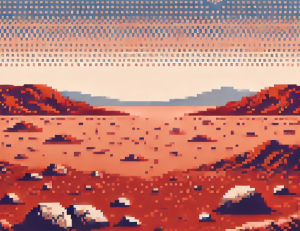
Closer to home and a little farther away, two other discoveries paint dramatic pictures of change—one on Mars, the other in Earth’s own atmosphere. A gigantic valley near Mars’s equator called Shalbatana Vallis has revealed scars left by massive ancient floods, suggesting that the Red Planet was once warmer and wetter. This 1,300-kilometer-long chasm bears the marks of groundwater bursts that carved deep, chaotic channels amidst volcanic terrain. Mars was not always the cold desert it is today; it might have hosted volcanic activity and vast oceans billions of years ago.
Meanwhile, on Earth, scientists finally explained a puzzling paradox: while our planet’s surface heats up due to greenhouse gases, like CO2, the upper atmosphere—specifically the stratosphere—is actually cooling. Researchers at Columbia University discovered that carbon dioxide doesn’t always trap heat. At high altitudes, CO2 emits heat into space through a “Goldilocks zone” in infrared wavelengths, cooling this part of the atmosphere as CO2 increases. This finding flips the usual story of climate change on its head and adds nuance to our understanding of global warming’s complex layers.
Hidden in Plain Sight: The Plant with a Mathematical Surprise
And if that wasn’t enough wonder for one week, scientists found a secret geometric pattern hidden inside the leaves of the Chinese money plant. The leaf pores and veins arrange themselves in a natural Voronoi diagram—a pattern that’s usually associated with human-designed networks like city planning or computer graphics. Nature, it seems, is a master mathematician, organizing itself with elegant spatial logic without a single measurement tool or civil engineer in sight. This discovery not only bridges biology and math but also shows there’s genius embedded in even the smallest details around us—hidden blueprints for solving problems that humans only recently grasped.
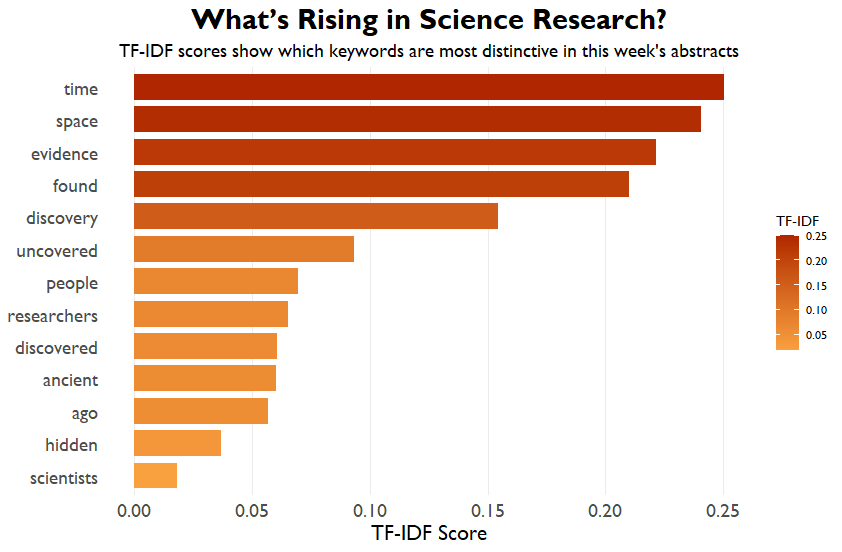
Science has woven a tale that stretches from ancient exploding stars to the microarchitecture of leaves, reminding us that the universe is as mysterious and beautiful as ever. Whether it’s cosmic ash riding through space, gravity’s stubborn secret, Mars’s dramatic past, or nature’s mathematical artistry, each discovery challenges what we thought we knew—and fuels the insatiable human drive to explore.
Stay curios!