Quantum Clocks and Gravity: Implications for Time and Technology
As we advance deeper into the realms of quantum physics and relativity, one of the most intriguing intersections arises between quantum clocks and gravity. The exploration of how these two concepts interact not only challenges our perceptions of time but also offers groundbreaking insights that may reshape our understanding of the universe.
Understanding Quantum Clocks
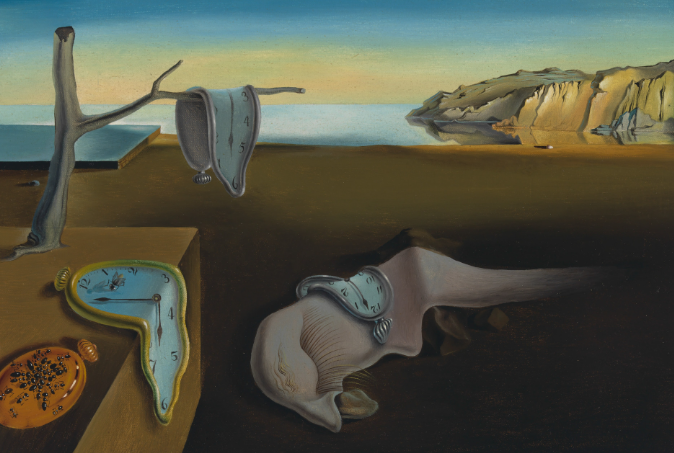
Quantum clocks leverage the properties of quantum mechanics to achieve unprecedented levels of accuracy in timekeeping. Atomic clocks, for instance, utilize atomic energy transitions to maintain time with remarkable precision, potentially allowing them to measure the gravitational effects of different elevations in a gravitational field. According to Einstein’s theory of general relativity, time is affected by gravity; clocks closer to a massive body will tick more slowly than those further away, a phenomenon known as gravitational time dilation.
Recent Developments in Quantum Clock Technology
Recent research has explored the potential of using quantum clocks not only for accurate timekeeping but also as sensitive instruments for measuring gravitational effects. A notable study on gravitational redshift enhanced our understanding of the fundamental principles governing relativistic physics.
The Role of Gravity in Quantum Clocks
Recent studies also highlight how quantum states can be influenced by gravitational fields. One notable investigation focuses on the interactions of quantum clocks with gravitational fields, aiming to determine whether it’s possible to manipulate quantum states in a way that would allow for a new assessment of gravity’s fundamental roles. The findings could lead to the development of innovative gravitational sensors and open new pathways to understand quantum gravity.
Quantum Entanglement and Time Measurement
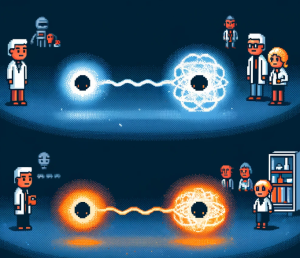
An exciting concept related to quantum clocks is quantum entanglement, in which two or more particles become interconnected, and the state of one immediately influences the state of another, regardless of distance. Researchers are now exploring the potential to create entangled states of quantum clocks, which could enable measurements that incorporate gravitational influences and revolutionize fields ranging from information technology to astrophysics.
Practical Applications: From Timekeeping to Space Exploration
The implications of advancements in quantum clocks extend beyond theoretical physics. For instance, the precision of quantum clocks can significantly enhance GPS technology, providing more accurate location data. Furthermore, the Atomic Clock Ensemble in Space (ACES) project, developed by the European Space Agency, aims to deploy atomic clocks on the International Space Station to facilitate research that could deepen our understanding of gravity and time in the context of space travel.
Potential Future Discoveries
As we continue to explore the convergence of quantum mechanics and general relativity, our understanding of the universe may shift dramatically. The ongoing research into how quantum clocks can be utilized to probe gravitational fields, coupled with developments in quantum technology, holds the promise of unlocking secrets of the cosmos that have eluded scientists for centuries.
Conclusion
In conclusion, the relationship between quantum clocks and gravity presents a vibrant field of study with implications for both technology and our fundamental understanding of the universe. As we refine our tools and techniques to measure the passage of time and the effects of gravity, we prepare to explore new dimensions of science that challenge our conventional wisdom.