Gödel’s Incompleteness Theorem: The Math Discovery That Proved Math Has Limits
Math can feel like the most certain thing in the world.
Two plus two equals four. A triangle has three sides. If you follow the rules carefully, you should always be able to find the right answer.
For a long time, many mathematicians believed something even bigger: that all of mathematics could one day be built into one perfect system. This system would start with a small set of basic rules, called axioms, and then use logic to prove every true mathematical statement.
It was a beautiful dream.
Then Kurt Gödel came along and showed that the dream could not work.
Incompleteness
Kurt Gödel was a logician and mathematician who, in 1931, proved what is now called the incompleteness theorem. It says that any logical math system powerful enough to include basic arithmetic will always contain true statements that cannot be proved within that system.
That sounds strange, so let’s slow it down.
Imagine a rulebook for math. The rulebook is careful, logical, and never contradicts itself. Gödel showed that no matter how good the rulebook is, there will always be some true math facts that the rulebook cannot prove.
In other words: math is not broken. But math is bigger than any single set of rules.
Here is a simple way to think about it.
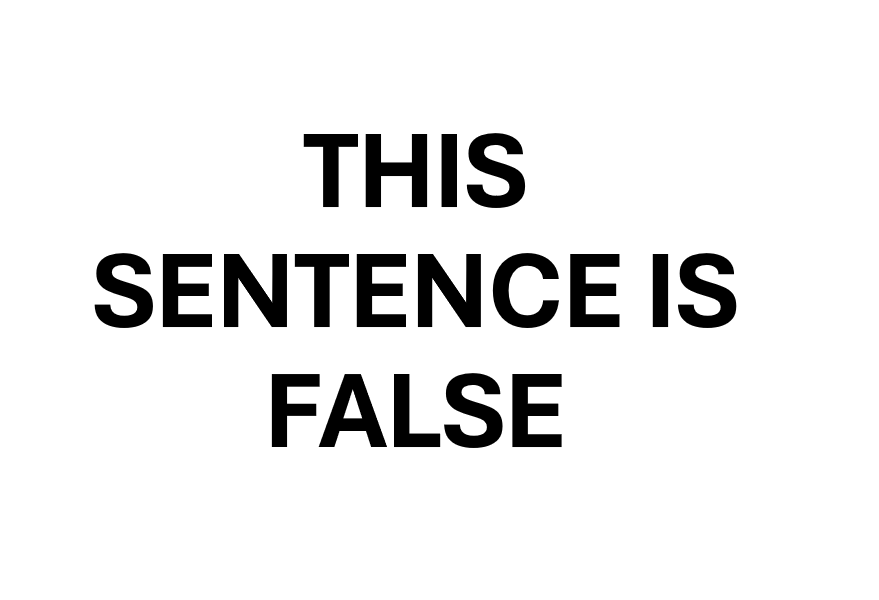
Suppose someone writes this sentence:
“This sentence cannot be proven by the rulebook.”
If the rulebook proves the sentence, then the sentence is false, because it said it could not be proven. That would mean the rulebook made a mistake.
But if the rulebook cannot prove the sentence, then the sentence is true. It really cannot be proven by the rulebook.
Gödel found a way to construct this kind of self-referential idea using numbers and logic rather than ordinary words. That was the genius of his proof.
His theorem had two major parts.
The first incompleteness theorem states that no sufficiently strong mathematical system can be both complete and consistent. Complete means it can prove every true statement. Consistent means it never proves contradictions. Gödel showed that if the system is consistent, it must be incomplete.
The second incompleteness theorem goes even further. It says that a strong math system cannot rely solely on its own rules to prove its consistency. That is like asking a rulebook to prove, using only the rulebook, that the rulebook never makes mistakes.
Why did this matter so much?
Before Gödel, many mathematicians hoped to place all of math on a perfect foundation. The mathematician David Hilbert wanted a system in which every mathematical question could, in principle, be answered by following clear logical steps. Gödel showed that this goal was impossible.
This changed how mathematicians understood truth. It showed that “true” and “provable” are not always the same thing.
That is a huge idea.
For example, a statement might be true about numbers, but still impossible to prove using a particular set of rules. Mathematicians may then need to add new assumptions, or axioms, to explore it. But Gödel showed that even after adding new rules, new unprovable truths can appear.
His work also influenced computer science. Computers follow rules. They are powerful, but they are still rule-based systems. Gödel’s theorem helped inspire later discoveries about what computers can and cannot decide.
This does not mean math is useless. It means the opposite. Math is deeper than people expected.
Gödel did not destroy mathematics. He revealed that mathematics has horizons. You can travel farther and farther, but there will always be more beyond the edge of what your current rules can reach.
That is why Gödel’s incompleteness theorem remains one of the most important ideas in the history of math.
It taught us that even in the most logical subject humans have ever created, there are limits to what rules alone can prove.
And that may be the most surprising math lesson of all: even certainty has boundaries.