
The Dark Forest Hypothesis: Is the Universe Silent Because Everyone Is Hiding?
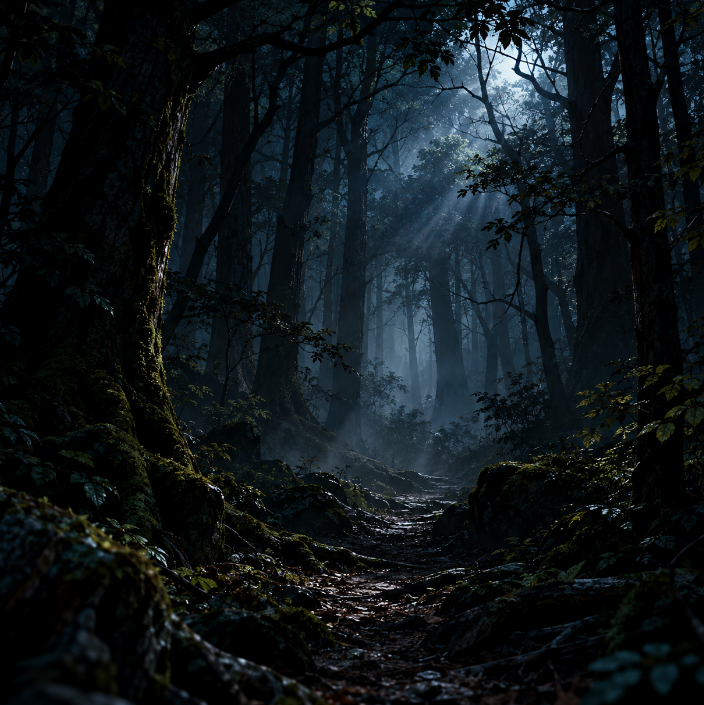
Imagine walking through a forest in the middle of the night.
You cannot see what is hiding among the trees. You hear something moving in the distance, but you have no idea what it is. It could be harmless. It could be dangerous. And whatever is out there might be listening for you, too.
Would you call out to announce your presence?
Or would you stay perfectly still and hope nothing notices you?
Now imagine that the forest is the entire universe.
That is the frightening idea behind the Dark Forest Hypothesis. It suggests that intelligent alien civilizations might exist throughout the galaxy, but they deliberately remain silent. Not because they have nothing to say, but because revealing their location could get them destroyed.
The idea became famous through science fiction writer Liu Cixin’s novel The Dark Forest. Yet it raises a question that scientists have debated for decades: If the universe contains so many stars and planets, why haven’t we found anyone else?
Astronomers have discovered thousands of planets beyond our solar system. Some might have conditions suitable for life. And the Milky Way has existed long enough for other civilizations to have developed millions or even billions of years before humanity.
Still, we have no confirmed evidence of extraterrestrial life.
Perhaps intelligent life is incredibly rare. Perhaps civilizations do not survive very long. Or perhaps they exist, but have learned that the safest thing to do is remain invisible.
The Dark Forest Hypothesis offers one of the most disturbing possible explanations for the universe’s silence. But how much of it is science, how much is speculation, and should humanity be worried about announcing its presence?
The Great Silence: Where Is Everybody?
On a clear night, thousands of stars can be visible from Earth. Our galaxy alone contains billions more, and many of those stars have planets.
Given enough time, it seems possible that life could have developed on at least some of those worlds. Perhaps a few even produced intelligent civilizations capable of building spacecraft, sending radio signals, or traveling between stars.
So where is everybody?
This question lies at the heart of the Fermi Paradox, one of the great mysteries of modern astronomy.
The paradox is named after physicist Enrico Fermi, who famously wondered why we had not encountered extraterrestrial civilizations. The fuller argument developed over time. In 1975, astronomer Michael Hart explored why Earth showed no evidence of extraterrestrial visitors despite the enormous age of the galaxy.
The problem is not that scientists expect aliens to be everywhere. Rather, the universe seems to offer many opportunities for life, yet we have found no confirmed evidence of another civilization.
NASA reports that despite decades of searching and the discovery of thousands of exoplanets, Earth remains the only world known to support life. There is also no credible evidence that unidentified anomalous phenomena are extraterrestrial in origin.
Scientists have proposed many explanations for this apparent silence.
Maybe life rarely develops beyond simple organisms. Maybe intelligent species tend to destroy themselves through war, environmental collapse, or dangerous technology. Perhaps advanced civilizations communicate in ways we cannot recognize.
Or maybe they are deliberately avoiding detection.
That last possibility leads us into the Dark Forest.
How the Dark Forest Hypothesis Works
In Liu Cixin’s 2008 novel The Dark Forest, the universe is imagined as a dangerous place where civilizations conceal their locations to avoid being destroyed by others.
The metaphor is simple.
Every civilization is like a hunter moving through a dark forest. Each hunter knows that others might exist, but cannot know their intentions. Revealing your location could attract a peaceful neighbor.
It could also attract someone who wants to eliminate you.
Under those conditions, staying silent might seem like the safest strategy.
The idea was later examined in a more formal scientific context. In 2015, researcher Chao Yu published a paper in the Journal of the British Interplanetary Society exploring the conditions under which a dark forest rule might emerge.
Importantly, Yu did not establish that the universe actually works this way. His analysis showed that the strategy could make sense under particular assumptions.
To understand why, consider what might happen if two alien civilizations discovered each other.
The problem of trusting strangers across the stars
Imagine a civilization detects a radio signal from a planet 100 light-years away. The signal seems friendly. Perhaps it contains mathematics, music, or a message of peace.
But there is a problem.
The message took 100 years to arrive. If the receiving civilization sends a reply, another 100 years will pass before it reaches the sender.
A complete exchange takes at least two centuries.
During that time, governments could rise and fall. Technology could change dramatically. A peaceful society could become aggressive, or a weak civilization could develop weapons far more powerful than anything its neighbors possess.
Neither civilization has a reliable way to predict what the other will become.
This creates a dangerous uncertainty.
Even if both civilizations want peace, each might worry that the other could eventually become a threat.
And if one believes the other might attack someday, striking first could begin to look like a way to survive.
Why peaceful aliens might still be dangerous
One of the most disturbing features of the Dark Forest Hypothesis is that it does not require evil aliens.
Imagine two civilizations that both value peace.
Neither wants war. Neither has any intention of conquering the other.
But neither can prove its intentions.
One civilization notices that the other is developing more advanced technology. It begins to worry about its future safety.
To protect itself, it develops stronger defenses.
The second civilization sees those defenses and interprets them as preparations for an attack. It responds by building its own weapons.
Soon, both sides feel threatened, even though neither originally wanted conflict.
This resembles what political scientists call a security dilemma. Actions taken for defense can appear threatening to others, creating cycles of fear and mistrust.
Across interstellar distances, such problems could become even harder to solve.
There may be no shared language, no diplomats, no international agreements, and no trusted organization capable of preventing misunderstandings.
The Dark Forest Hypothesis takes this uncertainty to its most frightening conclusion: some civilizations might decide that destroying another civilization is safer than risking its future growth.
If enough civilizations believe this, the universe could become a place where everyone hides and nobody dares speak.
But there is a major problem with this reasoning.
We have no evidence that alien civilizations actually behave this way.
Why the Dark Forest Hypothesis Is Frightening but Not Proven
The Dark Forest Hypothesis is compelling because its logic feels familiar.
Humans know what it means to fear strangers, compete for resources, and worry about powerful rivals.
But applying those experiences to the entire universe requires enormous assumptions.
For starters, we have only one known technological civilization to study: humanity.
We do not know how common intelligent life is. We do not know whether advanced civilizations tend to compete, cooperate, or avoid one another.
We do not even know whether their motivations would resemble ours.
A civilization that evolved under completely different conditions might have very different ideas about survival, cooperation, or conflict.
And even if some alien civilizations were hostile, that would not mean every civilization would behave the same way.
The assumptions behind the theory
For the Dark Forest Hypothesis to explain the universe’s silence, several things would need to be true:
- Other technological civilizations must exist.
- Some must be capable of detecting distant civilizations.
- At least some must have the ability to threaten other worlds.
- Hiding must offer meaningful protection.
- Civilizations must believe that revealing themselves creates unacceptable risks.
- In some situations, attacking first must appear safer than waiting.
None of these conditions has been demonstrated for extraterrestrial civilizations.
Chao Yu’s 2015 analysis emphasized that the dark forest rule depends on specific circumstances. It is not an unavoidable law of nature.
There is another challenge that makes the hypothesis even more complicated.
What if hiding is nearly impossible?
Can an advanced civilization really hide?
Imagine that an alien civilization decides never to transmit a radio message.
Would that make it invisible?
Not necessarily.
Astronomers are developing ways to study the atmospheres of distant planets. Certain combinations of gases could provide possible evidence of biological activity. Scientists call these clues biosignatures.
Earth itself has changed dramatically over billions of years as living organisms altered its atmosphere.
Research on Earth’s history suggests that some periods would have made life easier to detect from a distance than others.
Technology might create additional clues.
Scientists call these technosignatures: observable signs that advanced technology exists.
Possible technosignatures include unusual radio signals, artificial light, industrial chemicals in planetary atmospheres, or large structures that affect the light from stars.
NASA includes technosignature research within its broader search for life beyond Earth.
A 2026 preprint reviewing technosignature research describes possible clues on planetary surfaces, in atmospheres, around stars, and even across galaxies. Because it is a preprint, its conclusions remain part of an active scientific discussion.
All of this creates a serious problem for the Dark Forest Hypothesis.
A civilization might stop broadcasting messages, but its planet could still reveal signs of life or technology.
Silence does not necessarily mean invisibility.
If a sufficiently advanced civilization could already detect inhabited planets, staying quiet might offer little protection.
That raises an uncomfortable question for humanity.
Even if we wanted to hide, would it already be too late?
Should Humanity Stop Sending Messages Into Space?
The Dark Forest Hypothesis becomes especially unsettling when we consider our own behavior.
For more than a century, humans have used radio technology. We have built powerful radar systems, launched spacecraft, and occasionally transmitted deliberate messages toward distant stars.
In 1974, scientists sent the famous Arecibo message, a brief radio transmission containing information about humanity and Earth.
Was that a mistake?
If the Dark Forest Hypothesis is correct, deliberately announcing our presence might attract unwanted attention.
But the actual risks are much less certain than science fiction makes them seem.
Listening versus calling out
Scientists generally distinguish between two activities.
SETI, or the Search for Extraterrestrial Intelligence, involves looking for evidence of intelligent life. Researchers search for radio signals, optical pulses, and other possible technosignatures.
METI, or Messaging Extraterrestrial Intelligence, involves intentionally sending messages designed to be detected by other civilizations.
Listening does not necessarily reveal our location. Sending a powerful, targeted message could make us easier to detect.
In 2011, researchers John Billingham and James Benford examined the risks and technical challenges of deliberate interstellar messaging.
They argued that ordinary historical radio leakage from Earth would be difficult for realistic distant receivers to detect as a meaningful message. Stronger, targeted transmissions using advanced microwave or laser systems could be much easier to notice.
Their conclusion was not that humanity should panic.
Instead, they argued that deliberate attempts to contact extraterrestrial civilizations deserved international discussion before proceeding with more powerful transmissions.
Not everyone agrees that messaging poses a serious threat.
An advanced civilization capable of traveling between stars or attacking distant planets might already possess instruments powerful enough to detect Earth.
Our atmosphere has contained signs of life for billions of years. If extraterrestrial astronomers can recognize those signs, a radio message might reveal little that they do not already know.
There are also practical questions.
Would interstellar warfare even be worth the enormous distances, energy, and time involved?
Would destroying a distant civilization provide any meaningful benefit?
The Dark Forest Hypothesis imagines reasons for attacking, but it does not demonstrate that such attacks would be practical or likely.
Who gets to speak for Earth?
Even without assuming that hostile aliens exist, deliberate interstellar messaging raises a serious question.
Who has the authority to announce humanity’s presence?
A single scientist? A university? A government? A private organization?
The consequences of a message, if there were any, could affect the entire planet.
Researchers have also studied how humanity might respond if an extraterrestrial signal were detected.
In 2022, Jason Wright, Chelsea Haramia, and Gabriel Swiney examined claims that such a discovery might trigger geopolitical conflict. They argued that some dramatic scenarios had been overstated and emphasized the importance of transparency, cooperation, and planning.
Existing post-detection principles have similarly stressed confirming discoveries and sharing evidence with the scientific community and the public.
These discussions do not prove that alien contact would be dangerous.
They show that even the possibility of contact raises questions that go beyond astronomy.
If humanity ever faces a genuine decision about communicating with another civilization, it will need more than a powerful transmitter.
It will need careful thinking about uncertainty, responsibility, and risk.
What the Dark Forest Really Tells Us About Ourselves
The Dark Forest Hypothesis may ultimately reveal more about human fears than alien behavior.
We imagine the universe as a dangerous forest because we understand what it means to live with uncertainty.
Throughout human history, communities and nations have struggled to decide whether unfamiliar outsiders are potential friends or enemies.
We have seen how fear can produce conflict, even when neither side originally wanted one.
But we have also seen cooperation emerge between groups that once viewed each other with suspicion.
There is no reason to assume that the first pattern must dominate throughout the universe.
Alien civilizations, if they exist, might behave in ways we cannot imagine.
Some might be aggressive. Others might be cooperative. Some might have no interest in contact. Still others might have evolved beyond the kinds of competition that shape much of human history.
We simply do not know.
That is why the scientific search for extraterrestrial intelligence must remain open to many possibilities.
Researchers at NASA, the SETI Institute, Berkeley SETI, and other institutions continue looking for observable evidence rather than assuming in advance what alien civilizations must be like.
And as of October 2026, one fact remains unchanged.
No extraterrestrial civilization has been confirmed.
The universe’s silence might mean that intelligent life is extraordinarily rare.
It might mean that technological civilizations do not survive long enough to spread across the galaxy.
It might mean we have been searching for the wrong signals.
Or it might mean that civilizations exist but have reasons to remain quiet.
Perhaps somewhere, around a distant star, another intelligent species is staring into its own night sky.
Perhaps its scientists are wondering why the universe seems so empty.
Perhaps they have built telescopes, searched for signals, and debated whether they should announce themselves.
And perhaps, just like us, they are afraid of what might answer.
That is what makes the Dark Forest Hypothesis so haunting.
A silent universe and an empty universe look remarkably similar from Earth.
For now, science cannot tell us which one we are living in.
And until we find evidence of another civilization, the darkness will continue to leave room for both our greatest hopes and our deepest fears.
Build Your Own Science Issue
Tell us what fascinates you. We’ll search today’s science and build a personalized issue just for you.
Your science issue is being built.
We’re searching today’s research for stories that match your interests. Your personalized issue will arrive in your inbox shortly.
Something went wrong.
We couldn’t build your issue right now. Please try again in a moment.
References
Billingham, J., & Benford, J. (2011). Costs and difficulties of large-scale “messaging,” and the need for international debate on potential risks. arXiv. https://doi.org/10.48550/arXiv.1102.1938
Brin, G. D. (1983). The “Great Silence”: The controversy concerning extraterrestrial intelligent life. Quarterly Journal of the Royal Astronomical Society, 24, 283–309.
Gray, R. H. (2015). The Fermi paradox is neither Fermi’s nor a paradox. Astrobiology, 15(3), 195–199.
Hart, M. H. (1975). An explanation for the absence of extraterrestrials on Earth. Quarterly Journal of the Royal Astronomical Society, 16, 128–135.
International Academy of Astronautics. (1989). Declaration of principles concerning activities following the detection of extraterrestrial intelligence.
Liu, C. (2015). The dark forest (J. Martinsen, Trans.). Tor Books. (Original work published 2008).
National Aeronautics and Space Administration. (2019). Are we alone? NASA Science.
National Aeronautics and Space Administration. (2026). Can we find life? NASA Science.
National Aeronautics and Space Administration. (n.d.). Searching for signs of intelligent life: Technosignatures. NASA Science.
Pallé, E. (2018). The detectability of Earth’s biosignatures across time. In H. J. Deeg & J. A. Belmonte (Eds.), Handbook of exoplanets. Springer. https://doi.org/10.1007/978-3-319-55333-7_70
Vidal, C., et al. (2026). The search for technosignatures: A review of possibilities [Preprint]. arXiv.
Wright, J. T., Haramia, C., & Swiney, G. (2022). Geopolitical implications of a successful SETI program. arXiv. https://doi.org/10.48550/arXiv.2209.15125
Yu, C. (2015). The dark forest rule: One solution to the Fermi paradox. Journal of the British Interplanetary Society, 68, 142–144.