Science This Week: Open Data, Women in STEM, and NASA’s Educational Boost
The scientific landscape is buzzing with transformative shifts, equity-driven initiatives, and exciting opportunities for budding researchers.
Let’s put aside the firing of the National Science Council here in the US for a second…..
This week, we dive into the evolving open science ecosystem, celebrate initiatives empowering women in STEM, and spotlight NASA’s pioneering programs that supercharge student involvement in space and Earth sciences. Let’s unpack what’s sparking change and inspiration.
Unleashing Open Science: The FAO Leads the Charge
Imma Subirats of the Food and Agriculture Organization (FAO) paints a compelling picture: open science is no longer just about making research accessible—it’s about building sophisticated, interconnected ecosystems that make data not only available but instantly reusable by humans and AI alike. The concept of “FAIR by design” underscores this shift, emphasizing that data must be findable, accessible, interoperable, and reusable right from the start. FAO’s strides are impressive. Their platforms—AGRIS, FAOSTAT, and the Knowledge Repository—serve as global hubs for agricultural knowledge, accessible across multiple languages and licensed for unrestricted reuse.
Thanks to Creative Commons licenses applied since 2019, researchers worldwide, especially in the Global South, have eagerly embraced these resources. Millions of downloads signal not just usage but reliance on FAO’s open data. One standout innovation is the AGROVOC Multilingual Thesaurus. With over 41,000 concepts mapped across 42 languages, it’s a semantic masterstroke enabling research to cross language barriers—a vital bridge in a world where agricultural knowledge flourishes in many tongues. FAO’s commitment to ethical AI deployment on its open data further shows its foresight in harnessing technology responsibly.
The message is clear: open science is the lifeblood that will accelerate global collaboration, transparency, and innovation in science.
Women in STEM: Scholarships Break Barriers, Spark Ambition
Despite progress, women remain significantly underrepresented in many STEM fields—accounting for only about 26% of the STEM workforce in the U.S. But this year, scholarship programs tailored specifically for women are making a mighty dent in the gender gap. Bold.org spotlights over 120 scholarships dedicated to women in STEM, covering fields from engineering and biology to more niche areas like marine biology and data science. These financial lifelines are more than money—they’re a buzzer for ambition, encouraging young women to pursue and persist in demanding fields traditionally dominated by men. The hurdles are real—lack of role models, societal stereotypes, and career-life balance concerns weigh heavily.
Yet, scholarships that require essays, recommendations, and demonstrated leadership tap into the fiery commitment of female students determined to defy the odds. More than funding, these programs foster visibility and build community, proving that women aren’t just contenders but leaders in science, technology, and engineering. The advice from experts is clear: start applying early, cast a wide net, and craft standout essays that tell your unique story and future vision. The more women supported today, the more diverse and innovative STEM fields will become tomorrow.
NASA’s Educational Odyssey: Internships and Fellowships Fuel Future Scientists
NASA continues to dazzle by opening doors wide through dozens of programs designed to ignite young minds. From high schoolers immersing themselves in satellite data analysis to college and graduate students tackling real-world environmental challenges, NASA’s offerings span the STEM spectrum and beyond. Whether it’s the GeneLab for High Schools diving into bioinformatics or the six-month NASA Space Life Sciences Training Program prepping undergraduates for careers in space biology, opportunities abound. Programs like the National Space Grant College and Fellowship Project create expansive networks that connect academia, industry, and community organizations, all with a mission: to build the STEM talent pipeline.
The Pathways Program hands students not just experience but paid work that launches careers. Postdoctoral opportunities funnel promising scientists toward cutting-edge research in planetary science and astrophysics. What’s truly inspiring is NASA’s commitment to inclusivity—with specialized programs for neurodiverse students and a constant push to make science education accessible and engaging. In an era when science budgets and advisory panels face headwinds in Washington, NASA stands as a beacon for education, mentorship, and the practical engagement of tomorrow’s scientists.
Wrapping Up: Science at a Crossroads
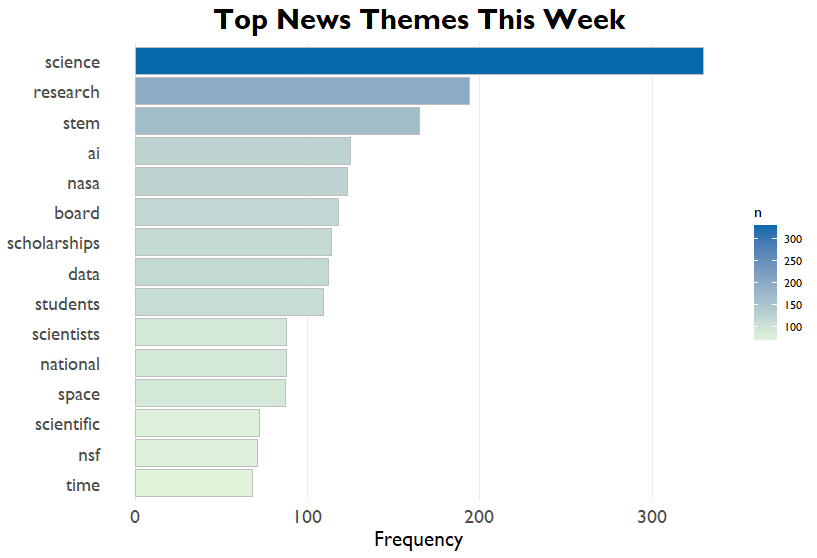
This week’s story is one of contrast and hope. While federal science advisory boards face upheaval and reduced transparency, as noted in recent governmental shakeups, the scientific community’s resolve to build open, inclusive, and multidisciplinary ecosystems grows stronger. The FAO’s open data revolution, scholarship efforts to fuel women’s STEM careers, and NASA’s educational programs collectively showcase a vibrant, forward-looking science culture that refuses to be stalled.
The future of science demands not only data and discovery but diversity and access. From open ecosystems that bring AI and data together, to scholarships that shatter gender ceilings, and NASA programs that turn curiosity into expertise, the momentum is building. If we seize these opportunities, the next decade of science will be more transparent, equitable, and stellar than ever before.