How Biodiversity Can Make the 15-Minute City Thrive
Every year, more of us trade fields for freeways. Today, over half the world’s population lives in cities. But as our urban footprints expand, the homes of countless plants, birds, and animals disappear beneath concrete and glass. What if the same city planning ideas designed to improve our lives could also rebuild nature’s foothold?
A new perspective, published in Nature Cities, argues that it’s not only possible, but essential. The authors propose a bold evolution of the now-famous 15-minute city concept: a “biodiversity-inclusive 15-minute city,” where the daily needs of both humans and non-human life are within easy reach.
The 15-Minute City: A Great Idea with a Blind Spot
The 15-minute city is an urban design philosophy that’s exploded in popularity from Paris to Bogotá. The idea is simple: residents should be able to reach everything they need, work, school, groceries, healthcare, and recreation,within a 15-minute walk or bike ride. The benefits are clear: less traffic, lower emissions, stronger local economies, and healthier lifestyles.
But there’s a catch. The model was largely built around human convenience. As the authors point out, it has been largely “biodiversity blind.” In most versions of the 15-minute city, parks and trees are considered pleasant extras, not essential infrastructure for living systems.
That’s a problem—because cities are also ecosystems. Bees need small patches of flowers to pollinate plants. Birds need tree cover to migrate safely. Even earthworms need moist, unsealed soil to thrive. Ignoring these needs, the authors warn, is a missed opportunity to design urban spaces that benefit everyone—feathered, rooted, and human alike.
Principle 1: Proximity Works for People and Pollinators
We love having shops, schools, and parks nearby. Wildlife works the same way. Many species, such as wild bees, travel only a few hundred meters during their lifetime. Hedgehogs use connected networks of gardens as green highways. When these small patches are close together, species survive. When they’re isolated, they vanish.
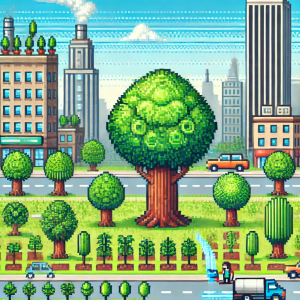
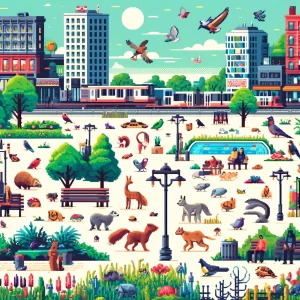
Just as people need a dense network of services, nature requires a dense network of habitats. A city that scatters pocket parks, rooftop gardens, and tree-lined streets can function as a “15-minute ecosystem,” supporting everything from beetles to bats.
But here’s where it gets interesting: those same green corridors also make cities cooler, cleaner, and calmer. Air pollution levels drop, heat islands shrink, and residents report increased happiness. Designing for biodiversity, it turns out, is also designing for human well-being.
Principle 2: Small Spaces, Big Impacts
Do you think you need a Central Park to save nature? Think again. The study highlights that small urban green spaces, sometimes less than 20 square meters, can collectively host more plant diversity than a single large park.
During the COVID-19 lockdowns, these “pocket parks” became lifelines for urban dwellers who were stuck close to home. For insects and birds, they were lifelines too. The takeaway: size matters, but density matters more. A city full of tiny oases may do more for biodiversity than one with a few grand green zones on the outskirts.
In São Paulo’s favelas, residents have already turned neglected corners into micro-gardens that attract pollinators and cool down alleyways. In Lagos, schoolyard tree planting has helped buffer heat waves. These aren’t luxury projects—they’re grassroots resilience in action.
Principle 3: Diversity Breeds Resilience
Diversity isn’t just about the number of species—it’s about how we live together. Human diversity, when reflected in neighborhood design, builds community and fairness. Ecological diversity does the same, keeping ecosystems balanced and adaptive.
City planners can borrow a lesson from both worlds: don’t build monocultures. Parks with layered vegetation—comprising shrubs, tall trees, and native flowers—support birds, bats, and pollinators. Likewise, neighborhoods that mix housing types and incomes are less prone to gentrification and displacement.
In Barcelona’s “Superblocks,” traffic is restricted and streets are reclaimed for pedestrians and plants. In Accra, Ghana, informal “green markets” double as biodiversity hotspots. When cultural and biological diversity thrive together, cities become more just—and more alive.
Principle 4: Smart Tech for Smart Ecosystems
Digital tools aren’t just for humans rushing between Zoom calls. Cities like Hannover, Germany, are already using soil sensors to track when trees need water, reducing stress on urban vegetation. Citizen science apps like iNaturalist, ObsIdentify, and Dawn Chorus (coincidence?) enable people to log species sightings, providing real-time biodiversity data that informs city planning.
Imagine if your city’s 15-minute map also showed bird nesting zones, butterfly gardens, or pollinator corridors. That’s not science fiction—it’s a smart, data-driven way to make cities friendlier to all life forms.
The Challenges: Green Dreams vs. Real-World Limits
Not every city can easily green its streets. Space is scarce, budgets are tight, and in many places, informal housing leaves little room for gardens. Adding green spaces can also backfire: when neighborhoods become more desirable, rents rise—a phenomenon known as green gentrification.
But the authors argue that these risks can be managed. Participatory planning—where residents help decide what kind of green spaces they want—can prevent displacement and foster ownership. Community gardens, schoolyard projects, and pop-up grasslands can be affordable first steps. In Berlin, local “mosaic governance” models link small citizen-led green projects into larger city networks.
The Big Picture: Cities as Shared Habitats
Urbanization and climate change are global forces—but so is creativity. From Cairo’s rooftop beekeepers to Mumbai’s mangrove defenders, people worldwide are redefining what it means to coexist with nature.
The 15-minute city offers a framework to unite these efforts. By expanding its scope—from humans only to humans and nature—it can become a blueprint for what the authors call “cities for all species.” In a world facing biodiversity collapse and rising temperatures, that’s more than a design philosophy. It’s a survival strategy.
Let’s Explore Together
Could your city support a “15-minute ecosystem”?
What tiny piece of land near you could be a haven for plants or pollinators?
If you were on this research team, what would you test next?
Cities can be humanity’s greatest invention—or nature’s last refuge. The choice depends on whether we see our neighbors as just the people next door, or the sparrows, bees, and trees that share our streets.