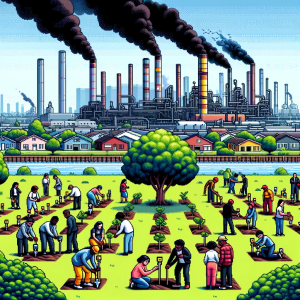

Shaping a City’s Ecological Future
Every year, fast-growing cities lose vital natural space without even noticing it. But a new study shows that a smarter design of ecological networks could reverse the damage—if cities act fast.
That bold claim comes from fresh research in the Guangdong–Hong Kong–Macao Greater Bay Area (GBA)—one of the most urbanized and economically powerful regions on the planet. What the researchers found matters far beyond China: from Lagos to São Paulo, from Mumbai to Manila, the same pressures are reshaping ecosystems and stressing the land that keeps cities alive.
Why Ecological Security Matters (and Why It’s Slipping)
Think of a city as a living organism. Rivers are like veins, forests are like lungs, and green corridors are the connective tissue that keeps everything functioning. When development grows too fast, these systems get pinched, cut apart, or polluted.
In the GBA, the team documented exactly this pattern:
- Urban centers like Shenzhen and Guangzhou showed low ecological security (insufficient natural space and excessive pressure).
- Mountainous regions like Zhaoqing and Huizhou showed higher ecological security (less fragmentation and more intact forests).
This is familiar to anyone who has watched a city spread outward until farmland and wetlands shrink to thin, disconnected patches. But the team didn’t stop at describing patterns—they asked why certain pressures persist.
The “Why” Behind Ecosystem Decline
The researchers used a system called DPSIR-S—a structured way to trace causal chains across:
Drivers → Pressures → State → Impacts → Responses → Structure. Then they added a statistical tool called the Obstacle Degree Model, which essentially asks:
Which obstacles matter the most? Which ones block ecological recovery?
The results were striking:
- The biggest barrier wasn’t pollution.
- It wasn’t loss of forest cover.
- It wasn’t even population density.
The most powerful obstacle was the weakness of “Response”—how much cities actually invest in environmental protection. Two numbers stood out as the most severe obstacles:
- Environmental protection investment (C17)
- GDP and population density (C18 & C6)
In other words: Cities know the ecosystem is under pressure—but they’re not acting fast enough or investing enough to match the scale of the problem.
This same issue shows up in cities worldwide. Budgets grow, buildings rise, but green systems limp behind
A Surprising Twist: Economic Growth Can Help or Hurt
The study found something that may sound contradictory: rich mega-cities with more pollution and density sometimes scored better on ecological security than expected. Why? Because they have more money and policies dedicated to fixing damage.
But there’s a limit. Once ecological pressure passes a threshold, even massive spending may not undo the harm. This mirrors the reality of many global cities—economic strength can buy time, but not infinite resilience.
The scientists warn: We cannot assume the economy will save ecological systems forever. Prevention is cheaper and more effective than repair.
But what exactly does “prevention” look like?
A Blueprint for Ecological Infrastructure That Works
Here’s the exciting part: the study proposes a real, buildable design for ecological infrastructure—one that expanded ecological space by 10.5% and added:
- 121 ecological nodes
- 227 multi-level ecological corridors
What does that mean in human terms? Think of ecological corridors as safe passageways for wildlife, cooler routes for air flow, and natural green “pipes” that transport ecological services like clean water and carbon absorption. Nodes are like ecological “hubs” that hold the system together.
The new network they designed follows a simple but powerful formula:
“One core, one bay, multiple corridors, many nodes.”
- One core: a central ecological area protected from future fragmentation.
- One bay: a redesigned coastline where land and sea protections are aligned.
- Multiple corridors: mountain-river-city-sea connections stitched together.
- Many nodes: smaller green spaces that keep the network functioning.
For rapidly growing cities, this is gold: a way to preserve nature without halting development.
A Global View: Why This Matters Far Beyond China
Whether you’re working in a lab in India, studying planning in Brazil, or supporting climate work in Kenya, the study speaks to a universal truth:
Cities can grow, but ecosystems must also grow—or everything begins to break.
Heatwaves intensify when air-flow corridors disappear. Biodiversity collapses when habitats fragment. Floods worsen when waterways are straightened or paved over.
By blending ecological science with real urban policy analysis (including NLP scanning of regional planning documents) the research shows how cities can break the cycle of growth → damage → patchwork repairs.
The message: Infrastructure isn’t only roads and rails. It’s rivers, forests, wetlands, and green corridors that operate just as critically—often invisibly.
Let’s Explore Together
This study gives us a map and a warning. The question now is how cities around the world choose to act. Ask yourself:
- Could this kind of ecological network work in your city or region?
- Where do you see the biggest ecological bottleneck—too little investment, too much pressure, or too little planning?
- If you joined the research team, what part of your city’s ecosystem would you map first?
Your insights can help build the next generation of resilient, ecological cities.