When Epilepsy Begins After 65?
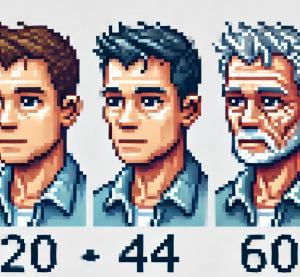
Every minute, an older adult somewhere in the world experiences their first epileptic seizure. And according to new global data, these late-onset cases are rising far faster than we realized.
But here’s the twist: this surge isn’t happening only in the places you might expect, and the reasons behind the rise stretch across biology, systems, and society itself.
Late-onset epilepsy (LOE)—epilepsy beginning at age 65 or older—has long existed in the shadows of neurology research. Yet a new 204-country analysis reveals a startling picture: from 1990 to 2021, LOE prevalence nearly tripled worldwide, reaching 3.57 million older adults in 2021. Incidence climbed too, up 30% after age adjustment. And these increases are happening on every continent.
The Everyday Story Behind a Global Trend
When you think of epilepsy, you may imagine childhood conditions or genetic causes. But in older adults, the story is different—and deeply relatable.
Think of the brain like an electrical grid in a busy city. Over decades, storms (stroke), heat waves (chronic inflammation), faulty wires (neurodegeneration), or aging infrastructure (frailty, multimorbidity) can strain the system. Eventually, one small surge can tip the balance.
That’s what LOE often looks like. The cause isn’t a single point—it’s accumulated life experience embedded in brain tissue.
And the new study reveals something universal: LOE is rising fastest in the very places where lifespans are longest. High-income countries—Japan, Germany, the United States—show some of the steepest increases in late-life incidence. In Western Europe, for example, incidence climbed to 55 cases per 100,000 people 65+. Germany topped the global rankings for the fastest rise in incidence.
Meanwhile, in parts of sub-Saharan Africa, the picture looks different: mortality rates from LOE are 8–10 times higher than in high-income countries. Zambia now leads the world in LOE mortality.
Two continents. Two trends. One common message: LOE is no longer rare—and no region is fully prepared.
A Tale from Three Places: Why LOE Hits Differently Around the World
📍 India: The Urban Stroke Factor
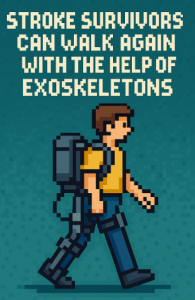
In Mumbai, stroke units are busier than ever. With hypertension and diabetes rising in middle-aged adults, vascular injuries often appear in the late 60s or 70s, and strokes are among the strongest predictors of LOE. Better stroke care means more survivors… but also more people at risk of late-life seizures.
📍 Nigeria: Fragile Systems, Higher Mortality
In rural Nigeria, access to EEG machines and antiseizure medications (ASMs) is limited. Most neurologists work in cities. In many regions, older adults never receive a formal diagnosis at all. The study shows that low-SDI countries have ASMRs that are more than six times higher than those of high-SDI countries. Here, the danger is not just the seizure—it’s the system.
📍 Brazil: Aging Meets Inequality
Brazil is aging quickly. In São Paulo clinics, clinicians report more older adults with seizures linked to dementia or stroke. But across the Amazon or Northeast, delayed diagnosis and stigma slow treatment.
The study found the highest prevalence in Andean Latin America, signaling that the region’s rapidly aging populations are entering unknown territory.
Different roots, same outcome: LOE is rising everywhere, but not evenly.
The Science Behind the Surge
So why exactly are LOE cases increasing?
1. People are living longer than ever.
More years lived → more vascular and neurodegenerative conditions. These conditions significantly elevate seizure risk.
2. Cardiovascular diseases remain a global force.
High blood pressure, diabetes, and atrial fibrillation can slowly injure brain networks. The study suggests many cases are tied to “modifiable mid-life factors” that play out decades later.
3. Diagnostic capacity is improving—at least in some places.
High-SDI countries show the biggest rises in incidence partly because clinicians detect more cases.
4. But diagnosis is uneven.
In low-SDI countries, the problem is the opposite: under-detection and under-treatment push mortality and disability sharply upward. By 2021, the age-standardized DALY rate was 450.85 per 100,000 in low-SDI regions, more than triple that of high-middle SDI areas.
5. Gender patterns add another layer.
Women experienced larger increases in both incidence and prevalence than men, yet men still face higher overall disability and mortality. The biological reasons remain under investigation, but social factors—like stigma in some regions—may also play a role.
But here’s the twist…
The Hidden Inequality Beneath the Numbers
Even though LOE rose everywhere, inequality did not stay the same.
The study tracked two inequality indices and found a slow but measurable narrowing of global gaps. In 1990, the difference in DALYs between the highest- and lowest-SDI countries was 306 DALYs per 100,000 people; by 2021, it had dropped to 224. journal.pone.
The world is getting slightly more equal—but not because high-burden countries are catching up.
Instead, high-income countries are seeing rising LOE rates due to aging, alcohol use, and cardiovascular risks, while low-income countries continue to face high mortality.
It’s a convergence driven by opposite forces. And that means scientists, clinicians, and policymakers face two challenges at once:
- Prevent preventable LOE (by targeting mid-life vascular risks)
- Treat existing LOE more equitably (by improving access to diagnostics + ASMs)
Why This Matters for the Next Generation of Scientists
Whether you work in neuroscience, public health, geriatrics, data science, or community health, this study highlights something fundamental:
Epilepsy is no longer a childhood-centric condition. The future of epilepsy research is geriatric. By 2050, the world’s older population will double. If current trends continue, LOE will become one of the most common neurological disorders of older age.
This means early-career scientists today will be the ones shaping:
- smarter screening tools
- community-based care systems
- age-sensitive ASMs
- AI-driven seizure detection
- integrated stroke-epilepsy care
- global equity frameworks
The question is no longer whether the world is aging—it’s whether our science is aging with it.
Let’s Explore Together
Here are a few questions to spark discussion—and maybe your next research idea:
- How could your country improve LOE detection in rural or low-resource settings?
- If you were designing a study, what mid-life factors would you track to predict LOE decades later?