
Ancient DNA Challenges the ‘Out of Africa’ Theory of Human Origins
In a groundbreaking study, researchers have used genetic data from diverse African populations to rewrite the narrative of human origins, challenging the long-held “Out of Africa” theory.
The Prevailing Theory
For decades, the dominant scientific consensus has suggested that all modern humans trace their lineage back to a single ancestral population in Africa, a concept popularly known as the “Out of Africa” theory. However, this new evidence calls this simplistic view into question.
The New Findings
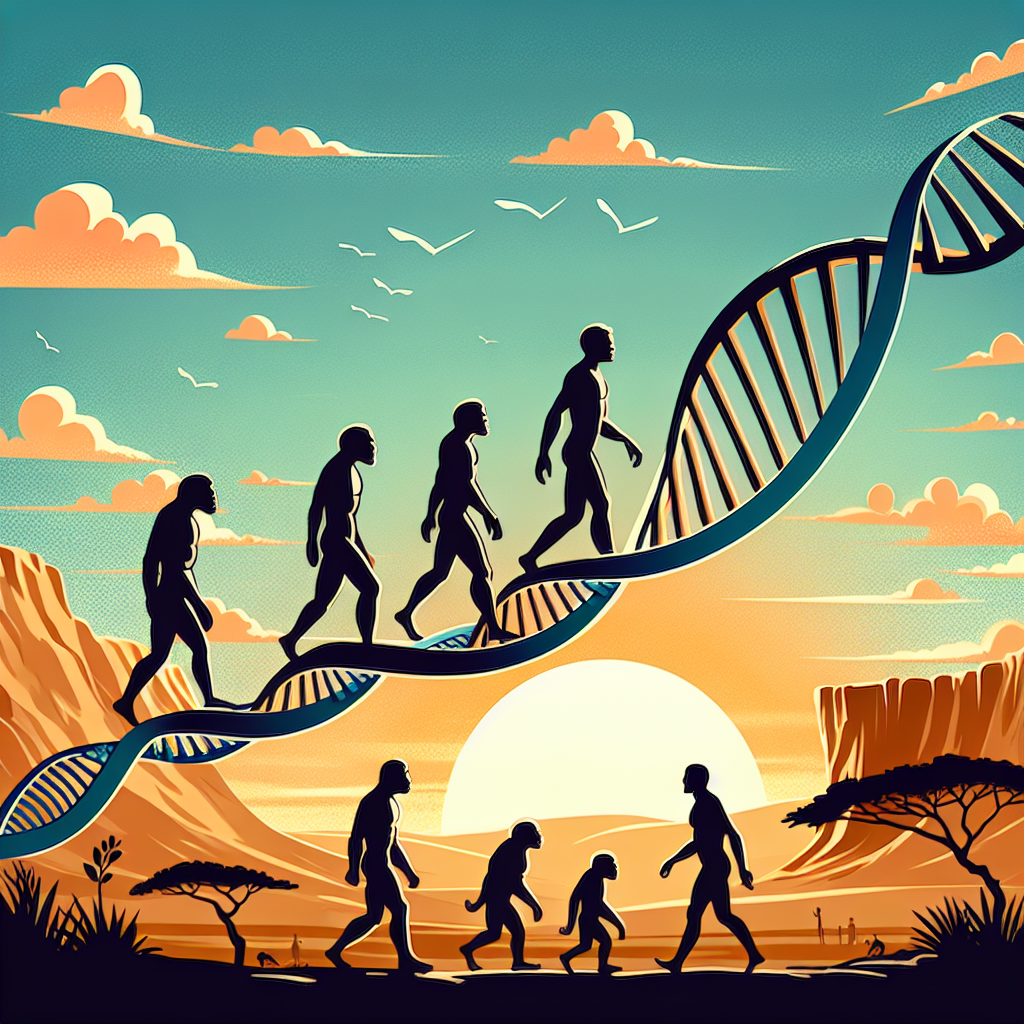
Researchers examined genetic material from various modern African groups, with particular focus on the Nama people, a group with distinct genetic markers. By comparing these genetic data with fossil evidence, scientists found that, rather than a single lineage, early humans likely evolved from several intermingling populations across the African continent over hundreds of thousands of years.
Interconnected Populations
The study suggests that these diverse groups remained interconnected, sharing genes long after they began to diverge, roughly between 120,000 and 135,000 years ago. This finding implies a tangled web of human ancestry rather than a straight line emerging from a singular cradle of humanity.
“It’s a paradigm shift,” said another researcher. “We’re seeing a mosaic of evolution.”
Implications for Human Evolution
This study not only reframes our understanding of human origins but also highlights the importance of genetic diversity within African populations in painting a fuller picture of humanity’s past. It suggests a more distributed network of evolutionary pathways and could spark further research into the genetic contributions of different African regions to human ancestry.
Cultural and Anthropological Context
These findings also underscore the cultural and anthropological richness of Africa, prompting a reevaluation of archaeological records and societal structures from early human history. Understanding how these populations interacted and influenced one another can reshape our perception of the evolution of cognitive and cultural traits in early humans.
Thus, while the new narrative may complicate the straightforward notion of a singular human lineage emerging from Africa, it also enriches the tapestry of our ancestry, reflecting a dynamic, expansive process that drove the development of modern humans.
For further reading, a detailed exploration can be found in the study published in Science Daily.