Powering the Future: Batteries, AI Safety, and America’s Bold Reach for the Stars
This week in science news is a potent cocktail of innovation and aspiration. From ambitious energy plans shaking up Upstate New York to crucial debates over artificial intelligence safety to NASA’s daring new lunar vision, the pulse of progress is unmistakable.
Battery Tech: Upstate New York Charges Ahead
Upstate New York is morphing into America’s battery tech powerhouse. Thanks to a hefty $45 million federal boost for the National Science Foundation’s (NSF) Energy Storage Engine, the region is accelerating its push to lead the next generation of battery innovation. This is phase two of a broader plan that could see up to $160 million funneled into Upstate over a decade. Binghamton University leads this colossal effort, joined by heavy hitters such as Cornell, Syracuse University, and Rochester Institute of Technology.
Their mission? To revolutionize how we store energy from safer, more efficient batteries to advanced manufacturing techniques powered by artificial intelligence.
The buzz isn’t just from scientists and engineers; political champions like U.S. Senator Charles Schumer and Representative Josh Riley are rallying behind the cause. Schumer passionately frames this as a strategic fight to “keep us ahead of China” and create good-paying jobs right on American soil. That’s national pride tossed squarely into the ring with science and industry. The collaboration of over 60 partners, including universities, startups, nonprofits, and government agencies, underscores the magnitude and community spirit behind this bold vision.
What’s thrilling here is the Engine’s dual focus on innovation and workforce development. More than 300 learners, from K-12 students to adults, have already benefited from programs that train talent ready to drive this battery revolution. Soon, Rochester Institute of Technology will launch the Northeast’s first advanced battery safety testing facility, a critical step in ensuring these powerful new systems not only perform but also perform safely.
AI Safety: Navigating the Perils of Superintelligence
As artificial intelligence barrels towards human-level capabilities and beyond, the stakes for getting AI safety right have never been higher. This week’s discourse highlights strides made by industry giants Anthropic, OpenAI, and DeepMind, who are pioneering frameworks to keep AI systems aligned with human values. Anthropic’s “constitutional AI” stands out as a novel concept—eschewing the traditional exclusively human-led oversight in favor of AI models that self-assess and self-correct, guided by a shared code of principles emphasizing honesty, helpfulness, and respect for human autonomy. Early signs are promising, with harmful outputs reduced by up to 60%.
Meanwhile, OpenAI and DeepMind refine reinforcement learning from human feedback (RLHF), scaling it to handle complexities that outstrip human evaluators. Techniques like debate systems and preference distillation reduce the heavy burden of human supervision while maintaining crisp alignment. Moreover, advanced safety measures, including “honesty training” and “capability control,” aim to curb overconfidence, hallucinations, and cultural insensitivity in AI outputs.
This tripartite approach, combining constitutional frameworks, scalable human feedback, and domain-specific safety methods, is smart. It acknowledges that no single silver bullet exists. The path forward demands transparency, continuous monitoring, and cross-organizational collaboration. As AI edges toward artificial general intelligence, safety challenges only deepen, but these initiatives light a hopeful path toward responsible development.
NASA’s Moon Dreams and Nuclear Ambitions

Take Flight NASA is kicking its space ambitions into overdrive, unveiling transformative initiatives that align with the National Space Policy’s bold goals: to return humans to the Moon before the decade’s end, build an enduring lunar base, and spearhead deeper space exploration. At the heart of these developments is a strategic pivot. NASA plans to pause the Gateway space station in its current form and instead focus on surface infrastructure for sustained lunar operations.
They envision regular crewed moon landings initially every six months, built on reusable, commercially procured hardware. The agency is also keen on fostering a vibrant commercial ecosystem in low Earth orbit, transitioning responsibly from the International Space Station’s decades-long reign.
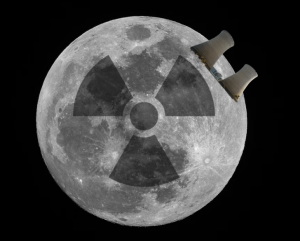
One of the most thrilling announcements is the imminent launch of Space Reactor-1 Freedom, NASA’s first nuclear-powered interplanetary spacecraft, set to head to Mars by 2028. Nuclear electric propulsion promises to revolutionize deep space travel, enabling missions beyond the reach of solar power. NASA Administrator Jared Isaacman’s urgency is palpable: “The clock is running in this great-power competition.” Indeed, these plans read like a high-stakes race, where every technical breakthrough and policy decision counts toward maintaining American leadership in space.
The Takeaway
What ties this week’s stories together is a restless ambition to confront the challenges looming over humanity’s future energy security, the ethical deployment of AI, and cosmic exploration. Upstate New York’s battery revolution could power a cleaner tomorrow while generating thousands of jobs. AI safety efforts show that even as machines grow more capable, we are determined to keep them tethered to human values. NASA reminds us that reaching for the Moon and beyond is not just a dream but a national imperative tied to science, security, and inspiration. In an era where science is often met with skepticism, these developments radiate promise.
They echo a collective commitment across states, industries, and research fields to wield knowledge responsibly and ambitiously. The future is charging up, and it’s electrifying to watch.