Can Roadless Areas Save Wildlife from Collisions?
Did you know, roads carve up 20% of our planet’s land? But what lies beyond these roads can offer wildlife a haven, if we know where and how to protect it.
Picture a small village nestled in a valley, surrounded by patches of woodlands that seem untouched by time. These are ‘roadless areas,’ and a recent study reveals their potential to serve as wildlife shelters, preventing fatal vehicle collisions.
Mapping the Wilderness
A team of researchers, led by Sarah Raymond from Cardiff University, mapped the United Kingdom to identify these roadless sanctuaries. Using OpenStreetMap data, they defined roadless patches as areas beyond a certain distance from roads—specifically 100, 500, and 1,000 meters.
The findings are concerning yet enlightening. Over 93,000 small patches exist, but most are under 1 km2 and highly fragmented, especially in densely populated England. Scotland, with its vast and serene highlands, offers larger refuges.
Wildlife at Risk
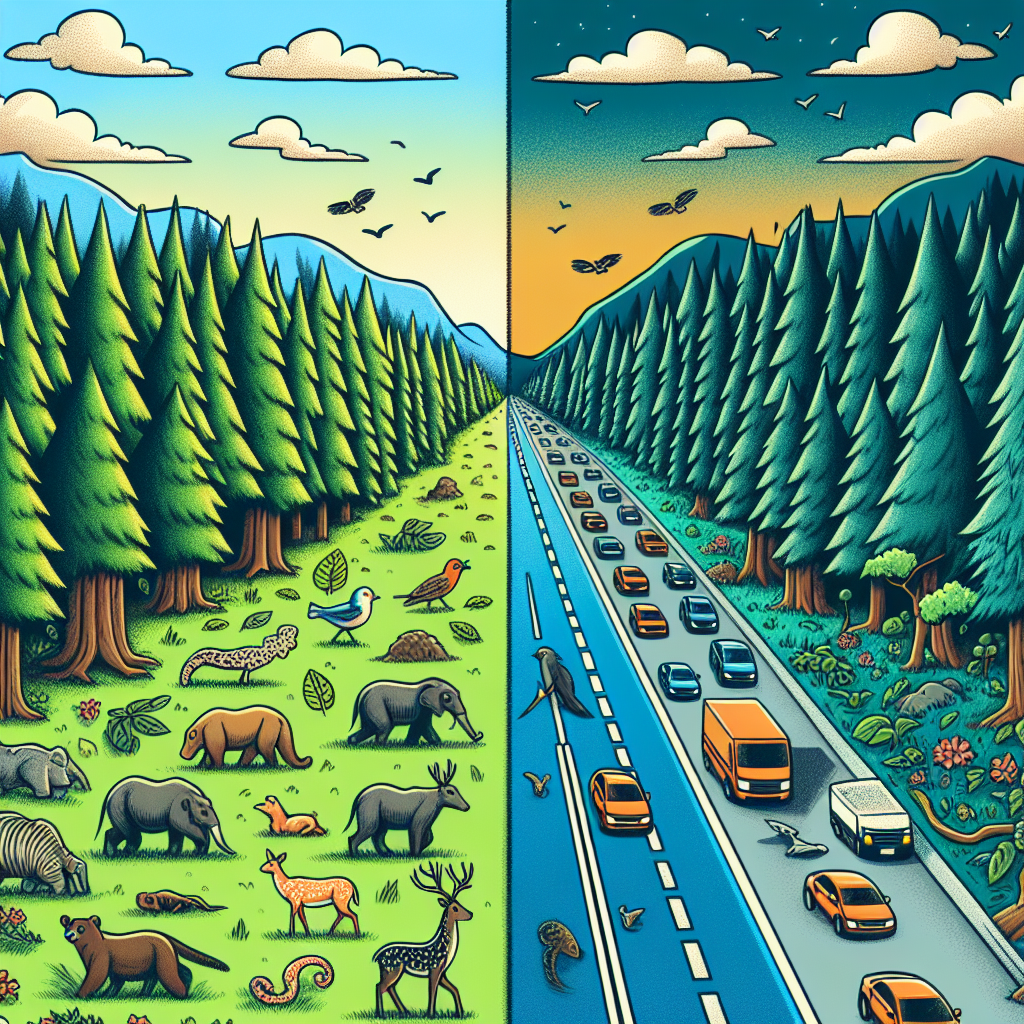
In a world where roads bisect and confine, wildlife faces not just habitat loss but life-threatening road crossings. Consider the European badger, whose home range often exceeds available roadless patches, making them frequent victims of vehicle collisions.
The Hidden Value of Roadless Areas
Roadless areas represent more than mere wildlife refuges. They provide essential ecosystem services, like carbon storage, and act as barriers to invasive species. Despite their importance, nearly half of these areas in the UK are not protected, exposing them to potential exploitation.
Bridging the Gaps
Cultural practices offer a historical insight. Ancient footbridges once connected communities, symbolizing that perhaps, nature, too, needs its bridges restored. In conservation terms, this means linking fragmented patches to turn isolated habitats into interconnected networks. Could this ancient wisdom help guide our conservation strategies today?
The Road to Conservation
Efforts to protect roadless areas could bolster existing conservation networks, much like the flourishing biodiversity in less-traveled territories in Germany and the USA. The UK aims to protect 30% of its land by 2030, and incorporating roadless areas could be key in achieving this.
The Path Forward
The real challenge lies in balancing protection with land use for societal needs. Roadless areas may require new strategies that account for both ecological value and potential land-use conflicts.
This study provides an open map tool for conservationists and policymakers to explore roadless areas, paving the way for future interventions.
Let’s Explore Together
- How can local communities help maintain and expand these roadless areas?
- What role could technology play in monitoring and protecting these vital habitats?
- In what ways could countries adopt policies that safeguard interconnected habitats globally?
Visit the open-access map to uncover areas near you that could become the next wildlife sanctuaries amid urban growth.
For more insights on roadless areas and their potential contributions to conservation, check out the full study here.