
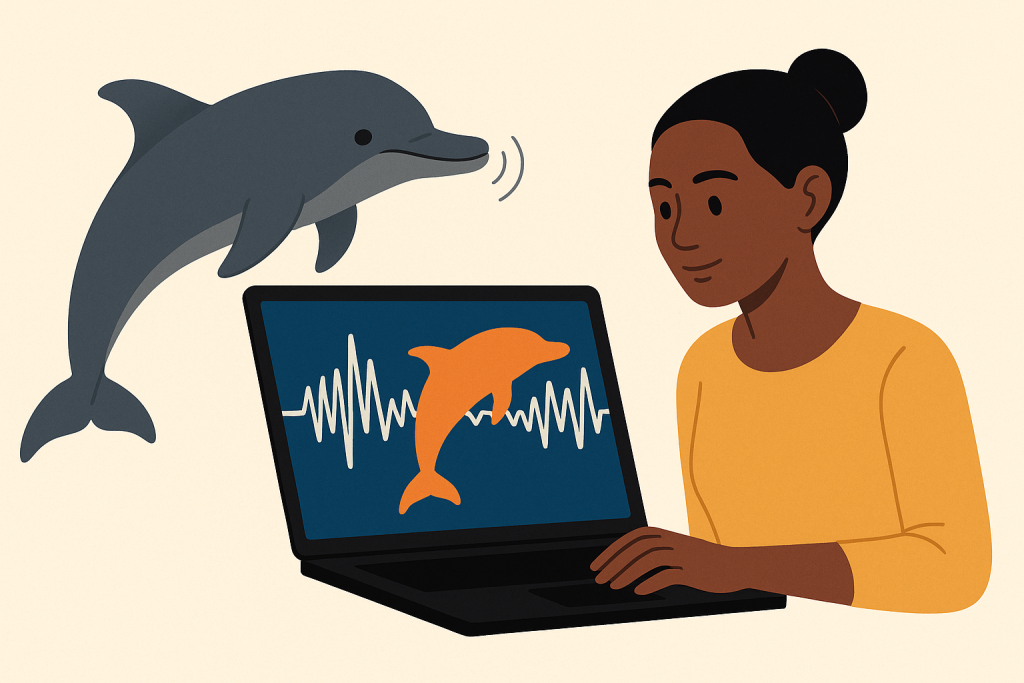
Dolphin Whistle Detection with Deep Learning
On any given day in the Adriatic Sea, a symphony of underwater sounds plays just beneath the surface. Among these are the distinctive whistles of bottlenose dolphins, communicating and navigating their way through a bustling marine world. These whistles might appear to be nothing more than charming signals, but they are essential tools for the dolphins. Now, a new study is uncovering how we can reliably identify these vital sounds using cutting-edge deep learning techniques.
The Puzzle of Dolphin Communication
Bottlenose dolphins possess one of the most complex acoustic repertoires in the marine animal kingdom. Their whistles serve as a crucial mode of communication, especially during social interactions or while coordinating with their pod. If we can reliably detect these whistles, we can learn more about dolphin behavior and even monitor their populations in the wild. But traditional methods of analysis have their limitations, often confounded by background noise and the broad range of vocalizations.
How the Study Was Conducted
In a collaborative study led by Scaradozzi and colleagues, researchers focused on developing a deep learning model that uses convolutional neural networks (CNNs) to identify dolphin whistles. This study uniquely applies the Sobel filter—a tool usually reserved for image processing—to enhance the spectrograms used in the acoustic analysis. These spectrograms visually represent sound frequencies over time, allowing CNNs to ‘see’ the whistles as distinct patterns.
Testing in Diverse Environments
To ensure their model’s effectiveness, the researchers used data from various dolphin habitats, including a controlled marine park and the challenging, noisy real-world environment of the Adriatic Sea. The dolphins in these datasets provided a wide range of vocalizations during different activities, adding robust diversity to the training and testing models.
Findings That Reshape Our Understanding
The study revealed that applying a vertical Sobel filter to spectrograms significantly improved the CNN’s accuracy, boosting performance metrics like accuracy and F1-score beyond unfiltered models. In comparative tests, the Sobel-enhanced models reached up to 90% accuracy in detecting dolphin whistles, outperforming other filtering techniques like CLAHE and Laplacian methods.
Why This Matters
This breakthrough method of detecting dolphin whistles could significantly enhance the way researchers monitor dolphin populations and understand their communications. With increased accuracy and real-time application potential, this model is a promising tool for marine conservation efforts.
What We Still Do Not Know
While the results are promising, there remains a need to test this system across broader conditions and diverse datasets. The study’s models have shown resilience in varying environments, but how adaptable are they to other species or different noise conditions?
Let’s Explore Together
The research poses new questions about how AI can be deployed for wildlife conservation and animal behavior understanding. Could this approach be used for other marine species, or perhaps even terrestrial animals? With dolphins serving as a cerebral anchor, the study prompts further inquiry into AI’s place in ecological monitoring.
Questions for Reflection:
- Could this method apply to other marine animals with distinct vocalizations?
- What technological advancements might further enhance this detection technique?
- How might this research influence global policies on marine conservation?