
From Tiny Brains to Smart Grids: This Week’s Science Hits—Health, Earth, and Computation
Science rarely stays in its lane. One day it’s probing how a human brain “keeps time” in a dish; the next it’s testing algorithms that help solar–wind power stay stable on real grids. This week’s studies span biology, medicine, ecology, engineering, and even how our brains react to “conscious” AI. Read on for why these results matter—and what they actually show. –
Brain Organoids That “Record the Passage of Time”
A Nature study offers a fascinating look at how scientists can model human brain development in the lab. Researchers created human brain organoids—miniature, lab-grown brain tissue—that survived and matured for five years. Over that time, the cells showed molecular changes similar to those seen as the human brain develops and ages.
Even more interesting, when researchers combined young and older cells in the same organoid, the older cells continued developing according to their own biological timeline rather than starting over. This suggests that developing brain cells may retain a kind of “memory” of their age.
Human brain development takes decades, making it extremely difficult to study directly. If brain organoids can accurately reproduce aspects of that biological timeline, scientists could use them to better understand brain development, aging, and neurological disease.
Fetal Programming for Gestational Diabetes: Stronger Signals in Females
Researchers in Tanzania analyzed umbilical cord blood from babies born to mothers with and without gestational diabetes. They examined genetics, gene activity, metabolism, and changes in gene regulation.
One of the clearest findings was a difference between boys and girls. Female newborns showed more molecular signs associated with later diabetes risk, including differences related to insulin, growth, and pancreatic function. Researchers found 273 differences in gene activity among females, compared with just four among males.
Children born after pregnancies affected by gestational diabetes have a higher risk of obesity and type 2 diabetes later in life. This study suggests that some of that risk may already be visible at birth—and that it may develop differently in girls and boys. Understanding those differences could eventually improve how researchers identify and study early metabolic risk.
Imidacloprid and Toxic Stress in Quail—Behavior, Blood, and Partial Mitigation
A Scientific Reports study examined what happens when Japanese quail experience long-term, low-dose exposure to imidacloprid, a widely used insecticide.
Over 12 weeks, exposed birds ate and drank less, moved less, gained less weight, and showed more signs of stress. Researchers also found changes in liver and kidney function, blood chemistry, and nerve tissue.
The researchers also tested whether vitamin B complex could reduce these effects. It appeared to lessen some of the changes, although it did not eliminate them.
This is an animal study, so the findings shouldn’t be directly applied to humans. But it demonstrates why researchers study more than immediately toxic pesticide exposures. Repeated exposure to lower doses may produce subtle effects across behavior, growth, and biological function that only become apparent over time.
Smarter Control for Hybrid Solar–Wind Power—and Cleaner Grid Signals
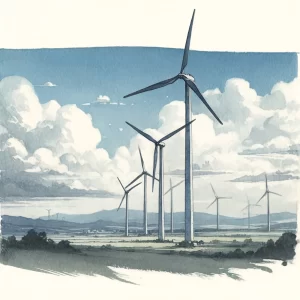
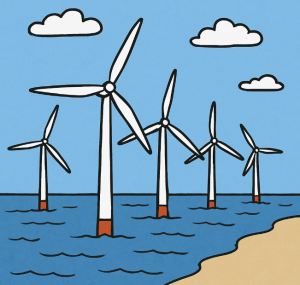
Renewable energy creates a challenge because sunlight and wind can change quickly. Researchers compared three algorithms designed to continuously adjust a hybrid solar-wind system as conditions change.
The algorithms had different strengths. Two responded especially quickly to changing conditions, while another produced smoother, more accurate power output with less fluctuation. Overall, the approaches improved grid stability and power quality.
Adding more renewable energy isn’t just about building more solar panels and wind turbines. The grid also needs to manage their changing output. Smarter control systems could help renewable energy remain stable and reliable even when the weather changes suddenly.
Why These Stories Matter This Week
Across these studies, one idea stands out: science is getting better at measuring complex problems in useful ways.
Researchers are finding signals they can track—from how brain cells develop over time and how diabetes risk may appear at birth, to how pesticides affect animals and how renewable energy systems respond to changing weather.
Together, these studies show how scientists turn complicated questions into things they can observe, measure, and test. That’s an important step toward discoveries that can eventually make a difference in the real world.