
The Strange Science of Army Ant Amputations
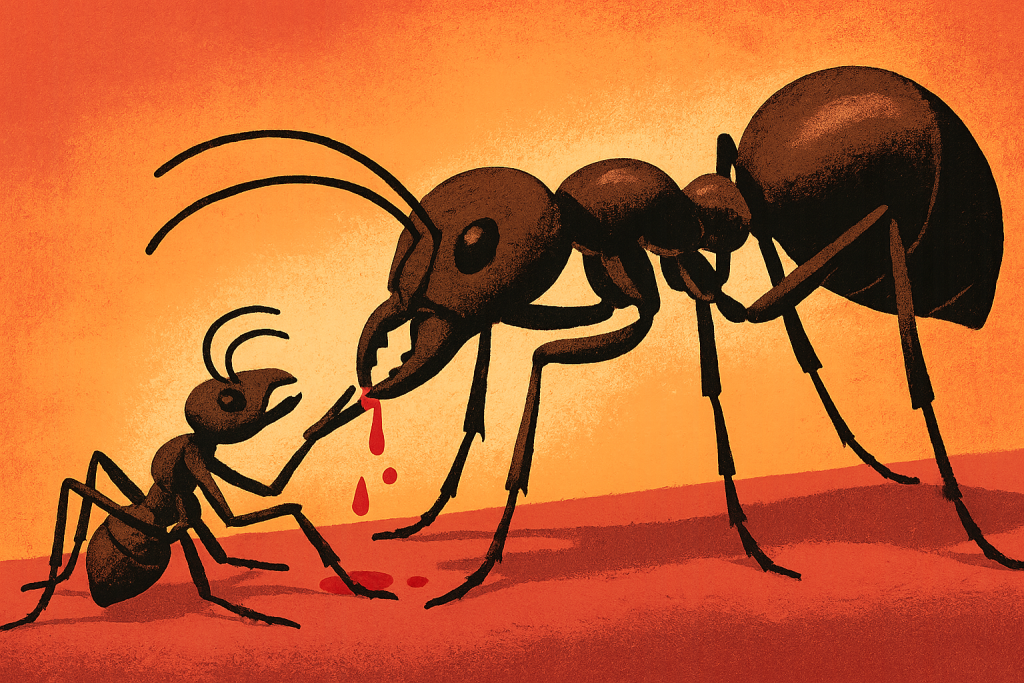
In the swirling leaf litter of the rainforest floor, a bizarre ritual unfolds that could look like an eerie science-fiction scene. Injured army ants, their limbs mangled in battle, are tended to by nestmates with meticulous care. This seemingly counterintuitive behavior—amputating parts of their comrades—raises a provocative question: why would an insect army, renowned for its efficiency, invest in saving and rehabilitating its wounded rather than leaving them behind?
Ants as Tiny Surgeons
Researchers have recently discovered that army ants perform a sort of battlefield surgery. These ants use their mandibles to carefully cut away injured limbs, helping their injured fellows return to productive use. In a world where the smallest inefficiencies can lead to extinction, the time and energy spent on this activity are puzzling.
This discovery challenges long-held assumptions about insect colonies. Unlike typical ant behavior, which emphasizes sacrifice for colony survival, why prioritize the individuals harmed on the field?
Survival Benefits of Amputation?
Researchers suggest the answer may lie in the structure of army ant societies. These ants are nomadic, frequently moving and establishing new colonies. Every member, therefore, is valuable in maintaining this mobile mini-society. Preserving as many functional ants as possible can improve the colony’s overall efficiency and survival odds during relocation.
Amazingly, ants do not amputate arbitrarily. They seem to identify limbs beyond repair and excise them precisely to prevent infection or further hindrance to movement.
Learning from Nature’s Healers
This natural strategy for dealing with injury provides intriguing insights into group dynamics and medical practices. The random-amputation hypothesis is dismissed. What stands out is their methodical, almost clinical approach to surgery.
This might teach scientists about non-human perceptions of pain and trauma and how communal care can reduce broader costs within community systems.
Why This Matters
Army ants have effectively demonstrated a form of triage, prioritizing which patients to treat and how best to ensure survival for the collective group. This is the first recorded instance of non-human organisms engaging in such proactive medical intervention. Such behavior contrasts sharply with survivalist norms in the insect world.
The broader implications also point to complex social structures in nature and life’s adaptability. By studying these insects, researchers gain deeper insights into biological strategies that can inform robotic systems and even human healthcare approaches.
Remaining Mysteries
Much remains to be explored about this remarkable behavior. Questions linger about how ants determine which individuals come under surgical care and what chemical signals might be involved.
As scientists delve deeper, they aim to shed light on how these micro-surgeons developed such a sophisticated system, offering unexpected glimpses into life’s fascinating complexity.
In the mysterious world of army ant societies, one thing is certain: even the smallest creatures can challenge our understanding of cooperation and survival, reminding us that all life, regardless of size, has intricate adaptations that make us rethink the very boundaries of nature and nurture.
Build Your Own Science Issue
Tell us what fascinates you. We’ll search today’s science and build a personalized issue just for you.
Your science issue is being built.
We’re searching today’s research for stories that match your interests. Your personalized issue will arrive in your inbox shortly.
Something went wrong.
We couldn’t build your issue right now. Please try again in a moment.