
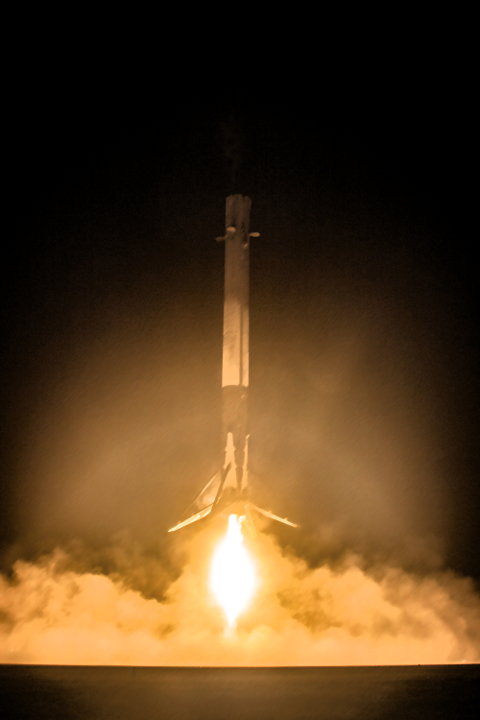
SpaceX’s Big Week in Orbit: Why Starship Flight 14 Matters for the Future of Space Travel
For years, Starship was mostly a promise: a giant stainless-steel rocket meant to carry satellites, cargo, and eventually people farther into space. In late September, that promise crossed an important line. SpaceX said Starship Flight 14 became the company’s first orbital Starship flight and its first mission to deliver a meaningful payload to orbit, including 26 Starlink V3 satellites.
That makes this more than just another launch. It marks a shift from testing a huge rocket to using it for real work in space. And that shift helps explain why SpaceX keeps drawing so much attention. The company is not focused on a single breakthrough. It is pushing on several fronts at once: giant rockets, steady space station supply runs, and a launch schedule that keeps rockets flying at a striking pace.
Starship reached a milestone SpaceX has been chasing for years
According to SpaceX, Starship Flight 14 launched on September 28, 2026 and became the first orbital Starship flight. It also carried 26 Starlink V3 satellites, making it the first Starship mission the company described as delivering a meaningful payload to orbit.
Reaching orbit is one challenge. Doing useful work once you get there is another. A rocket becomes far more important when it can carry equipment that supports communications, science, or exploration.
Think of it like the difference between building a powerful truck engine and actually loading the truck with cargo for a real trip. Flight 14 suggests Starship is moving from the engine-test phase toward the cargo-hauling phase.
Why getting payload to orbit changes the story
Space travel depends on lifting mass out of Earth’s gravity well, which takes enormous energy. The bigger and more capable the rocket, the more it can carry in a single launch. That can mean more satellites, bigger spacecraft parts, or supplies for missions farther from Earth.
By putting Starlink V3 satellites into orbit on Starship, SpaceX linked its giant rocket to a practical task: deploying hardware that supports a working satellite network. That is a strong sign of how the company may use Starship in the future, not just as a symbol of ambition, but as a transportation system.
If Starship continues along that path, it could reshape how space missions are planned. Bigger payloads can reduce the need to split equipment across many launches. They can also open the door to spacecraft designs that are less constrained by size.
While Starship grabs headlines, Dragon keeps doing the dependable work
At the same time, SpaceX’s more established spacecraft continue handling critical missions. On October 13, 2026, NASA and SpaceX launched the 35th Commercial Resupply Services mission to the International Space Station. The Dragon capsule carried science, supplies, and equipment to the station, and NASA said it was scheduled to return in mid-November with research and cargo.
Space exploration is not only about giant new rockets. It also depends on reliable systems that deliver food, tools, experiments, and replacement hardware to astronauts in orbit.
Dragon shows what mature space transportation looks like: regular missions, clear jobs, and a direct role in supporting science. While Starship represents the future SpaceX wants to build, Dragon represents the operational backbone the company already has.
A fast launch tempo shows how much the company can juggle at once
SpaceX’s launch calendar also points to another reason the company stays in the spotlight: cadence. In November 2026, SpaceX listed USSF-627 and USSF-317 as upcoming Falcon 9 missions from California on November 10 and November 13.
Spaceflight is not only about designing rockets, but also about running an industrial system that prepares launch vehicles, coordinates missions, and keeps teams moving from one launch to the next.
A high launch tempo can make space access feel less like a rare event and more like a regular service. That may be one of the biggest changes SpaceX has helped drive in modern spaceflight. Rocket launches still look dramatic, but they are increasingly part of a repeated rhythm rather than isolated spectacles.
The future of Starship is not just engineering. It is also regulation.
Even major technical progress does not put a rocket on an unlimited path forward. The Federal Aviation Administration is still managing key regulatory processes related to Starship operations in Texas, including a public-comment period on expanded Boca Chica launch and landing operations that was extended to December 7, 2026.
This is an important reminder that modern spaceflight runs on more than engines, fuel, and software. It also depends on environmental review, public input, and government oversight. As rockets grow larger and launch more often, those questions become part of the technology story too.
In other words, building a powerful spacecraft is only one piece of the puzzle. Scaling it into a routine system means solving technical, logistical, and regulatory challenges at the same time.
Why this moment matters for the bigger future of space exploration
SpaceX is interesting right now because it sits at a crossroads between present-day operations and future ambition. Dragon is already serving the space station. Falcon 9 continues flying frequently. And Starship, after Flight 14, looks more like a vehicle entering a new stage of usefulness.
That does not mean the biggest dreams of deep-space travel arrive overnight. But it does mean one of the central ideas behind Starship just became more concrete: a very large rocket can do more than test flights and dramatic demonstrations. It can begin carrying real payloads into orbit.
That kind of change can ripple outward. Bigger launch capacity can affect satellite networks, cargo delivery, mission design, and eventually how humans plan journeys beyond low Earth orbit.
For curious readers, that is the real reason “SpaceX” keeps trending. It is not just about one company or one launch. It is about watching spaceflight evolve from rare heroic missions into a transportation system that is becoming larger, faster, and more routine.
The takeaway
Starship Flight 14 did something simple but important: it made Starship look less like a future concept and more like a working orbital vehicle. Paired with steady Dragon resupply missions and a rapid Falcon 9 launch schedule, it shows a company trying to build the next era of space travel while still running the current one.
If that effort succeeds, the most exciting part may not be a single spectacular launch. It may be the moment giant rockets, orbital cargo, and frequent missions start to feel normal.
Build Your Own Science Issue
Tell us what fascinates you. We’ll search today’s science and build a personalized issue just for you.
Your science issue is being built.
We’re searching today’s research for stories that match your interests. Your personalized issue will arrive in your inbox shortly.
Something went wrong.
We couldn’t build your issue right now. Please try again in a moment.
References
NASA: Science cargo launch on 35th SpaceX resupply mission to station