Bear Baiting Can Backfire on People and Wildlife
Every year, people are told never to feed wild animals. But in some places, we do it on purpose. A new study shows that this contradiction may be quietly increasing risks for both humans and bears.
In parts of North America, especially Alaska, hunters are legally allowed to use large piles of food to attract bears. The practice is called bear baiting. To many, it sounds like a technical hunting detail. To wildlife experts, it looks a lot like something they spend their careers trying to prevent.
A Simple Idea With Complicated Consequences
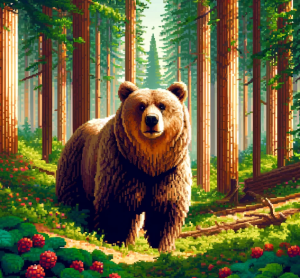
Picture a remote forest trail. It could just as easily be in Alaska as in northern India or rural Brazil. Hikers, berry pickers, hunters, and families all share the same landscape. Now imagine a hidden site nearby stocked with hundreds of pounds of dog food, pastries, grease, or animal carcasses. Bears find it. Bears remember it.
This study, published in PLOS ONE, asked a simple but powerful question: What actually happens when bears are intentionally fed to make them easier to hunt? To answer it, researchers didn’t run risky experiments. Instead, they turned to something just as valuable—decades of expert experience in a journal.
The “Aha” Moment: Feeding Is Still Feeding
The researchers surveyed 41 bear experts from across North America, including wildlife managers and scientists with a combined total of hundreds of years in the field. Many had worked directly with bears that injured people or had to be killed.
Their conclusion was strikingly consistent.
Most experts agreed that bear baiting is functionally the same as feeding bears. When bears find food placed by humans, they do not see it as a neutral object. They see it as a resource worth defending.
Think of it like leaving a single water well in a dry village during a heatwave. Crowds gather. Tension rises. Conflict becomes more likely.
Bears Don’t Separate “Hunters” From “Everyone Else”
Bears are intelligent and extremely food-motivated. When they repeatedly find food associated with human activity, they start associating people with meals. This process is called food conditioning.
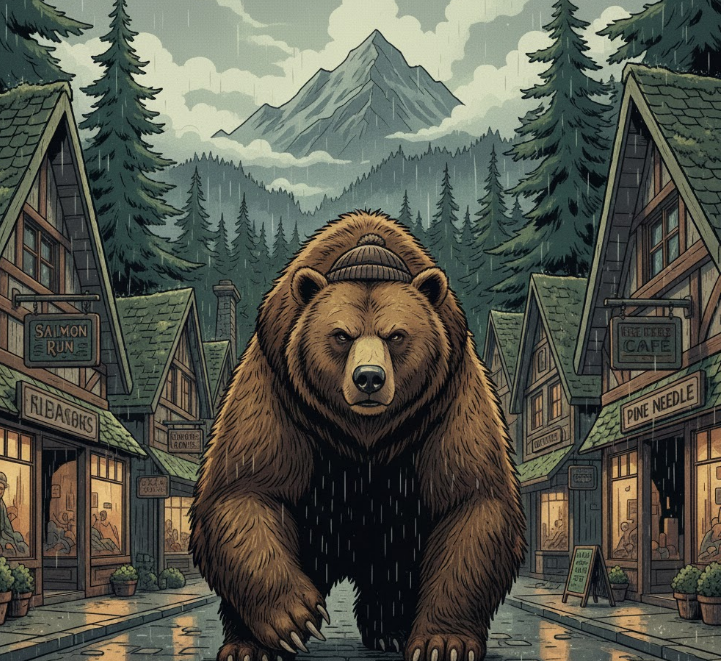
Once conditioned, bears don’t stop at bait stations. They may approach campsites, cabins, fishing areas, or villages. In Alaska, experts say this increases the chance that bears will be killed in so-called “defense of life or property” situations. These are bears shot not for food, but because they became too dangerous.
We thought distance rules would solve this problem. But the data say otherwise.
Why Safety Buffers Don’t Work as Planned
Current rules often require bait sites to be placed a certain distance from roads, trails, or homes. On paper, that sounds reasonable.
In reality, most experts surveyed said these buffers do not eliminate risk. Bears can roam widely. People move unpredictably. And bait sites often require repeated human visits to restock food.
One wildlife manager compared it to placing a magnet in a crowded area and hoping no metal objects come near. The risk doesn’t stay contained.
It’s Not Just Bears Who Show Up
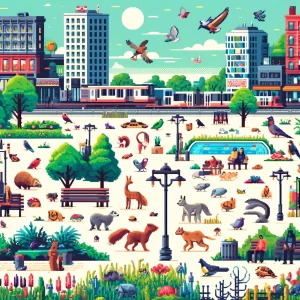
Camera studies show that bait stations attract many non-target animals—wolves, birds, small mammals, even species that were never meant to be part of the hunt. These animals consume highly processed human foods that can disrupt their diets and gut health.
In other words, baiting doesn’t just affect one species. It reshapes local ecosystems in subtle but lasting ways.
And this effect doesn’t disappear when the hunting season ends.
A Global Lesson About Human–Wildlife Boundaries
You don’t need bears to see the relevance of this study.
Across the world, humans are reshaping animal behavior through food—intentionally or not. Urban monkeys in India, street dogs near markets, or birds around landfills all show similar patterns. When animals associate people with food, conflict increases. And animals usually pay the price.
The experts in this study weren’t arguing about tradition or hunting rights. They were pointing to a deeper issue: when management goals conflict, science should clarify the trade-offs.
The Twist: This Risk Is Preventable
The researchers emphasize that these dangers are not mysterious or inevitable. Wildlife agencies already know how to reduce human–animal conflict: limit access to human food, avoid conditioning, and manage shared spaces carefully.
The tension arises when different institutions prioritize different outcomes—some focus on maximizing hunting opportunity, others on public safety and natural behavior. This study helps make those trade-offs visible. And visibility is the first step toward better decisions.
Why This Matters for Early-Career Scientists
If you are studying ecology, public health, urban planning, or environmental policy, this research offers a powerful reminder: science doesn’t just discover facts—it reveals consequences.
This paper didn’t rely on high-tech sensors or massive datasets. It relied on listening carefully to people who have seen the outcomes again and again. That approach is especially valuable in places where experiments are impossible or unethical.
Let’s Explore Together
- Could similar food-conditioning risks be happening with wildlife in your community?
- If you were part of this research team, what data would you want to collect next?
- What everyday human behavior do you think science most urgently needs to rethink?
Science is not just about understanding the natural world. It’s about understanding our role in it—and deciding what kind of neighbors we want to be.