
Woven Metamaterials: A New Realm of Flexibility and Strength
Could a simple twist of fibers revolutionize the material industry? Recent research suggests that 3D woven metamaterials may hold the key to unprecedented strength and flexibility, potentially transforming industries from aerospace to biomaterials.
Imagine weaving a delicate basket. As fibers intertwine, the structure becomes stronger and more flexible. This age-old technique is inspiring new materials at the microscopic level, offering solutions to modern challenges.
Unraveling the Science
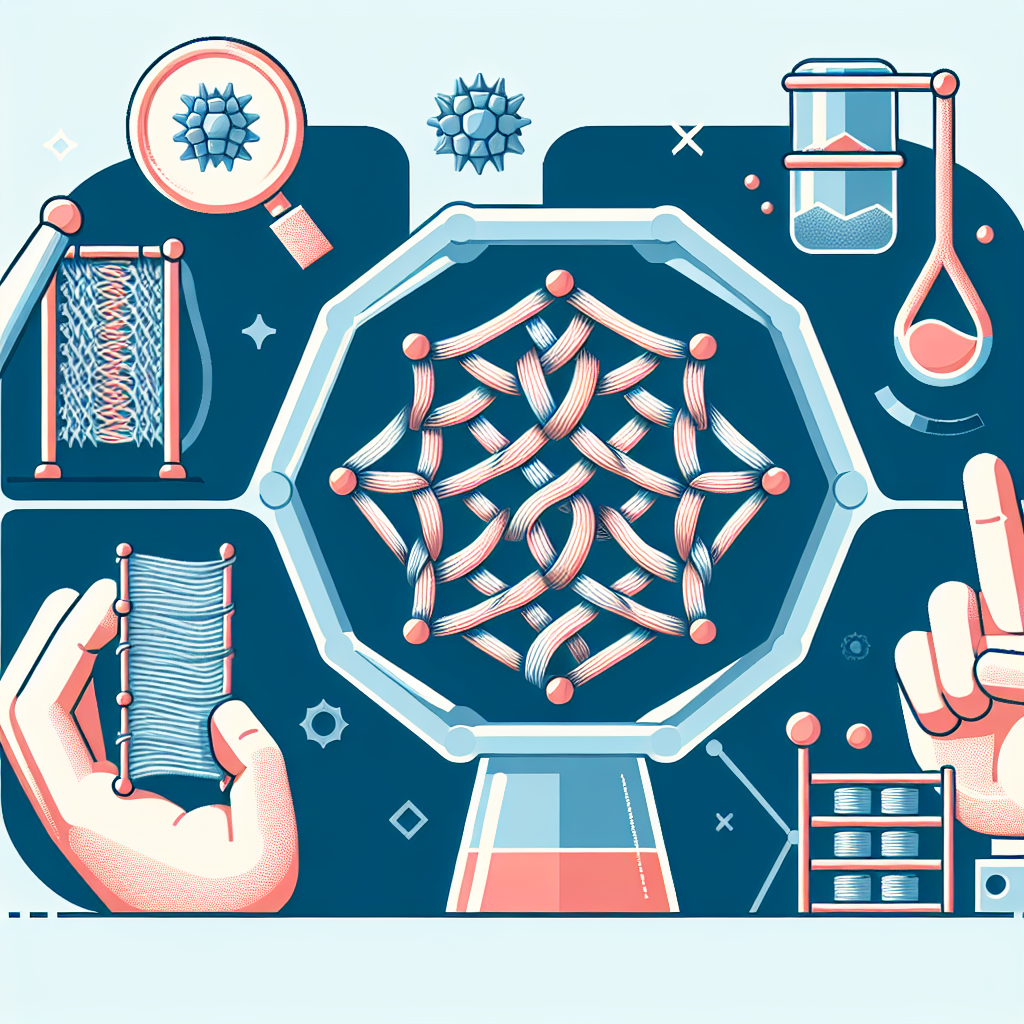
Researchers led by Molly Carton and colleagues introduced a design framework for 3D-woven metamaterials. The secret lies in a clever geometric strategy using a graph structure to encode woven topologies. This method allows for extraordinary control over how materials deform and break, tailored to specific needs. The study was published in Nature Communications.
The Aha Moment
The team realized that by manipulating the tightness and pattern of the weave, they could create materials that were not just strong but also incredibly flexible. This insight came from microscale tension experiments, in which varying the weave’s parameters produced responses ranging from brittle to ductile, illustrating control beyond traditional rigid forms.
Why This Matters
In many low- and middle-income countries, the challenge of finding materials that can withstand harsh conditions is significant. These woven metamaterials could lead to more resilient building materials, essential in areas prone to natural disasters. Their flexibility allows them to absorb energy, much like shock absorbers, making them ideal for infrastructure that must withstand earthquakes or adverse weather.
But here’s where it gets interesting: these materials don’t just resist breaking—they can be programmed to deform in specific ways. Think of a car bumper made with woven lattices that absorbs impact without shattering, thus protecting passengers.
Opening New Doors
Beyond practical uses, why is this exciting for the global scientific community? The method introduced is not locked behind expensive equipment or materials. With the right tools, researchers worldwide can adopt and adapt the approach, exploring endless applications. From creating artificial muscles in robotics to scaffolds in tissue engineering, the potential is vast.
Keeping Curiosity Alive
Woven metamaterials could soon become the building blocks of future technologies. What’s more, this research opens questions about how we might design even more responsive materials.
Spark the Conversation
Let’s explore together:
- Could this idea work in your community? Where do you see flexible and strong materials making the most impact?
- If you were on the research team, what experiment would you conduct next?
- What everyday problem do you wish science could solve with new material technology?
The story of woven metamaterials is just beginning. Whether in a rural village or bustling city, their impact promises to be as diverse as the people who will use them. Share your thoughts, and let’s shape the future together!