
What Are Positrons and How Are They Helping Research?
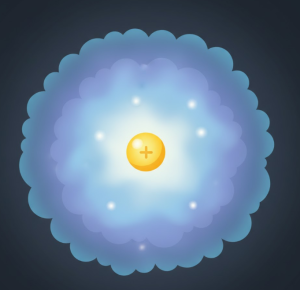
Positrons are tiny particles that are very similar to electrons. Or maybe very different?
The main difference is that electrons carry a negative charge, whereas positrons carry a positive charge. When a positron meets an electron, they can cancel each other out in a process called annihilation, releasing energy in the form of gamma rays. This unique behavior makes positrons very interesting for scientific research.
Positrons in Everyday Science
Even though positrons are not something you see every day, they play a big role in many important studies. Scientists use positrons in a variety of ways, such as:
- Studying Antimatter: Positrons are a key part of antimatter. When a positron pairs with an electron, they form a special kind of atom called antihydrogen. Recent experiments have trapped thousands of antihydrogen atoms using cooled positrons. This helps scientists learn more about the differences between matter and antimatter, which could reveal secrets about the origins of our universe.
- Industrial Imaging: Positrons are also used in positron imaging. Researchers have been developing new techniques using computer algorithms and deep learning to produce clearer images of the interiors of objects. This method is useful in non-destructive testing, where examining a material without breaking it is essential. Improved imaging can help in fields such as quality control in manufacturing or evaluating structures without damaging them.
Recent Research Involving Positrons
Recent research has shown exciting developments in how we can use positrons:
- A study demonstrated an innovative method to improve the quality of images produced by positron beams. By using a computer program that learns from data (a generative adversarial network), researchers achieved improved image clarity even when little data were available. This technology can be highly useful in industrial applications where detecting small defects is critical.
- Another trailblazing experiment confined more than 15,000 antihydrogen atoms using cooled positrons combined with laser-cooled beryllium ions. This large-scale trapping of antihydrogen is a significant step forward in antimatter research, as it allows scientists to conduct more precise measurements and tests to determine whether matter and antimatter behave identically.
Why This Research Matters
Understanding positrons and their behavior is more than just a cool science fact. These studies help us:
- Explore the fundamental differences between matter and antimatter to deepen our understanding of the universe.
- Develop new imaging technologies that can improve safety and innovation across several industries.
As research with positrons continues, we can expect further breakthroughs that could lead to advances in medical imaging, materials testing, and our understanding of the universe itself.
By digging into the world of positrons, scientists are not only unraveling the mysteries of tiny subatomic particles but also paving the way for exciting new technologies in everyday life.