Unearthing Bronze Age Secrets in Europe
In the rolling hills of Central Europe, the echoes of the Late Bronze Age are being brought to life through groundbreaking research that paints a vivid picture of our ancestors. Over 75 ancient humans, found in this region famous for its intense cultural transformations, are now offering us a genetic roadmap to understand who they were and how they lived.
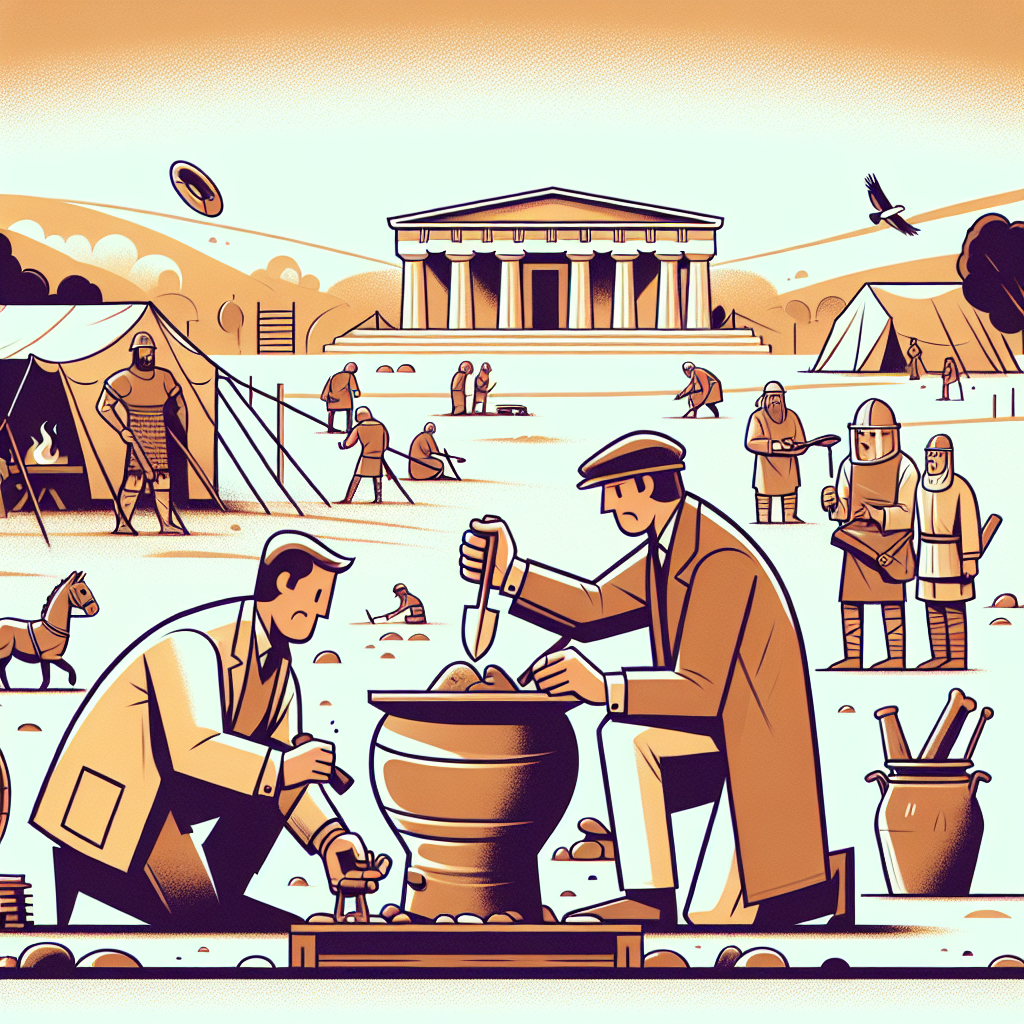
This is no ordinary story. Like a treasure hunt, archaeologists and geneticists have combined forces to peer into the distant past using every tool at their disposal—ancient DNA, isotopes, and archaeological analysis. The results are as thrilling as they are enlightening.
From Fields to Laboratories: Connecting the Dots
The Late Bronze Age, spanning from about 1300 to 800 BCE, was a period of significant transformation in Central Europe. During this time, advances in metalworking technology led to more efficient production of tools, weapons, and ceremonial objects, which in turn reshaped trade networks and social hierarchies. Expanding long-distance exchange connected communities across vast regions, spreading not only goods such as amber and bronze but also new cultural practices and artistic styles. These developments laid important foundations for the political and economic systems that would emerge in the early Iron Age.
The study of mortuary practices, often hindered by the prevalence of cremation, which leaves little trace for DNA extraction, gets a boost from the examination of rare inhumation sites. Sites like Kuckenburg and Esperstedt in Central Germany, alongside southern counterparts in Bohemia and Poland, become pivotal in this research.
These sites don’t just reveal bodies, but stories. The genomic profiles extracted reveal a thrilling picture of continuity and change. There’s genetic continuity from the Early Bronze Age, yet there’s also a fascinating increase in farmer-related ancestry over time, hinting at waves of migration and cultural exchanges. Imagine walking through a marketplace today and hearing a dozen languages spoken—this was the dynamic, interconnected world of ancient Europe.
Aha Moments in Ancient Bones
What makes this research remarkable is how it connects DNA to real-world scenarios. The careful work of decoding DNA strands led to an ‘aha’ moment: most ancient individuals were locals, as confirmed by strontium-isotope analyses matching local geological signatures. However, outliers—those with different isotopic fingerprints—hint at mobility and long-distance connections. It’s like detecting accents in a foreign city, each one hinting at a different journey.
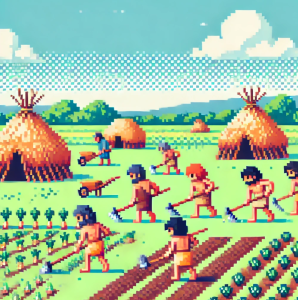
Beyond genetics, isotopic studies delve into the dietary habits of these ancient Europeans, revealing their reliance on different crops over time. As the climate changed, so did their menus, from millet in one era to wheat and barley in another—a survival tale written on the bones themselves.
The Real-Life Impact
For communities worldwide, especially in regions undergoing rapid change today, understanding these patterns resonates deeply. Just as these ancient communities responded to climate variability with agricultural shifts, modern communities might find inspiration in adapting their strategies for resilience.
Moreover, appreciating the diverse practices within ancient populations, from burial rituals to societal roles, offers a reminder of the cultural richness and adaptability that have defined human societies over millennia.
Keeping the Story Going
With each bone extracted, each DNA sequenced, the story grows richer, rekindling our connection to an ancient world. One can’t help but wonder: what other secrets lie beneath the soil? How do we continue to learn and integrate such findings to enhance our understanding of human history and identity?
Let’s Explore Together!
This research is not just for scholars; it’s for communities yearning to connect with their past and draw lessons for today. How do these findings challenge or affirm what you know about human migration and adaptation? What can your own community learn from these ancient strategies in facing modern challenges?
The world is curious, and so are we. Join the conversation, reflect, and share these unfolding mysteries of our shared human journey.
For more details, jump into the comprehensive research at Nature Communications.