
Multimodal Data Predicts Sleep Quality in Basketball Athletes
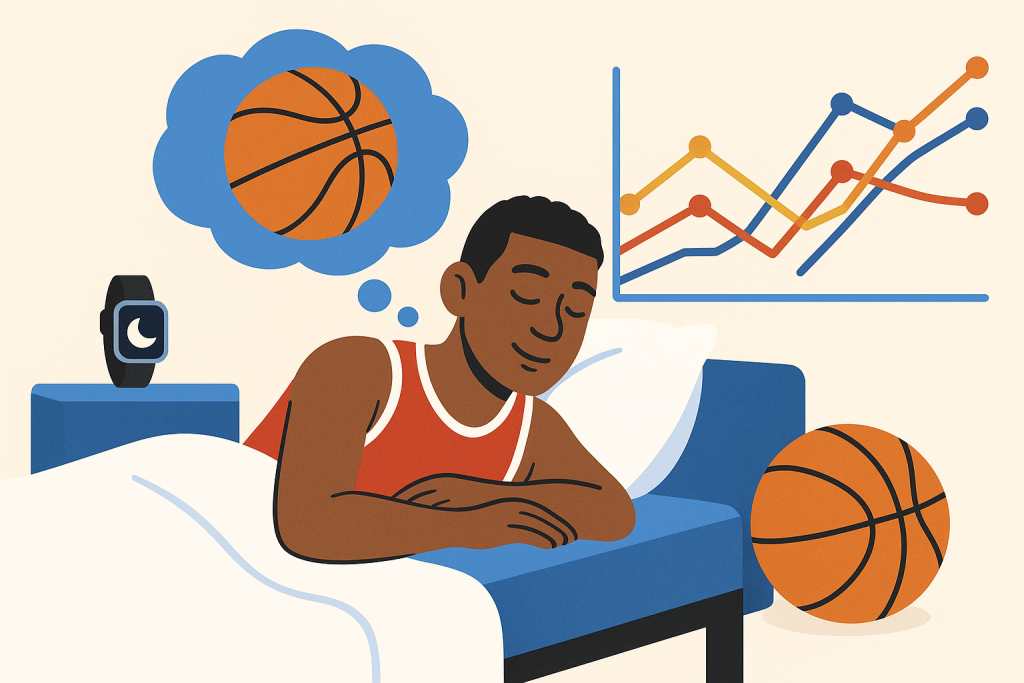
Picture this: a college basketball player, exhausted from a grueling day of classes, practice, and games, beset by the pressures of performance. They lie awake in bed, tossing and turning, as their minds race through plays, academics, and social commitments. The next day, their coach wonders why the athlete looks sluggish on the court. The answer might be found in a sophisticated model, powered by data from across the player’s life.
Researchers have tackled the age-old question of how to predict and improve sleep quality in athletes—a task that’s as challenging as the sports they train for. A new study has developed a deep learning framework that uses a unique blend of physical, psychological, and sociodemographic data to gain insight into athletes’ sleep patterns, particularly college basketball players.
The Science of Sleep Quality
The problem is clear: traditional methods of assessing sleep quality in athletes often miss crucial factors. Sleep quality is a complex trait influenced by both physical fitness and mental health. But until now, methods for predicting sleep quality have been simplistic, focusing on limited or isolated measures.
This new study ventured into advanced machine learning, applying a model capable of evaluating data from multiple domains. The researchers collected extensive data on university basketball players, including physical fitness markers such as BMI, psychological metrics such as anxiety and stress levels, and sociodemographic details.
What They Did
To predict sleep quality, researchers employed an attention-based Multilayer Perceptron (Attention-MLP) alongside traditional models such as Logistic Regression and Random Forest. The data included standardized fitness tests and psychological scales, with sleep quality assessed via the Pittsburgh Sleep Quality Index (PSQI). They processed this data using one-hot encoding and z-score normalization to feed their models.
Surprising Findings
The Attention-MLP emerged as the frontrunner, with an accuracy of 73.2% and a notable ability to unearth intricate feature interactions. Among the data points, BMI and anxiety stood out as significant predictors of poor sleep quality. Yet, not all was ideal—the model struggled to accurately classify athletes falling into the ‘moderate’ sleep-quality category.
Why This Matters
This work is more than an academic exercise. Adequate sleep is vital for athletes, enhancing recovery, sharpening focus, and mitigating the risk of injury. By improving how we predict and address sleep issues, this model can potentially help coaches tailor training plans, enabling athletes to both perform at their peak and maintain their health.
Beyond athletics, these findings highlight a broader message about health management. In environments beyond sports, integrating multimodal data could transform how we predict health outcomes and personalize treatments, particularly in resource-constrained settings where comprehensive monitoring tools are unavailable.
What We Still Do Not Know
However, questions remain. The study was limited in scope, focusing only on basketball players in China, and used a relatively small sample size. The model effectively predicts risk but can’t diagnose sleep disorders. Furthermore, the impact of behavioral factors like diet and daily activity rhythms wasn’t assessed, leaving room for improvement and expansion.
Let’s Explore Together
This blend of data-driven insights and human health raises questions beyond basketball courts and sports fields. How could similar models transform health predictions in schools or workplaces worldwide? What would it take to incorporate broader data sets, including environmental and lifestyle factors?
The journey of discovery in science is ever-evolving. Comfortable in our ever-digital lives, perhaps we, too, can learn from these insights about our own sleep and health.
- How might this model be adapted for non-athlete populations?
- Could a similar approach help address other health challenges in under-resourced areas?
- What other unexpected predictors of sleep quality might be uncovered through multimodal data?
For more details, see the original study: Sleep quality prediction in basketball athletes using a deep learning framework.