The Mandela Effect: Why Millions Remember Things That Never Happened
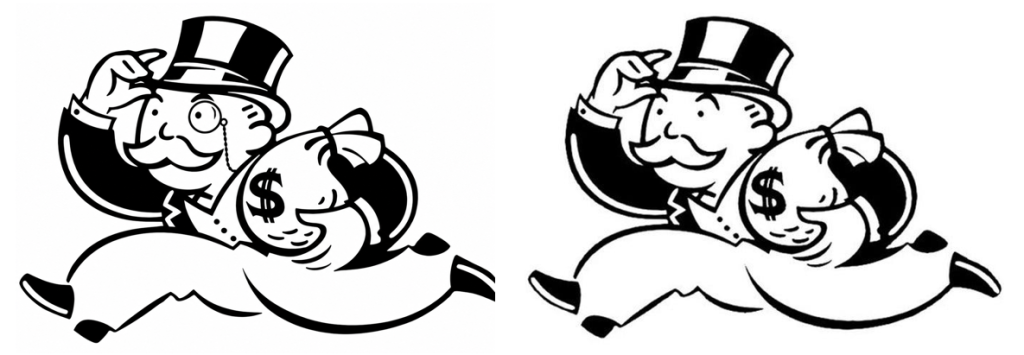
If you picture the Monopoly mascot wearing a monocle, you’re in good company.
The same thing happens with Pikachu, who is often remembered as having a black-tipped tail despite never having one. Countless adults insist they grew up reading the “Berenstein Bears” rather than the Berenstain Bears. One of the most quoted movie lines in history—”Luke, I am your father”—was never actually spoken in Star Wars. The real line is, “No, I am your father.”
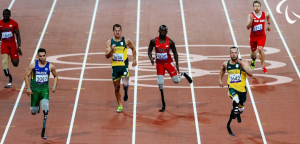
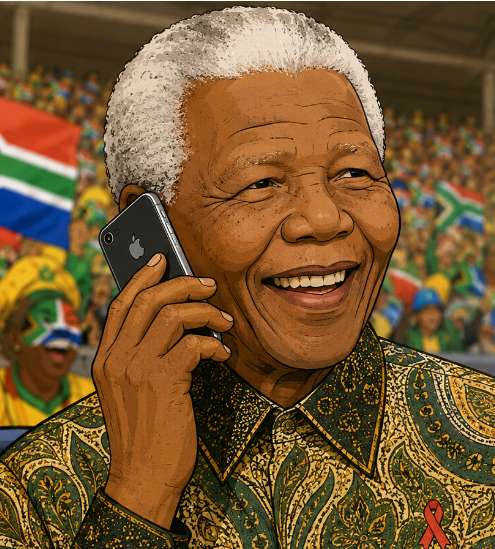
These examples have collectively come to be known as the Mandela Effect, a term coined after paranormal researcher Fiona Broome reported in 2009 that she and many others vividly remembered Nelson Mandela dying in prison during the 1980s. In reality, Mandela was released in 1990 and died in 2013.
For some, these shared memories became evidence of alternate timelines, parallel universes, or glitches in reality itself.
For scientists, however, the phenomenon raises a different and arguably more interesting question. Why do large groups of people remember the same incorrect detail in the same way?
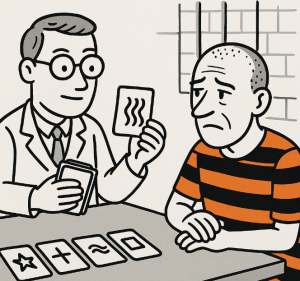
Psychologists have known for decades that memory is fallible. People forget names, misremember events, and confidently recall details that never occurred. The real puzzle is not that memory fails. The puzzle is why many people fail in the same direction, converging on the same mistaken recollection with remarkable confidence.
While the term “Mandela Effect” is relatively new, the scientific foundations used to explain it are not. Research spanning reconstructive memory, misinformation effects, source-monitoring errors, social contagion, collective memory, and belief formation provides a surprisingly coherent explanation for why shared false memories emerge.
The most important scientific insight is that the Mandela Effect is not explained by a single mechanism. Rather, it appears to emerge from the interaction of multiple well-established cognitive and social processes that can transform ordinary memory errors into widely shared recollections.
To understand how that happens, we first need to understand what memory actually is.
Why Memory Is Not a Recording
Most people intuitively think of memory as a storage system. An event occurs, the brain records it, and later we retrieve the recording.
Modern cognitive science paints a different picture.
Psychologist Endel Tulving described episodic memory as the system that allows us to mentally revisit past experiences. Yet decades of research suggest that this process is not equivalent to replaying a video file. Rather, memories are reconstructed from stored fragments of information, meaning, context, and emotion.
This idea sits at the center of what psychologist Daniel Schacter and colleagues termed constructive memory. Human memory is remarkably efficient precisely because it does not preserve every detail of every experience. Instead, it extracts patterns, meanings, and relationships that help us navigate future situations.
The tradeoff is that reconstruction creates opportunities for distortion.
One influential framework, known as fuzzy-trace theory, proposes that people encode both verbatim details and broader “gist” representations of experiences. Over time, gist often becomes more durable than exact details. As a result, people may accurately remember the general meaning of an experience while incorrectly recalling specific elements.
This principle provides a useful lens for many Mandela Effect examples.
A monocle fits our mental image of a wealthy cartoon businessman. “Berenstein” follows a more familiar spelling pattern than “Berenstain.” When memory reconstruction relies more heavily on gist than precise detail, these alternatives can feel more natural than reality itself. So does the Fruit of the Loom logo. No cornucopia here:

The implication is important: memory errors are not necessarily evidence of a malfunctioning memory system. In many cases, they arise from the same reconstructive processes that make memory useful in the first place.
If memories are reconstructed rather than replayed, however, another question emerges. Can those reconstructions change after a memory has already been formed?
How Memories Change After They Are Formed
For much of the twentieth century, scientists assumed that once a memory was consolidated, it became relatively stable. Research on reconsolidation challenged that assumption.
Experiments by Karim Nader and colleagues demonstrated that retrieving a memory can temporarily return it to a flexible state before it is stored again. During this window, new information can sometimes become incorporated into the memory itself.
This finding fundamentally changed how neuroscientists think about remembering.
Retrieval is not simply an act of access. It can also be an opportunity for updating.
That does not mean memories are constantly rewritten wholesale. Nor does it imply that every act of remembering dramatically alters the past. What it does suggest is that memory remains dynamic throughout life.
Importantly, memory can be influenced not only during its creation but also during recall. This creates opportunities for later experiences, interpretations, and conversations to subtly reshape what we believe happened.
The next question, therefore, is not whether memories can change, but what kinds of information are most likely to change them.
When New Information Becomes Part of the Memory
Few researchers have done more to answer that question than Elizabeth Loftus. In a landmark experiment, Loftus and John Palmer showed participants footage of an automobile accident and later asked them to estimate vehicle speed. The critical manipulation involved a single word.
Some participants were asked how fast the cars were going when they “hit” each other. Others were asked how fast they were going when they “smashed” into each other.
The difference mattered. Participants exposed to the stronger language reported higher speeds and were later more likely to remember broken glass that had never appeared in the footage.
The study became one of the foundational demonstrations of what is now known as the misinformation effect: the tendency for post-event information to alter memory for the original event.
This literature provides a powerful framework for understanding many Mandela Effect cases. Most popular-culture memories are not retrieved from a single, pristine exposure. They are filtered through years of conversations, headlines, memes, parody sketches, social media posts, and repeated retellings.
Over time, those later exposures can become difficult to separate from the original experience itself. Yet misinformation alone cannot fully explain why people often converge on the same incorrect memory. To understand that phenomenon, researchers must also consider where people believe their memories originated.
A Brief Reality Check: Are We Talking About a Broad Phenomenon or a Handful of Famous Examples?
By this point, a reasonable reader might be asking a different question. If memory is reconstructive, vulnerable to suggestion, influenced by social interaction, and shaped by repeated exposure, shouldn’t there be thousands of Mandela Effects?
Yet most online discussions revolve around a surprisingly small set of examples. The Monopoly monocle. The Berenstain Bears. Pikachu’s tail. Darth Vader’s famous line. The Fruit of the Loom logo. The supposed Sinbad genie movie. I scoured Reddit trying to find different and novel examples, to no avail. It’s the same set of 10ish things, over and over and over again.
Spend enough time in Mandela Effect communities and the same examples appear again and again. This observation raises an important scientific question. Are we witnessing a broad cognitive phenomenon that affects countless memories, or are we repeatedly encountering a relatively small set of unusually memorable cases?
Human memory errors are extraordinarily common. People forget names, dates, conversations, and details every day. Most of those mistakes never become cultural phenomena. What makes Mandela Effect examples distinctive is not simply that they are wrong, but that they are shared, recognizable, and repeatedly discussed.
That creates the possibility of a selection effect. The examples that become famous may not be representative of memory errors in general. Instead, they may be a small subset of especially compelling cases involving culturally iconic images, brands, films, and childhood experiences that millions of people have encountered.
Online communities may amplify this process further. Once a particular example becomes popular, it is repeatedly shared, discussed, and rediscovered, making it seem more common and more mysterious than less memorable forms of everyday forgetting.
This does not mean the Mandela Effect is unreal. Shared false memories clearly occur. The question is whether the phenomenon is as widespread as its cultural footprint suggests.
Answering that question requires moving beyond anecdotes and examining what researchers have actually tested in the laboratory.
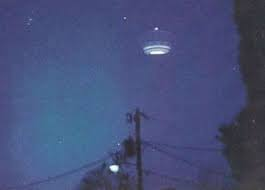
Most discussions of the Mandela Effect focus on a few famous examples involving logos, movies, and childhood brands. But if the underlying mechanisms involve reconstructive memory, misinformation, and social contagion, then shared false memories may be only the visible tip of a much larger iceberg. The vast majority of memory distortions are probably personal, mundane, and never become cultural phenomena because they are not collectively shared. For example, I thought I saw the UFO at the right when I lived in Florida as a child? Or maybe everyone was talking about seeing the UFO?
Conclusion: What the Mandela Effect Really Reveals
The Mandela Effect is often presented as a mystery about reality. In many online discussions, the phenomenon becomes a jumping-off point for theories about alternate timelines, parallel universes, simulation glitches, or hidden changes to history itself.
Yet the scientific literature points in a different direction. Over the past several decades, researchers have accumulated substantial evidence that memory is reconstructive rather than reproductive. We do not store and replay perfect recordings of our experiences. Instead, we rebuild memories from fragments of information, meaning, context, and prior knowledge. Along the way, memories can be influenced by suggestion, altered through retrieval, blended with later experiences, and shaped by conversations with other people.
Viewed through this lens, the Mandela Effect is not evidence that reality has changed. It is evidence that memory is more dynamic, adaptive, and fallible than most of us realize.
At the same time, the phenomenon may be somewhat narrower than its cultural reputation suggests. Discussions of the Mandela Effect tend to revolve around a relatively small collection of recurring examples, raising legitimate questions about whether we are observing a broad feature of everyday memory or a handful of especially memorable and socially contagious cases. The answer remains uncertain. Shared false memories clearly occur, but researchers are still working to understand why some become cultural touchstones while countless others disappear unnoticed.
That uncertainty points toward some of the most interesting questions for future research. Why do certain images, logos, phrases, and stories seem particularly vulnerable to shared distortion? How does social media influence the formation and spread of collective memories? What happens when AI-generated images, videos, and conversations become part of the information environment from which memories are constructed?
These questions extend far beyond internet debates about cartoon mascots and movie quotes.
The same cognitive processes that may help explain the Mandela Effect also influence eyewitness testimony, political misinformation, conspiracy theories, historical narratives, and everyday disagreements about what did or did not happen. Understanding how memories are formed, altered, and shared is therefore not simply an academic exercise. It is increasingly central to understanding how societies construct a common understanding of reality.
Perhaps the most important lesson is also the simplest. A vivid memory is not necessarily an accurate one. Confidence is not proof. Consensus is not verification. A large group of sincere, intelligent people can remember the same thing and still be mistaken.
That realization may feel unsettling. But it is also one of the most valuable insights modern psychology has produced. The Mandela Effect does not reveal hidden truths about the universe. It reveals something equally fascinating about ourselves: the remarkable, imperfect, and deeply social way human beings remember the past.