

Best Moves for Metabolic Health, Climate Shifts in Power Use, and Sleep’s Secret Danger on the Road: Insights from Latest Science
This week’s fresh science brings something for everyone: how to tailor exercise best for metabolic health, climate-driven changes reshaping Europe’s electricity demands, and why even moderate sleep loss can severely impair your nighttime driving. Along with new clues about cancer spread, wildfire risks, and neurodegenerative disease, these studies offer important takeaways for our health, environment, and safety. Let’s dive into what matters and why.
Tailoring Exercise: Not All Workouts Are Created Equal for Metabolic Syndrome
Metabolic syndrome, characterized by a cluster of issues like high blood pressure, elevated blood sugar, cholesterol imbalance, and increased waist size, affects a growing number of people worldwide, raising risks for diabetes and heart disease. But what’s the most effective exercise for people dealing with this condition? A comprehensive meta-analysis published in iScience sifted through over 50 studies involving nearly 3,000 participants to compare 10 different types of exercise interventions. The answer? No single exercise fixes everything.
- Combined aerobic and resistance training (think cardio plus weightlifting) emerged as the top approach for improving body mass index (BMI), waist circumference, LDL (“bad”) cholesterol, and fasting blood glucose.
- High-volume high-intensity interval training (HV-HIIT) was best at reducing overall body fat percentage.
- Low-volume HIIT (LV-HIIT) showed stronger improvements in total cholesterol, triglycerides, and diastolic blood pressure.
- Traditional Chinese exercises (such as Tai Chi or Qigong) had the greatest benefits on raising HDL (“good”) cholesterol and lowering systolic blood pressure.
Why does this matter for you? Metabolic syndrome isn’t one-size-fits-all, and this study supports a personalized “phenotype-tailored” exercise plan based on which metabolic factors need the most attention. It’s a step toward smarter, more effective fitness advice beyond generic gym routines.
Combined Exercise Boosts Body Composition for Young People with Obesity
Another meta-analysis looked at overweight and obese youth, comparing combined exercise (aerobic + resistance) with aerobic exercise alone. The combined approach showed greater gains in lean muscle and better insulin resistance markers—key for preventing diabetes—though it wasn’t clearly better for weight loss or fat percentage. This hints that adding resistance training offers metabolic benefits that pure cardio lacks, even if it doesn’t always translate to immediate weight changes. For young people and their health providers, it suggests that pairing cardio with strength training might be a better strategy for lasting metabolic improvements.
Climate Change Will Reshape Europe’s Power Needs and Output
Europe’s move toward renewable energy is a cornerstone of reducing emissions. But a new open-data study highlights that climate change itself will significantly shift electricity demand and supply patterns this century. The dataset, spanning 1981 to 2100, uses climate projections to analyze impacts on wind, solar, hydropower, and energy usage for heating and cooling across the continent:
- Cooling demand is expected to soar—up to 3 times higher by 2100 in some scenarios—as summers get hotter.
- Meanwhile, heating demand will drop sharply due to milder winters.
- Surprisingly, offshore wind energy potential is predicted to decline moderately, while solar and hydropower show no clear trends.
Energy planners need to anticipate these shifting demands and resource availabilities to ensure a stable, sustainable power grid. This work offers vital scientific groundwork for making Europe’s green energy transition resilient in a warming world.
The Explicit and Enormous Dangers of Sleep Loss on Nighttime Driving
Sleep deprivation is well-known to increase car crash risk, but does missing a full night’s sleep affect driving differently than chronic partial sleep loss? A rigorous randomized trial puts this question under the microscope. Twenty healthy men completed simulated night driving after normal sleep, four nights of partial reduction (losing 2 hours per night), and one full night without sleep. The findings: Acute total sleep deprivation caused rapid, severe loss of lateral vehicle control within just minutes, resembling impairment from very high blood alcohol levels. Cumulative partial sleep loss produced smaller, inconsistent driving impairments, despite increased self-reported sleepiness. Vigilance and speed control were relatively preserved across conditions, suggesting operational control (steering) is more sensitive to acute sleep loss.
For everyday drivers, this underscores that pulling an all-nighter before driving is far riskier than a few nights of lost sleep—even if those nights feel tiring. Distinguishing these sleep loss patterns is critical for road safety messaging and policy.
Why These Big Ideas Matter
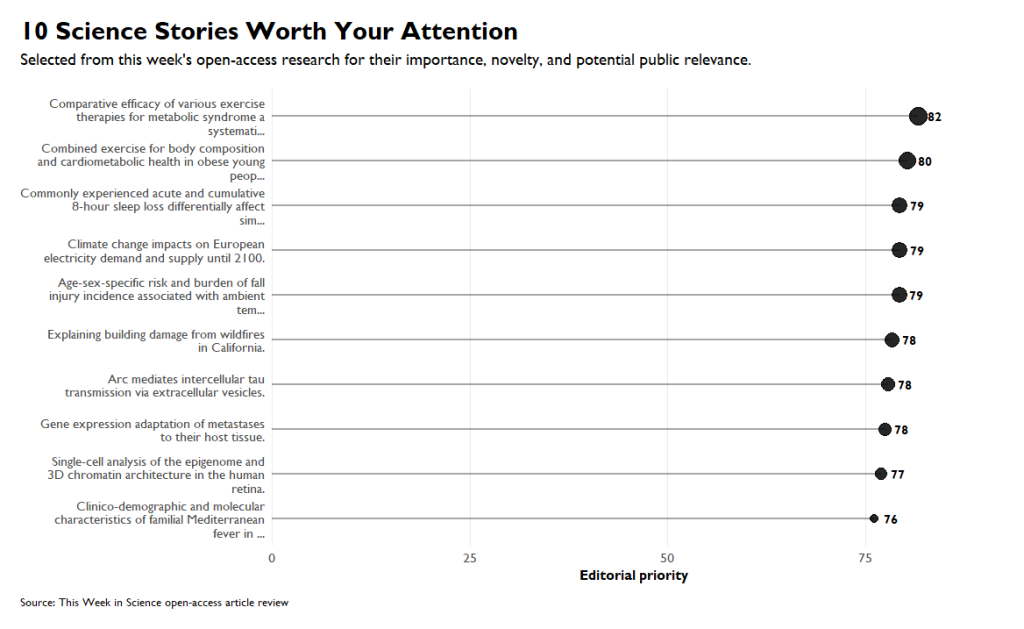
Together, these studies show that nuanced approaches from exercise regimens tailored to specific metabolic needs, to preparing energy systems for climate-driven shifts, and understanding how different types of sleep deprivation uniquely endanger drivers can have far-reaching impacts on public health and safety. So, whether you want to optimize your workout, advocate for smarter energy resilience, or get home safely after a late shift, there’s actionable insight here grounded in the best new science. Stay informed, stay healthy, and stay safe out there!