Starship Flight 15 Could Attempt a First: Catching Both Parts of the Rocket
Most rockets end their trip as wreckage, scrap, or museum pieces. Starship Flight 15 is aiming for something far stranger: a giant rocket system that flies to space and then tries to come back in one piece.
SpaceX is preparing Starship Flight 15 as a major recovery test from Starbase, Texas, with FAA airspace advisories listing a primary launch window on November 13, 2026, and a separate reentry window on November 14. The big goal drawing so much attention is a planned attempt to return both the Super Heavy booster and the Starship upper stage to the launch site for catch operations.
If that happens, it would mark a dramatic step toward one of the hardest dreams in spaceflight: a fully reusable orbital rocket.
The real breakthrough is not just launch. It is recovery.
Launching a powerful rocket is impressive. Launching one that can be used again and again is revolutionary.
That is the bigger story behind Starship Flight 15. SpaceX has described the mission as part of the next phase of Starship orbital operations, with the vehicle preparing for orbital flight and future payload delivery missions. In plain language, this is not just about getting off the ground. It is about building a space system that can fly, return, and fly again.
That idea matters because spaceflight is usually expensive for a simple reason: rockets are hard to reuse. Imagine if every airplane took off once and then had to be thrown away. Air travel would be wildly costly and rare. Reusability changes that math.
For space missions, it could mean cheaper launches, faster turnaround, and more chances to send cargo into orbit.
Why catching a rocket sounds like science fiction
The planned “catch” is what makes Flight 15 so fascinating.
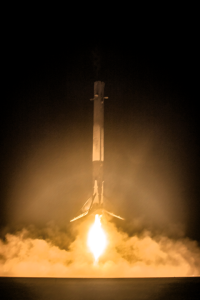
Instead of splashing into the ocean or landing far away, the mission is being framed as an attempt to bring both stages back to the launch site. That means the Super Heavy booster and the Starship upper stage would each need to survive extreme speeds, intense heating, precise guidance, and a carefully timed final approach.
Think about what that requires. A rocket returning from flight is not just falling. It has to steer, slow down, stay stable, and arrive at exactly the right place. Small errors can quickly become big problems when the vehicle is enormous and moving at high speed.
Recovering one stage is already difficult. Attempting recovery operations for both stages in the same mission raises the challenge even higher.
Starship is designed around a bold idea: full reuse
Many spacecraft are built around a single trip. Starship is being developed around a different vision. The long-term goal is a transportation system where the booster and ship can both return after flight, cutting the need to rebuild giant hardware every time.
That is why Flight 15 matters even before launch. It tests whether a huge orbital-class system can behave less like a disposable firework and more like a machine meant for repeated use.
SpaceX’s launches page shows Flight 14 was completed on September 28, 2026, placing Flight 15 in the next step of that test program. Each mission helps answer a practical question: can engineers move from proving that a vehicle can fly to proving that it can fly routinely?
Why this matters for the future of space science
Reusable rockets are not just an engineering flex. They could change what becomes possible in space.
If launch systems become more reusable, sending satellites, science equipment, and other cargo to orbit could become more efficient. A vehicle designed for future payload delivery missions could support everything from communications systems to research hardware.
That is also why Starship is often linked to big ideas like Moon and Mars missions. Ambitious exploration plans depend on moving large amounts of material through space. The easier and cheaper it becomes to launch major payloads, the more realistic those plans start to look.
Flight 15 does not equal a crewed Mars mission. But it does focus attention on a key piece of the puzzle: whether giant rockets can be recovered reliably enough to make deep-space ambitions practical.
Spaceflight still depends on more than engineering
Even the most eye-catching rocket launch depends on rules, review, and timing. The FAA says SpaceX must have the appropriate license or permit before Starship and Super Heavy operations, and the agency’s Starship project pages show ongoing environmental and licensing review activity tied to Starbase operations.
That may sound less exciting than engines and fire, but it is part of modern spaceflight too. Launch systems do not operate in isolation. They share airspace, affect nearby communities, and must meet regulatory requirements before a mission can proceed.
So while Flight 15 is being watched for its technical goals, it also sits inside a much larger system of safety and oversight.
The most exciting moment may come after the trip to space
Rocket launches usually build toward liftoff. Starship Flight 15 may build toward the return.
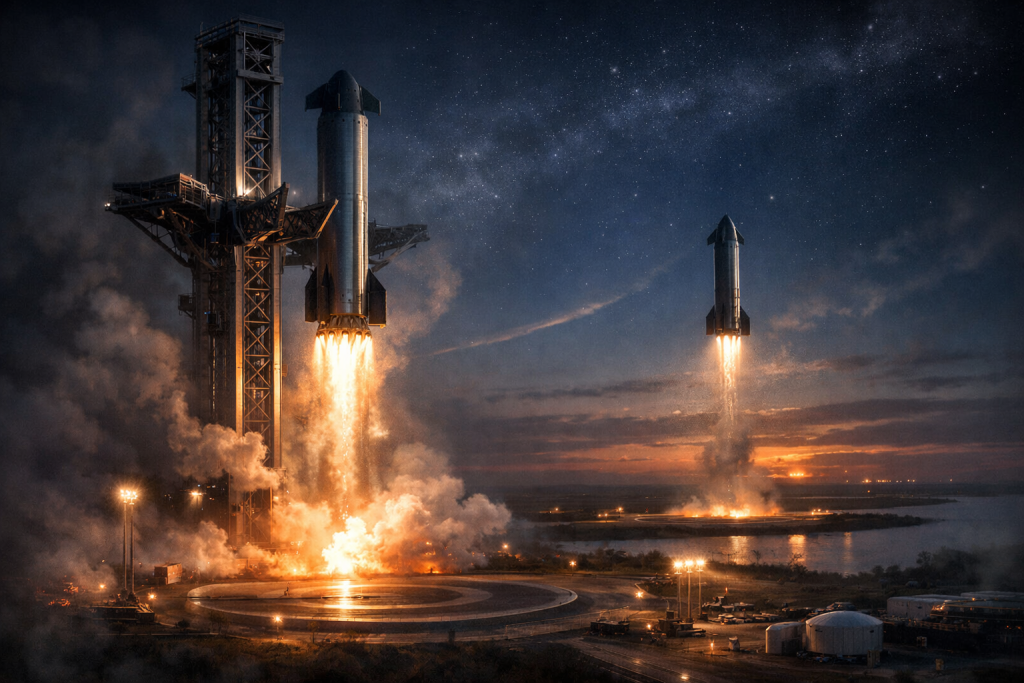
The striking image people will be waiting for is not only a giant vehicle climbing into the sky, but a giant vehicle coming home under control. That could signal a real shift in how orbital rockets work.
If Flight 15 succeeds in its recovery goals, it would vividly demonstrate that reusability is not just about landing boosters but about recovering an entire launch system. And if spaceflight can start working that way, the future of launching cargo, building missions, and exploring farther from Earth starts to look very different.
That is why Starship Flight 15 is more than another test. It tests whether the age of throwaway rockets can begin to give way to something much more powerful: rockets built to come back.
Build Your Own Science Issue
Tell us what fascinates you. We’ll search today’s science and build a personalized issue just for you.
Your science issue is being built.
We’re searching today’s research for stories that match your interests. Your personalized issue will arrive in your inbox shortly.
Something went wrong.
We couldn’t build your issue right now. Please try again in a moment.
References
FAA Current Operations Plan Advisory
SpaceX Updates: Starship to Orbit