
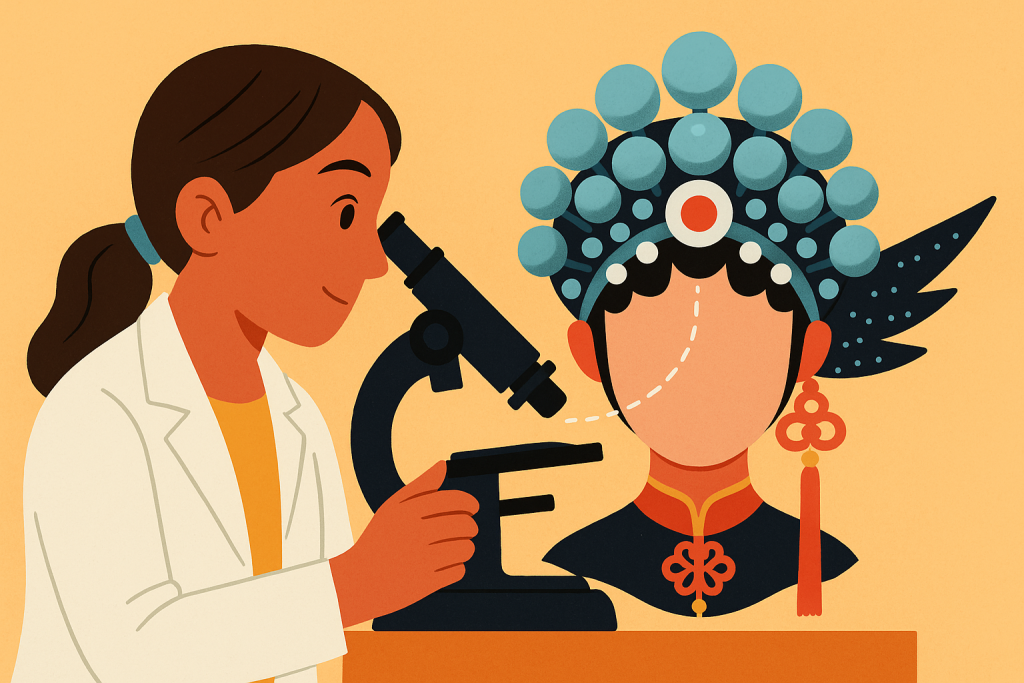
Unveiling the Secrets of the Peking Opera Hat-Wing Technique
The iconic Peking Opera, known for its stunning visual and auditory performances, holds within its repertoire a collection of highly intricate techniques that convey storyline and emotion with exceptional grace. One such technique is the ‘hat-wing toss,’ a move that, despite its apparent simplicity, involves a subtle orchestration of body mechanics that has intrigued performers and audiences alike.
The Timeless Art of the Hat-Wing Toss
Peking Opera has been an integral part of Chinese cultural heritage since the 18th century, yet like many traditional arts, it faces the challenge of being preserved in a rapidly modernizing world. The ‘hat-wing toss,’ where one wing of a performer’s hat oscillates mysteriously with precise control, is a prime example of a skill passed down through generations. But the unspoken complexities of this elegant maneuver often remain mysterious to new learners.
The Scientific Puzzle: Understanding the Hat-Wing Dynamics
The research team, led by Xiuping Wang and colleagues, embarked on a mission to decode the biomechanics of this traditional movement. The researchers aimed to uncover how the intricate balance and coordination required to toss the hat’s left-wing can be understood, taught, and preserved for future generations. By analyzing the movement’s dynamics using advanced biomechanical tools, they sought to translate this cultural expertise into a form that new generations could learn and master.
What the Researchers Did
The study employed a combination of methods to analyze this unique performance. Using an infrared motion capture system and 3D force platforms, the researchers gathered data on a seasoned Peking Opera performer specializing in this technique. They carefully segmented the movement into stages—initiation, maintenance, and termination—based on the dynamics of how the left-wing toss was executed.
The research analyzed parameters such as displacement curves of specific markers on the hat, head tilt angle, and foot forces. These helped break down the movement into understandable components.
Decoding the Performance
What they found was enlightening. The study confirmed that the phase relationship between the Z-axis displacement of a marker on the left hat wing and the head tilt angle was a reliable indicator of movement stages. This included the detailed execution of body postures, such as minor knee flexion extensions that accompanied head tilts, effectively balancing the motion.
The data also showed the essential coordination between the lower body and head movement that facilitates the visually complex yet mechanically efficient art of the left-wing toss.
Why This Matters
This work is not just a scientific inquiry—it has profound implications for cultural preservation. By framing the art of the hat-wing toss in biomechanical terms, training can be standardized, documented, and disseminated across geographical and generational divides. Furthermore, this scientific approach can serve as a basis for rehabilitation and sports science, providing insights into perfecting balance and coordination techniques.
For countries and communities where resources for large-scale traditional training may be scarce, such innovations could prove invaluable by offering straightforward, data-driven pathways to preserve their cultural practices.
What We Still Do Not Know
Several questions remain unanswered. A single-point case study like this one, inherently limited by its focus on one performer, leaves a space for further research. Variations in body type, training background, and even stage environments, such as the theatrical setting, might influence performance. Exploring different performers and contexts will be necessary to fully generalize these findings.
Moreover, expanding the analysis to include the effects of different hat designs or environmental factors on the biomechanics of movement could further illuminate potential variations in techniques.
Let’s Explore Together
While the intricacies of the Peking Opera hat-wing toss are now a bit more demystified, the field is ripe for further exploration. How might these insights optimize performance in other domains? Could this approach adapt other cultural practices in need of preservation?
- ‘How might this discovery change the way we think about traditional performance art?’
- ‘What would it take to use this finding in places with fewer resources?’
- ‘Where else might scientists look for this same pattern?’