Predicting Coral Coverage: A New Framework for Global Reef Monitoring
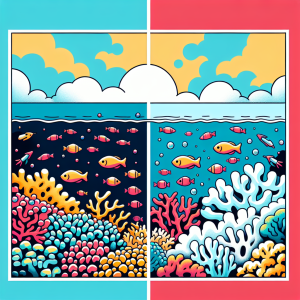
Mysterious beauty lies beneath the sea—vibrant coral reefs, which many know as the rainforests of the ocean, teeter on the brink of ecological ruin. These underwater cities face threats like heat stress and cyclones, which obscure our understanding of their survival and recovery.
In a recent study published in Global Change Biology, marine scientists cracked open a new method for predicting coral cover trends over vast spatial scales, from tiny local patches to extensive regions. Led by a team from the Australian Institute of Marine Science, this research foretells the future of coral reefs using sophisticated statistical models loaded with the latest ecological data.
Coral reefs are under siege by climate change. Boiling sea temperatures trigger mass bleaching, and fierce cyclones wreak havoc, leaving these ecosystems fragile and struggling.
To navigate this crisis, scientists need reliable and actionable data across diverse global reef systems, but long-term, consistent monitoring is rare and often financially out of reach.
The Scientific Puzzle: Monitoring Coral Dynamics
How do we overcome the challenge of uncertain and sparse coral reef data to reveal broader ecological patterns and changes? This is where the study’s spatio-temporal prediction framework shines, a method designed to forecast coral cover by simulating conditions over time and space. By grasping interference from two critical disturbances—tropical cyclones and heat stress—the framework maps how coral reefs respond over time.
What Researchers Did
Through the power of ReefCloud, a digital platform that feeds on images captured undersea, researchers harness machine learning to sort and analyze extensive seafloor visuals. By converting these snapshots into quantifiable data, they were able to employ statistical models to identify underlying patterns in coral cover changes.
The innovation lies in predicting coral resilience not just at one point but across whole networks of coral reefs, accommodating large datasets efficiently. This was achieved by dividing reef areas into uniform 5 km2 cells, then estimating trends within these blocks and ultimately rolling up the data into regional and global insights.
What They Found
The framework operated across the Great Barrier Reef’s central expanse and American Samoa’s remote beauty, covering areas rich in biodiversity yet vulnerable to disruptions. In these regions, researchers discovered significant fluctuations in coral cover linked to environmental stressors, highlighting clear decline and recovery cycles.
Notably, heat stress was associated with linear declines in coral cover, while cyclone impacts showed a steeper initial drop-off. This nuanced understanding helps pinpoint when coral reefs are most at risk and what factors drive these dynamics universally across environments.
Why This Matters
The ability to foresee trends in coral ecosystems can revolutionize how conservation efforts are targeted. By equipping scientists and policymakers with predictions, decisions can be grounded in solid evidence, making interventions more strategic. Additionally, the platform’s accessibility and scalability mean a broader global reach in biodiversity monitoring, crucial for protecting these natural treasures from deteriorating further.
Crucially, it underlines the importance of feeding diverse datasets into models to enhance reliability, particularly in resource-constrained settings where every datapoint counts. This framework also reveals the necessity of incorporating a wide array of data beyond the conventional, ensuring that critical disturbances are not only monitored but anticipated, furthering coral conservation efforts.
What We Still Do Not Know
Overall, while the model works impressively, it isn’t without its challenges. Primary among them is the dependence on available data: potential underestimations arise as a consequence of short-term monitoring datasets, often confined to specific localities. More profound insights depend on expanding both the breadth and consistency of observation networks.
Moreover, additional factors like chronic stressors or human impacts weren’t included, which might contribute to significant predictions if incorporated properly. Future research needs to bridge such data gaps, paving the way for more comprehensive conservation strategies.
Let’s Explore Together
Considering these striking revelations and ongoing uncertainties, the path forward for coral reef conservation hinges on collective effort—from sampling to software development—that transcends borders and industries.
Think about this:
- How might this innovation change the approach to coral monitoring in your region?
- What other environmental factors should we include to improve predictive accuracy?
- Could a similar model be used for conserving other ecosystems?