
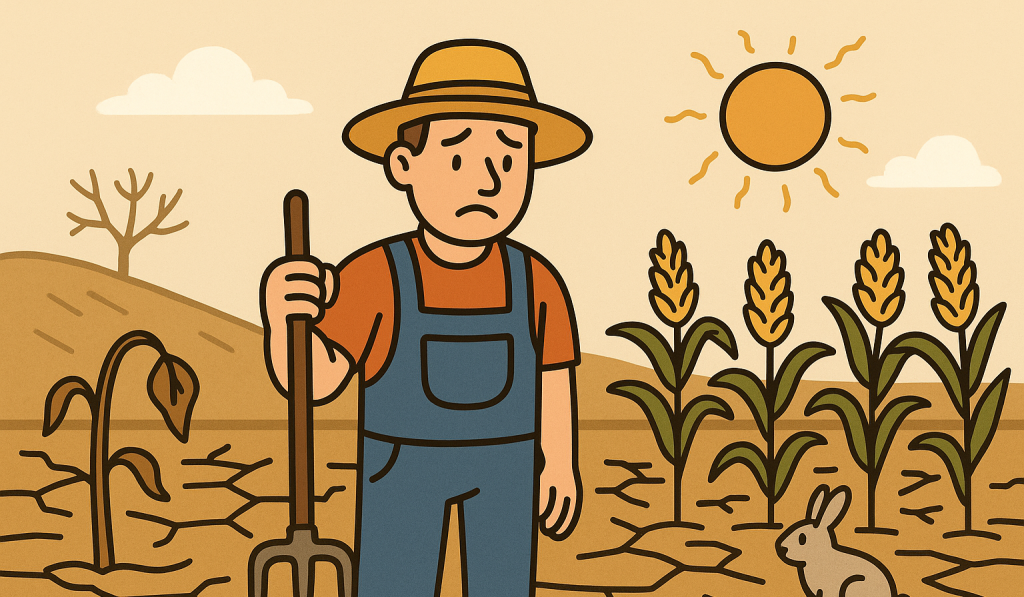
The Impact of Drought on Agricultural Resilience and Biodiversity
As the world grapples with the complexities of climate change and its myriad effects, one pressing issue is the growing reality of drought and its impact on agriculture and biodiversity.
Recent reports have highlighted the catastrophic effects of persistent drought conditions, particularly focusing on regions such as Europe and North America.
Current Drought Conditions and Their Implications
July 2026 was marked by unprecedented drought across southern England and Wales, with parts experiencing the first month in history without any recorded rainfall. The Met Office noted that this severe weather event is characterized by extreme heat and a drastic reduction in precipitation, raising alarms among farmers and environmental scientists alike.
The ongoing drought has already led to water restrictions affecting over 20 million households in the UK, with forecasts predicting that conditions might worsen before improving. Areas historically known for their lushness are now turning barren, significantly increasing the risk of wildfires and directly impacting agricultural output. Crop failures, especially in crops dependent on consistent water supply, are becoming a reality.
The Economic Consequences of Drought
Economic implications are severe, with losses in agricultural sectors potentially costing billions. With solar power generation also impacted by smoke from wildfires, as seen during the 2023 Canadian wildfires, this complex interplay between drought and environmental disasters demonstrates the magnitude of the issue. Smoke caused a significant reduction in solar power generation, emphasizing a need for strategies to enhance resilience in the face of such multifaceted environmental challenges.
Historical Perspectives and Future Strategies
Historically, drought has reshaped societies and economies. Today, scientists are advocating for wider implementation of sustainable agricultural practices, including crop diversification, agroforestry, and innovative irrigation techniques that can withstand extreme weather conditions. Shifting towards drought-resistant crops can also play a crucial role in mitigating the impact of water scarcity.
Moreover, land management practices aimed at enhancing soil moisture retention can help buffer against the severe effects of drought. As biodiversity also suffers, with reduced habitats for various species, it underscores the necessity for an integrative approach that combines conservation with agricultural needs.
Potential for Biodiversity Recovery through Innovative Practice
Alongside agricultural resilience, preserving biodiversity is essential for maintaining the ecosystem services that support food production and climate adaptation. Reintroducing species such as beavers, which help create wetland areas, can enhance water retention in landscapes, improving resilience to drought conditions.
As we observe climate patterns evolving, fostering a relationship between agricultural practices and biodiversity conservation could lead to innovative solutions that aid both humans and wildlife in adapting to changing environments.
Conclusion: A Call to Action
The current state of drought around the world necessitates urgent action. Effective policies combining agricultural resilience, biodiversity conservation, and climate adaptability can not only mitigate the immediate impacts of drought but also build a sustainable future. As such, stakeholders from governments to local farmers must collaborate to leverage their resources and knowledge in combating the escalation of dry conditions.
As we move forward, scientists and policymakers alike must heed the warning signs of our changing climate and adapt appropriately to ensure the sustainability of agriculture and the preservation of biodiversity, securing food systems for future generations.
For more in-depth exploration of these issues, you can follow the latest reports from Science Daily, BBC Science, and The New York Times.