Unveiling a Black Hole’s Dusty Secrets
What if a ring of cosmic dust shrouding a black hole is the key to understanding our universe’s evolution? New research using the James Webb Space Telescope (JWST) has peeled back layers of cosmic mystery, revealing this very possibility in the Circinus galaxy.
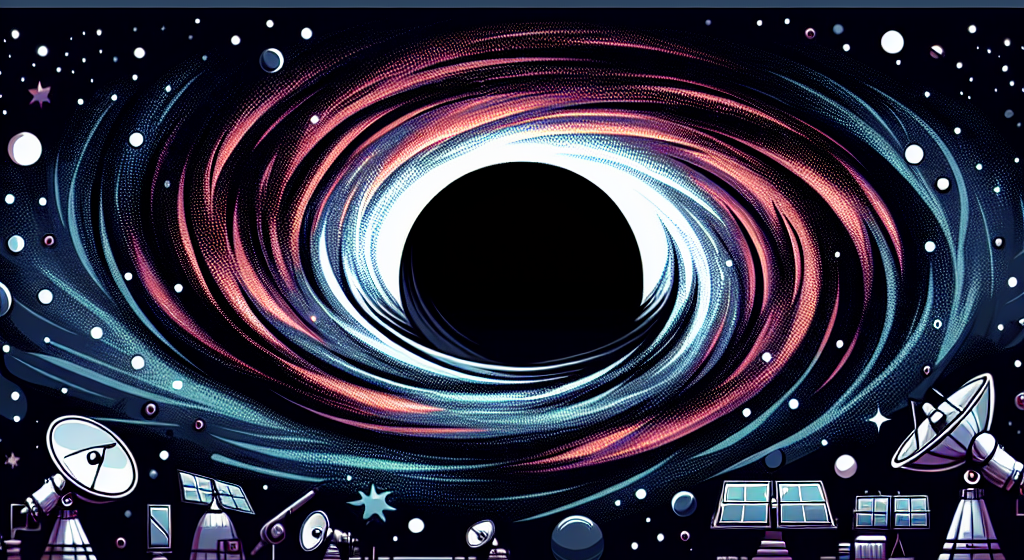
In cities bustling with life or quiet village corners, the beauty overhead is untouchable, sometimes visible only as a quiet river of stars. Yet, out there, in a galaxy not so far away in astronomical terms, a dusty fortress obscures the gargantuan secret powers of a supermassive black hole. Nestled at the center of the Circinus galaxy, some 4.2 million parsecs away, lies a cosmic enigma encircled in a swirling, dusty ring known as a torus.
Unraveling the Dusty Shield
A galactic torus might seem alien, but picture it as a colossal cloud swirling around an invisible drain. In the quiet Mexican highlands, where radio dishes pierce the heavens, or the stark Atacama Desert, where ALMA scans the skies, observers strive to decode these cosmic signatures.
The new JWST observations have sharpened our view to an unprecedented 0.08 arcseconds. Imagine zooming in so closely that you could see an orange’s segments from a mile away. This ultra-clarity shows us that the dusty torus of Circinus mostly spreads across a disk spanning 5 by 3 parsecs – an interstellar distance that feeds the ravenous black hole hidden within.
The Breakthrough Moment
The story of this discovery is marked by cutting-edge observations as JWST’s aperture-masking interferometry reveals hidden wonders. This technique slices through the cosmic fog, just as an artist removes dust from a window, to see the vibrant scene outside. Enrique Lopez-Rodriguez and his team used images from different angles and meticulously combined them to recreate the galaxy’s heart.
Galaxies Alive
Every urban dweller and every farmer knows: life demands constants – water, heat, protection. Even galaxies follow these needs. The Circinus galaxy’s dusty cocoon acts like a celestial breadbasket, providing materials needed for a black hole’s feast, while simultaneously shielding it from prying eyes. But more than a mystery of consumption, these structures are the chefs and the critics, regulating star formation and defining a galaxy’s narrative.
In spaces where resources are scarce, like many LMICs striving to harness clean energy from the sun, these cosmic processes echo our own struggles and creativity. The feedback from the black hole can quench or ignite new star formation, much like energy policy decisions shape the course of nations on Earth.
Rethinking Spaces, New Potential
Without probing stages closer to home, like how your dusty attic holds mementos that shape your family’s history, scientists seek to understand the torus’s implications on galaxy evolution. This discovery is a chapter in a larger cosmic book, showing how small tweaks at the core can propagate immense changes.
As researchers hypothesize, the torus and its accompanying dusty winds might harness and channel energy, affecting not only the black hole’s growth but also the larger cosmic environment.
Continuing the Conversation
How will this change our approach to studying other galaxies’ cores? Can we compare torus structures to energy management systems or climatic regulation here on Earth?
Explore more on these findings and engage in the dialogue about how cosmic structures reflect our persistence and curiosity. What could humanity glean from understanding that even the universe, like our closest environments, continuously adapts and transforms?