Why Do We Get Déjà Vu?
Imagine walking into a café you’ve never visited before when an unsettling feeling suddenly washes over you. The conversation at the next table, the arrangement of the furniture, even the way someone reaches for a coffee cup all seem strangely familiar. For a brief moment, you’re convinced you’ve lived through this exact scene before. Just as quickly, the feeling disappears, leaving behind a nagging question: How could something entirely new feel so familiar?
That fleeting experience is called déjà vu, and it is one of the most curious quirks of human memory. Most people who experience it don’t actually believe they’ve traveled back in time or remembered a forgotten past. Instead, they experience something much stranger, a powerful sense of familiarity that clashes with the equally certain knowledge that the moment is genuinely new.
That contradiction is what makes déjà vu so fascinating to psychologists and neuroscientists. Under normal circumstances, recognizing something involves two pieces of information: a feeling of familiarity and the ability to place that familiarity in context. You recognize a friend’s face because you’ve seen them before, and you can remember where you know them from. During déjà vu, however, the brain seems to generate the feeling without providing its source. The result is an unmistakable sensation that something is familiar, paired with the realization that it shouldn’t be.
For over a century, scientists have attempted to explain the phenomenon of déjà vu. The challenge is that déjà vu is both very common and surprisingly difficult to study. These episodes occur suddenly, usually last only a few seconds, and leave no clear physical evidence behind. Psychologist Alan Brown noted in his influential 2003 review that déjà vu remains one of psychology’s enduring mysteries because researchers cannot consistently induce or directly observe it in a laboratory setting. More recent research has further refined the definition, describing déjà vu as a conflict between a strong sense of familiarity and the simultaneous realization that the experience is actually new.
Long before neuroscience existed, people struggled to explain this peculiar feeling. Some historians trace descriptions resembling déjà vu to discussions of “false memories” by Augustine in the early fifth century, although those comparisons are necessarily interpretive rather than exact.
By the nineteenth century, the phenomenon had entered both literature and medicine. Charles Dickens famously described the eerie sensation in David Copperfield as the feeling that “what we are saying and doing” had somehow “been said and done before,” while French psychiatrists classified similar experiences as a form of paramnesia. Around the same time, neurologist John Hughlings Jackson began linking related “dreamy states” to epilepsy, shifting the conversation away from the supernatural and toward the workings of the human brain
Today, researchers no longer see déjà vu as a paranormal mystery. Instead, they view it as a rare glimpse into one of the brain’s most remarkable abilities: continuously deciding whether an experience belongs to the past or the present. Understanding why that system occasionally misfires may reveal not only why we experience déjà vu, but also how memory itself works.
How Common Déjà Vu Is
If déjà vu feels strange, you’re in good company. Far from being a rare curiosity, it’s something that most people will experience at least once in their lives.
Exactly how common it is depends on how researchers ask the question. Early studies suggested that around 60% of people had experienced déjà vu, while later reviews pushed that estimate closer to two-thirds of the population. The largest picture to date comes from a 2024 systematic review and meta-analysis, which estimated that roughly 74% of healthy adults have experienced non-seizure-related (non-ictal) déjà vu. Although the precise number varies from study to study, the overall conclusion is remarkably consistent: déjà vu is a normal part of human experience rather than an unusual exception.
Researchers have also uncovered some interesting patterns in who experiences it. Age is by far the strongest predictor. Déjà vu is reported most frequently by adolescents and young adults, becoming steadily less common as people grow older. Scientists aren’t entirely sure why, but one possibility is that younger brains are constantly forming new memories while encountering novel environments, creating more opportunities for the kinds of memory mismatches that may trigger déjà vu.
Other demographic differences are surprisingly small. Despite occasional speculation, large reviews have found no meaningful differences between men and women. Instead, lifestyle factors appear to matter more. People who travel frequently, recall their dreams more often, have higher levels of education, or are exposed to a wider variety of experiences—including, in some studies, movies—tend to report déjà vu more often. One explanation is straightforward: the more experiences your brain stores, the more opportunities it has to encounter new situations that partially resemble old ones. Stress and fatigue may also increase the likelihood of déjà vu, not because they create false memories themselves, but because they can make the brain slightly less efficient at checking where a feeling of familiarity came from,
Perhaps most reassuring is how brief the experience usually is. The vast majority of healthy episodes last only a few seconds before disappearing as suddenly as they arrived. Most people describe the sensation as surprising, curious, or mildly pleasant rather than frightening. That changes in certain neurological conditions, where déjà vu can become more frequent, more intense, or emotionally distressing. This distinction has helped researchers better understand what is happening in the brain when the feeling occurs.
Cognitive and Neural Mechanisms
If scientists agree on one thing, it’s this: déjà vu is almost certainly a memory phenomenon. The mystery isn’t whether memory is involved—it’s which part of the memory system is momentarily getting it wrong.
The leading explanation begins with an important distinction in how memory works. Your brain can recognize something in two different ways. Sometimes you simply have a feeling that something is familiar. Other times, you can actually remember where that familiarity came from—the place, the conversation, or the event itself. Memory researchers call these two processes familiarity and recollection, and they normally work together.
During déjà vu, they appear to come apart.
According to psychologist Anne Cleary, déjà vu is best understood as “recognition without identification.” In other words, your brain generates a powerful sense of familiarity but cannot retrieve the memory that should explain it. You don’t suddenly remember a forgotten visit to the restaurant or recall an earlier conversation. Instead, you’re left with a strange certainty that the moment belongs to your past, even though you know it doesn’t.
But where does that misplaced familiarity come from?
One possibility is that your brain is recognizing patterns rather than entire memories. Every environment you encounter is made up of countless visual features: the arrangement of furniture, the layout of a room, the lighting, the relationships between objects, and even subtle spatial geometry. If a new place happens to share enough of those features with places you’ve experienced before, your brain may generate a familiarity signal even though you’ve never actually been there.
Experiments support this idea. In one series of studies, simply showing people photographs of unfamiliar locations later increased their confidence that they had visited those places. In another, researchers created virtual environments whose layouts subtly resembled previously viewed scenes. Even though participants recognized nothing consciously, they were significantly more likely to report feelings resembling déjà vu. These findings don’t mean every episode is caused by visual similarity, but they demonstrate something important: partial overlap between past and present can fool the brain into producing familiarity without a genuine memory to accompany it.
Yet that may only explain part of the story.
More recent research suggests that déjà vu isn’t simply about generating a false feeling of familiarity. Instead, it may reflect the brain realizing that something is wrong. Studies by O’Connor and colleagues found that people who frequently experience déjà vu don’t necessarily score differently on standard laboratory tests of memory. That redirected focus from familiarity itself to memory assessment and the brain’s capacity to judge whether its own signals are logical..
Imagine two internal systems speaking at once. One says, “I’ve experienced this before.” The other immediately replies, “No, you haven’t.” Déjà vu may be the brief moment when you become consciously aware of that disagreement.
Brain imaging studies support this idea. Using carefully designed false-memory experiments, researchers have shown that reports of déjà vu are most likely when participants experience both a strong feeling of familiarity and convincing evidence that the situation is actually new. During those moments, activity increases in regions such as the anterior cingulate cortex and medial prefrontal cortex—areas known for detecting conflict, monitoring errors, and resolving competing information. Rather than blindly accepting the feeling of familiarity, the brain appears to recognize the mismatch and correct it in real time.
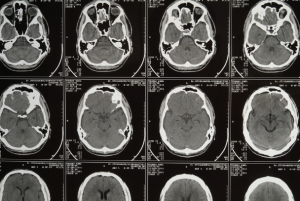
Researchers have also identified the brain regions most consistently involved in generating that initial feeling of familiarity. Much of the evidence points to the medial temporal lobe, particularly structures surrounding the hippocampus that help determine whether an experience feels familiar. Studies using MRI have found subtle structural differences in these regions among healthy people who report frequent déjà vu, while more recent imaging studies have identified altered activity and communication between the medial temporal lobe and frontal brain regions involved in attention and cognitive control.
Exactly how these regions divide the work remains an active area of research. Some scientists argue that structures such as the perirhinal and parahippocampal cortices generate familiarity, while the hippocampus reconstructs the detailed memories that provide context. Others believe the boundaries are less distinct than once thought, especially for vivid memories.
Taken together, the evidence points toward a simple but compelling conclusion. Déjà vu is probably not caused by a single malfunctioning brain region. Instead, it seems to emerge when the systems that generate familiarity and the systems that verify our memories briefly fall out of sync. For a few seconds, your brain sends two contradictory messages at once—and you become aware of both.
Table of Major Explanatory Models
| Model | Key claim | Supporting evidence | Main limitation |
| Familiarity-without-recollection | Déjà vu is an unplaced familiarity signal without successful source retrieval | Recognition-memory theory and “recognition without identification” findings (Cleary, 2008; Yonelinas, 2002) | Explains the feeling of familiarity better than the “this is wrong” insight |
| Similarity or gestalt familiarity | New scenes overlap with stored scene features or layouts, producing false familiarity | Scene-similarity and VR configuration studies (Cleary et al., 2009, 2012); false autobiographical exposure effects (Brown & Marsh, 2008, 2009) | Real-life episodes may depend on more than visual similarity alone |
| Parahippocampal or medial temporal misfiring | Abnormal activity in familiarity circuitry produces inappropriate recognition | Parahippocampal account, epilepsy stimulation data, MRI and PET correlates (Spatt, 2002; Brázdil et al., 2012; Guedj et al., 2010) | Can sound too localized for an experience that likely recruits distributed monitoring networks |
| Conflict or metacognitive account | Déjà vu occurs when familiarity and novelty are simultaneously evaluated and found to conflict | fMRI analogues implicating ACC, mPFC, and parietal control regions (Urquhart et al., 2021; Aitken et al., 2023) | Experimental analogs are not yet phenomenologically identical to spontaneous déjà vu |
Sources for the table are synthesized from the principal reviews and primary studies listed in the references.
When Is Déjà Vu a Medical Concern?
For the overwhelming majority of people, déjà vu is completely harmless. It arrives unexpectedly, lasts only a few seconds, and disappears as quickly as it came. By itself, an occasional episode is considered a normal part of human experience rather than a sign that something is wrong.
That said, neurologists have long paid close attention to déjà vu because, in some cases, it can serve as an aura, an early warning sign that a seizure is about to occur.
People with temporal lobe epilepsy sometimes experience an intense wave of familiarity immediately before a focal seizure. Others describe sudden feelings of fear, unreality, or profound strangeness alongside the déjà vu sensation. Because these episodes originate in brain regions critical for memory, particularly within the medial temporal lobe, déjà vu remains one of the classic symptoms neurologists consider when evaluating temporal lobe seizures. A 2024 systematic review estimated that about 22% of epilepsy patients experience déjà vu during seizures (ictal déjà vu), while roughly 62% report episodes between seizures (interictal déjà vu), with both forms becoming less common with increasing age.
Brain recordings highlight an important difference between ordinary and seizure-related déjà vu. In healthy individuals, episodes can occur without the abnormal electrical activity that defines epilepsy. During epileptic seizures, however, EEG recordings often reveal characteristic epileptiform discharges. Studies using intracranial electrodes and advanced brain imaging have consistently implicated structures involved in memory and emotion—including the hippocampus, parahippocampal gyrus, entorhinal cortex, amygdala, insula, and surrounding medial temporal regions. Functional imaging adds further evidence, showing altered blood flow and metabolism in these areas during seizure-related déjà vu.
Researchers have also explored whether déjà vu is linked to psychiatric conditions. The answer is yes…but not in the way many people assume.
Persistent or unusually frequent déjà vu has been reported in people with anxiety disorders, depersonalization, and derealization. One well-known case described a young man who experienced almost constant, debilitating déjà vu despite having normal brain scans and EEG results, suggesting that psychological factors alone can sometimes produce persistent symptoms (Wells et al., 2014).
The picture is equally nuanced in schizophrenia. Contrary to older assumptions, studies have not found that people with schizophrenia experience déjà vu more often than the general population. In fact, some research suggests the opposite. However, when episodes do occur, they may last longer and feel more repetitive than the brief experiences reported by healthy individuals.
An even rarer condition, known as déjà vécu (“already lived”), is fundamentally different from ordinary déjà vu. Instead of recognizing that the feeling of familiarity is mistaken, people lose that insight entirely. They may become convinced that new events are literal repetitions of the past and even construct false memories to explain them. Déjà vécu is most often associated with dementia and other neurodegenerative disorders, making it a clinically distinct phenomenon rather than simply a more intense version of everyday déjà vu,
The practical takeaway is reassuring. An occasional, short-lived episode of déjà vu is almost always benign. However, episodes that become frequent or are accompanied by intense fear, unusual smells or tastes, involuntary movements, loss of awareness, memory gaps, confusion, or other neurological symptoms deserve medical evaluation. In those situations, what feels like an odd quirk of memory may actually be an important clue to an underlying neurological condition.
What We Still Don’t Know About Déjà Vu
Despite more than a century of research, déjà vu remains one of neuroscience’s most fascinating puzzles. Part of the challenge is practical: the experience appears without warning, usually lasts only a few seconds, and leaves behind no obvious physical evidence.
Researchers can’t simply ask volunteers to “have déjà vu now.”
Instead, they have developed increasingly sophisticated ways of recreating parts of the experience in the laboratory, using virtual reality, carefully designed false-memory experiments, and other techniques that generate feelings of familiarity without true recollection. These experimental approaches have transformed déjà vu from a philosophical curiosity into a scientifically testable phenomenon.
Even so, some of the biggest questions remain unanswered. Are the fleeting episodes experienced by healthy people fundamentally the same as those associated with epilepsy, or do they arise from different mechanisms? What actually triggers the false feeling of familiarity in everyday life? Is it a familiar spatial layout, subtle perceptual similarities, echoes of forgotten experiences, dream memories, or several of these processes working together? And how does the brain recognize its own mistake quickly enough for us to realize that the feeling is false?
Answering those questions will require better tools. Researchers are already combining immersive virtual reality, real-time brain imaging, wearable physiological sensors, and recordings from patients undergoing epilepsy monitoring to observe memory processes with unprecedented detail. The hope is that these technologies will capture the moment when the brain briefly mistakes the present for the past and then corrects itself.
Perhaps that’s what makes déjà vu so compelling. It isn’t simply a glitch or a curiosity. It is a rare moment when the machinery of memory becomes visible. For a few seconds, we catch our brains in the act of deciding whether an experience belongs to the past or the present.
Most of the time, that system works so seamlessly that we never notice it. Déjà vu reminds us that memory isn’t a perfect recording of our lives. It’s an active, constantly evolving process: one that compares, predicts, interprets, and occasionally gets things just wrong enough for us to notice. Understanding those fleeting mistakes may ultimately teach us as much about how memory succeeds as why it sometimes fails
References
Adachi, N., Adachi, T., Akanuma, N., Matsubara, R., & Ito, M. (2003). Demographic and psychological features of déjà vu experiences in a normal Japanese population. Japanese Journal of Psychiatry and Neurology.
Adachi, N., Watanabe, T., Matsuda, H., et al. (2006). Déjà vu experiences in patients with schizophrenia. Comprehensive Psychiatry.
Adachi, N., Watanabe, T., Matsuda, H., et al. (2007). Déjà vu experiences in schizophrenia: Relations with psychopathology and antipsychotic medication. Comprehensive Psychiatry.
Aitken, C. B. A., Wells, C., Moulin, C. J. A., & O’Connor, A. R. (2023). Towards a conflict account of déjà vu: The role of memory errors and memory expectation conflict in the experience of déjà vu. Neuroscience & Biobehavioral Reviews.
Berrios, G. E. (1995). Déjà vu in France during the 19th century: A conceptual history. Comprehensive Psychiatry, 36(2), 123–129.
Brázdil, M., Mareček, R., Urbánek, T., Kašpárek, T., Mikl, M., Rektor, I., & Zeman, A. (2012). Unveiling the mystery of déjà vu: The structural anatomy of déjà vu. Cortex, 48(9), 1240–1243.
Brown, A. S. (2003). A review of the déjà vu experience. Psychological Bulletin, 129(3), 394–413.
Brown, A. S., & Marsh, E. J. (2008). Evoking false beliefs about autobiographical experience. Psychonomic Bulletin & Review, 15(1), 186–190.
Brown, A. S., & Marsh, E. J. (2009). Creating illusions of past encounter through brief exposure. Psychological Science.
Cleary, A. M. (2008). Recognition memory, familiarity, and déjà vu experiences. Current Directions in Psychological Science, 17(5), 353–357.
Cleary, A. M., Brown, A. S., Sawyer, B. D., Nomi, J. S., Ajoku, A. C., & Ryals, A. J. (2012). Familiarity from the configuration of objects in 3-dimensional space and its relation to déjà vu: A virtual reality investigation. Consciousness and Cognition, 21(2), 969–975.
Cleary, A. M., Brown, A. S., & Claxton, A. B. (2009). Can déjà vu result from similarity to a prior experience? Consciousness and Cognition.
Guedj, E., Aubert, S., McGonigal, A., Mundler, O., & Bartolomei, F. (2010). Déjà-vu in temporal lobe epilepsy: Metabolic pattern of cortical involvement in patients with normal brain MRI. Neuropsychologia.
Hadzic, A. H. A., & Andersson, S. A. S. (2024). Non-ictal, interictal and ictal déjà vu: A systematic review and meta-analysis. Frontiers in Neurology, 15, 1406889.
Illman, N. A., Butler, C. R., Souchay, C., & Moulin, C. J. A. (2012). Déjà experiences in temporal lobe epilepsy. Epilepsy Research and Treatment.
Martin, C. B., Mirsattari, S. M., Pruessner, J. C., Köhler, S., & McAndrews, M. P. (2012). Déjà vu in unilateral temporal-lobe epilepsy is associated with selective familiarity impairments. Neuropsychologia.
Moulin, C. J. A., Conway, M. A., Thompson, R. G., James, N., & Jones, R. W. (2005). Recollective confabulation in two cases of persistent déjà vécu. Neuropsychologia.
O’Connor, A. R., & Moulin, C. J. A. (2013). Déjà vu experiences in healthy subjects are unrelated to laboratory tests of recollection and familiarity for word stimuli. Frontiers in Psychology, 4, 881.
Pašić, M. B., & Jurasić, M. J. (2018). Many faces of déjà vu: A narrative review. Psychiatria Danubina.
Spatt, J. (2002). Déjà vu: Possible parahippocampal mechanisms. The Journal of Neuropsychiatry and Clinical Neurosciences, 14(1), 6–10.
Squire, L. R., Wixted, J. T., & Clark, R. E. (2007). Recognition memory and the medial temporal lobe: A new perspective. Nature Reviews Neuroscience, 8, 872–883.
Urquhart, J. A., Sivakumaran, M. H., Macfarlane, J. A., & O’Connor, A. R. (2021). fMRI evidence supporting the role of memory conflict in the déjà vu experience. Memory, 29(7), 921–932.
Vignal, J.-P., Maillard, L., McGonigal, A., & Chauvel, P. (2007). The dreamy state: Hallucinations of autobiographic memory evoked by temporal lobe stimulations and seizures. Brain, 130(1), 88–99.
Wells, C. E., O’Connor, A. R., & Moulin, C. J. A. (2014). Persistent psychogenic déjà vu: A case report. Journal of Medical Case Reports, 8, 414.
Wild, E. (2005). Deja vu in neurology. Journal of Neurology, 252(1), 1–7.
Yonelinas, A. P. (2002). The nature of recollection and familiarity: A review of 30 years of research. Journal of Memory and Language, 46(3), 441–517.