
Ancient Tombs Reveal a Genetic Turnover in Britain 4,500 Years Ago
Picture this: ancient burial sites, untouched for centuries, carefully harboring secrets from past centuries. Surprisingly, recent analysis shows these sacred spots are more than remnants of forgotten rituals—they’re historical clues revealing a fascinating shift in Britain’s ancestral tapestry around 4,500 years ago.
The Mystery of Monumental Return
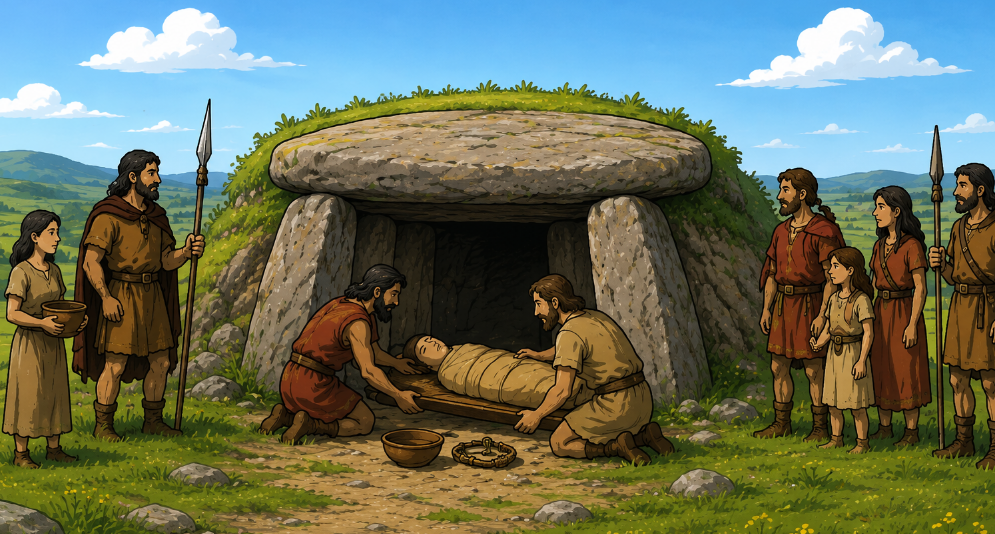
Southwestern England boasts an array of prehistoric burial monuments, constructed by Neolithic communities over five thousand years ago. An intriguing puzzle emerges when we uncover that Bronze Age newcomers, with no apparent links to the monuments’ original creators, later reused these sacred places. What prompted this reuse? Was it a conscious attempt by the newcomers to anchor themselves within historic landscapes or seek the symbolic authority of ancient ancestry?
Research Unveils Hidden Histories
The study, conducted by an international team of researchers, investigated the genomes of 30 individuals buried between approximately 3800 and 1400 BCE at 12 different sites in southwestern England. By examining the genetic data, researchers noticed a sharp turnover in genetic composition between 3100 and 2550 BCE. Individuals buried before 3100 BCE shared similarities with European Neolithic farmers, while those laid to rest after 2550 BCE aligned with the Bell Beaker culture, known for transforming Britain’s genetic landscape.
A Cultural and Genetic Shift
This genetic transition aligns with migration patterns from the Pontic steppe, a region north of the Black Sea, into Europe and later into Britain during the late Neolithic and early Bronze Age. The hierarchical structure of societies shifted, marked by an emphasis on individual burials rather than communal interments typical of earlier Neolithic times.
Why This Matters
Understanding these migratory and cultural shifts sheds light on how ancient societies navigated long periods of change. These findings underscore the broader theme of human history as one of movement, adaptation, and cultural assimilation, mirroring issues of migration and cultural identity we grapple with today.
The Work Ahead: Unanswered Questions
Although this study offers new insights, it leaves us pondering the motivations and societal implications behind reusing these ancient monuments. Could there have been an unrecognized reverence for ancestors, or was it merely opportunistic reuse of existing structures? Furthermore, were these migrations driven by necessity, such as climate changes, or were they parts of broader socio-cultural exchanges?
Let’s Explore Together
Uncovering Britain’s ancient movement offers a unique opportunity to reflect on the continuity and change inherent in human history. The questions remain: How might this new understanding of ancestry redefine cultural heritage? What does it teach us about competing narratives of migration? And finally, can these ancient patterns offer insights into modern societal challenges? As new techniques continue to augment archaeological findings, we are only at the beginning of unraveling these layers of our shared past.
For those passionate about the stories hidden beneath our feet, these findings remind us that every layer of earth beneath us conceals a chapter of human history, waiting to be rediscovered and shared across the world.