
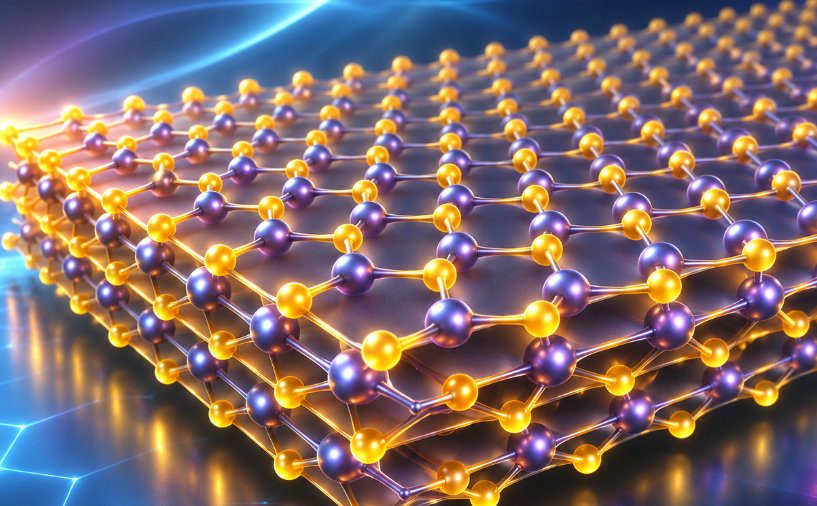
Synthesis of 2D Transition Metal Selenides?
In materials science, some breakthroughs seem to upend our most basic assumptions. Take, for instance, the synthesis of two-dimensional transition metal selenides (TMSs) without using hydrogen, a feat that sounds almost impossible given the conventional wisdom.
Hydrogen assists have been the norm, hailed for overcoming the stubborn stability of selenium molecules. Yet, researchers have devised a new method that circumvents hydrogen entirely, revealing surprising pathways in material growth. But how can such a fundamental shift in approach become a reality?
The Mystery of Hydrogen-Free Synthesis
The synthesis of TMSs usually relies heavily on hydrogen’s ability to crack open stable selenium rings, a crucial step for producing high-quality material. Though effective, this method raises safety and cost concerns because it requires handling hydrogen gas and produces toxic by-products. Escaping these challenges has long been a goal for scientists.
That’s why a new study introducing a hydrogen-free chemical vapor deposition (CVD) method is so intriguing. Instead of hydrogen, the method uses aluminum and other abundant metals to assist in the selenization process, generating highly reactive selenium compounds without the associated risks. This fundamentally shifts the scientific paradigm: what was once thought indispensable turns out to be avoidable.
A Discovery in Metal Doping
Not only does this new approach forgo hydrogen, but it also enables precise elemental doping of materials, impacting their electronic properties. Introducing metals like aluminum, zinc, iron, nickel, and copper during CVD growth simultaneously influences this doping. For example, nickel was identified as the most effective dopant for WSe2, a commonly used TMS, yielding unique electronic characteristics previously difficult to achieve.
The research highlights how this metal assistance enables selenization without hazardous reagents, producing 2D materials of quality comparable to H2-assisted and even exfoliated TMSs. A feat once thought impossible now opens the door to scaling these materials safely and sustainably.
Why Does It Matter?
This hydrogen-free method marks a turning point in the sustainable manufacturing of next-generation electronics. By leveraging common metals and their unique properties, this approach simplifies the synthesis process while minimizing the risks associated with hydrogen gas.
Furthermore, the ability to precisely dope these materials brings customizable electronic properties within reach, potentially transforming how we envision applications in electronics, optoelectronics, and beyond.
The Unseen Mechanism Revealed
Through thorough experimentation and analysis, these researchers revealed how metal dopants favorably alter the local chemistry, facilitating the essential breaking of selenium rings. Metals serve a dual function: creating a conducive selenization environment and contributing as strategic dopants within the material lattice.
The significance of this dual functionality is immense. It not only allows for individually tailored electronic properties but also broadens the scope of 2D TMS applications, paving the way for advanced electronic components.
Remaining Mysteries and Future Directions
Even with this advancement, certain mysteries linger. Understanding the full implications of metal dopants on lattice structures and electronic properties remains an open question. Additionally, refining the process for a broader range of 2D materials could significantly expand applications.
These findings challenge traditional assumptions in materials synthesis, offering a new lens to look at the micro-world of TMSs. As research progresses, we may discover even more astonishing capabilities of these seemingly simple methods, bringing us closer to extraordinary technological applications.
Build Your Own Science Issue
Tell us what fascinates you. We’ll search today’s science and build a personalized issue just for you.
Your science issue is being built.
We’re searching today’s research for stories that match your interests. Your personalized issue will arrive in your inbox shortly.
Something went wrong.
We couldn’t build your issue right now. Please try again in a moment.