
Urban Commons: Rethinking City’s Shared Spaces
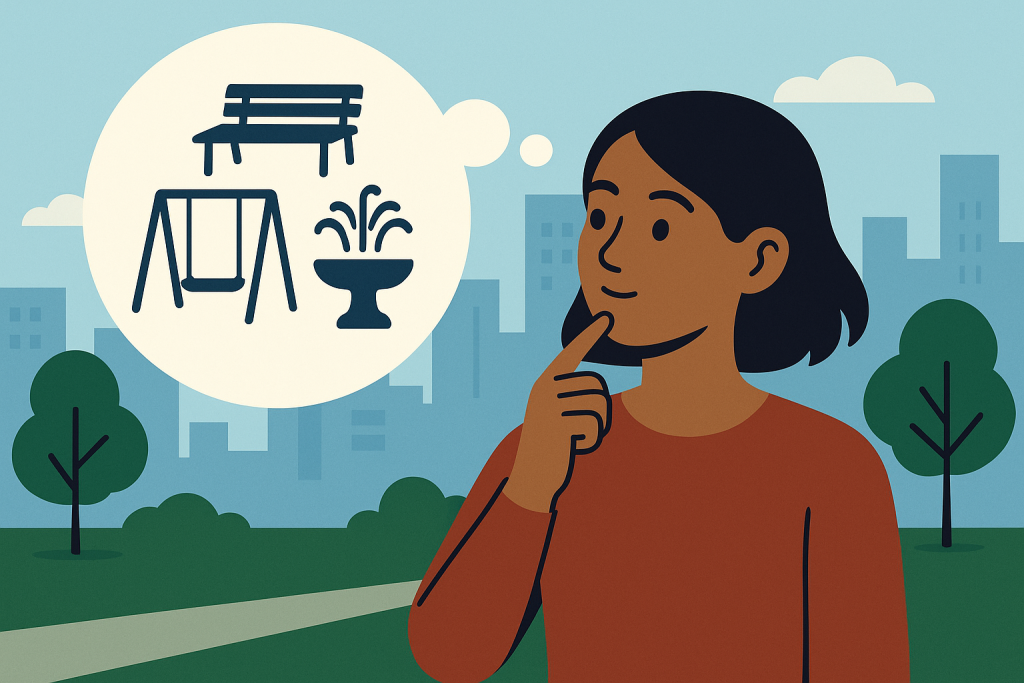
Mention ‘urban commons,’ and you’re likely to conjure up images of bustling city parks, community gardens, or vibrant public squares filled with the murmur of daily life. But what truly governs these shared spaces that bring communities together?
It’s a question that sends us down a path of exploration. How do urban communities self-organize to manage these shared resources effectively? The journey to understanding this puzzle takes us to the work of Elinor Ostrom, a pioneering figure in economic governance and renowned for her analysis of the ‘commons.’ Her ideas, originally applied to natural resources in non-urban settings, now inspire efforts to adapt these principles to urban contexts. In urban environments that burst with diversity and complexity, can Ostrom’s theories truly fit?

The Urban Puzzle
The traditional economic lens views cities through the lens of market dynamics and public policies—urban planning, housing regulations, and the provision of public facilities. Yet, an intriguing element emerges: communities often create solutions, stepping in where government and market may fall short. Whether it’s preserving a green space, opening a repair café, or organizing a neighborhood clean-up, these grassroots actions embody the concept of urban commons.
These activities resonate with the idea championed by theorists like Ostrom, who contended that communities could self-govern and manage resources sustainably, contrary to the ‘tragedy of the commons’ theory proposed by Garrett Hardin. But the challenge lies in applying Ostrom’s frameworks, originally intended for rural settings, to the vibrant, fluctuating tapestry of urban life.
Ripples of Collective Action
The research featured in this story explores how principles for governing commons might evolve to suit urban environments. It highlights the dynamics within urban communities globally, examining how residents band together, often beyond formal institutions, to manage shared resources. Surveying 50 urban communities from 20 countries and conducting interviews in Poland’s city of Katowice—where citizens actively transform their industrial past into a community-focused future—the study maps out this dynamic web of relationships.
What Did They Find?
Investigating these urban commons unveils unique characteristics. Firstly, traditional boundaries often blur. In contrast to stable rural setups, urban communities see frequent movement: people come and go, drawn by shared interests and passions rather than rigid formal structures. Hence, defining ‘boundaries’ becomes more about fostering inclusiveness and mutual identification through shared goals and activities.
This openness often drives urban communities to pursue long-term impacts: not just to adapt to local conditions, but to transform them. In Katowice, for instance, enlisted communities strive to alter perceptions, advocating for sustainable development and zero-waste practices.
Why This Matters
Urban commons present fertile grounds for experimenting with cooperative governance, boosting civic life, and fostering social resilience. Such endeavors can refine approaches to managing shared resources, enhancing urban environments without defaulting to market or governmental interventions. By applying Ostrom’s principles as a guide, researchers and practitioners can harness insights for crafting more adaptive, empowering frameworks that could redefine urban governance worldwide.
These nuanced models support a ‘Co-City’ concept, promoting co-governance in which diverse stakeholders collaborate to foster innovation and community-driven development. This collaborative spirit, as evidenced by case studies, hints at a future where cities are not just places of economic transactions but canvases on which citizens co-create the urban landscape.
What We Still Do Not Know
Despite promising implications, many questions linger. The dynamic nature of urban environments means unpredictability. The scalability of successful urban commons models remains a challenge, as does harmonizing them with existing regulatory frameworks. While the tapestry of urban commons weaves a vibrant picture of possibilities, certainties remain elusive.
Let’s Explore Together
The evolving saga of urban commons invites you to imagine cities not as static entities but as dynamic realms shaped by collective action. Consider these thoughts as you traverse your local landscapes:
- How might tapping into the untapped potential of your community’s shared spaces redefine urban living?
- As cities grow, might localized community action lead future urban planning?
- Where does this leave the role of traditional governance in shaping the cities of tomorrow?
Urban commons are more than academic concepts; they are lived realities that impact us all. Their stories remind us that in the urban mix, everyone contributes to the shared place we call home.
Read MORE!
Governing the Urban Commons. Lessons from Ostrom’s Work and Commoning Practice in Cities
Collective Action and the Evolution of Social Norms
A General Framework for Analyzing Sustainability of Social-Ecological Systems