
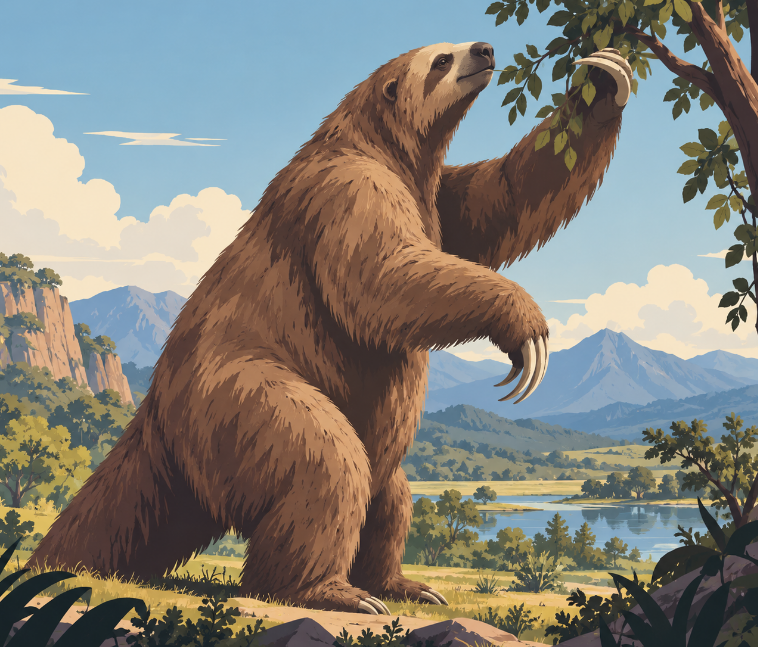
Speciation Trouble: The Real Story Behind Africa’s Megaherbivore Decline
Out of Africa came giants that roamed the earth with grace and might. We often hear of their extinction, blaming it on changing climates or the encroaching steps of early humans. But new research suggests the story is not just about what was lost, but about what never came to be.
Imagine a bustling market full of life’s colossal customers, from the towering elephants to the hefty hippos. Now picture some of these vital actors fading away, leaving voids in both ecological and evolutionary scenes. Why did the diversity of Africa’s megaherbivores dwindle over millions of years? The answer lies not in a dramatic exit, but rather a never-seen entry.
The Extinction Illusion
For a long time, scientists zeroed in on extinction. A simple story: creatures died out, gone forever under the weight of environmental changes or predatory human innovation. However, the collapse of African megaherbivores, those hefty creatures over a ton, demands a keener eye on evolution’s ebb and flow.
The latest study uncovers a twist, suggesting that a stunted speciation rate, rather than sky-high extinction rates, was the chief architect of decline. This perspective reshapes our understanding of the crisis, one that saw not just the fall of old giants, but the failure to sprout new ones.
The Scientific Puzzle
Researchers set out to quantify the 23 million years of biodiversity shifts in African ungulates. Utilizing a novel evolutionary model aided by neural networks, they plowed through a dataset with thousands of fossil occurrences. Their model, vigilant for patterns among factors like body mass and dietary adaptations, aimed to decode these shifts within evolving climates.
Surprising Findings
What they found was startling. As environmental conditions stimulated speciation and extinction turnovers, the largest herbivores faced a peculiar problem: they simply were not speciating fast enough. The onset of aridification some 5 million years ago suppressed the sprouting of new giant lineages, while others accelerated their evolutionary dance.
Megaherbivores like elephants, rhinos, and hippos, though less susceptible to extinction, suffered primarily because they could not speciate. High-crowned teeth, or hypsodonty, offered other lineages a survival mechanism, allowing them to exploit harsh diets and maintain ecological niches through speciation.
Why This Matters
The findings underline the sophisticated play of evolutionary forces, where invisible dynamics—a lack of newcomers—often trump dramatic exits. The repercussions extend beyond Africa. They challenge how we address current biodiversity losses, often viewed through an extinction-centric lens.
There are real-world implications. A deeper understanding of factors hindering species emergence could influence conservation strategies, promoting areas that foster speciation or increase adaptability in ecosystems strained by climate change.
What We Still Do Not Know
While we grasp the striking impact of slow speciation, many questions linger. The study, with findings rooted in historical data and simulations, leaves the true causal links and how these forces played out across geographies open.
The computers have modeled possibilities, but the past hides nuances: unsettling ecological interactions, the subtle dance of predator and prey, and regional climate specifics that remain elusive.
Let’s Explore Together
This study nudges us to view both the grandeur and fragility of Earth’s megafauna with fresh eyes. Evolution doesn’t just ebb; it fails to flow, shaping landscapes while leaving mystery in its wake.
What does this balance of speciation and extinction reveal about ecosystems elsewhere? How might these findings inform efforts to conserve biodiversity in varying climates? And where might researchers uncover additional key fossils that further challenge prevailing extinction narratives?
As we ponder and probe these questions, we sketch not just a history of what was, but imagine a vivid canvas of what might have been.