
New Math Model Aims to Control Screwworm Outbreak
In the dense lowlands of Chiapas, a pestilent scourge is quietly making a comeback. After decades of peace, the New World screwworm—an insidious parasite of livestock—has been stealthily reclaiming territory, creeping northwards with each passing day. As the days tick by, farmers watch nervously, knowing that even a minor lapse in control can trigger a local catastrophe.
This week, a study published in PLOS One details a potential breakthrough in managing this perilous pest. Researchers Rosalio Reyes and Rafael A. Barrio have developed a novel mathematical model designed to optimize control measures for New World screwworm outbreaks. But what makes this model revolutionary, and how could it turn the tide against this relentless invader?
The Puzzling Reemergence of a Pest
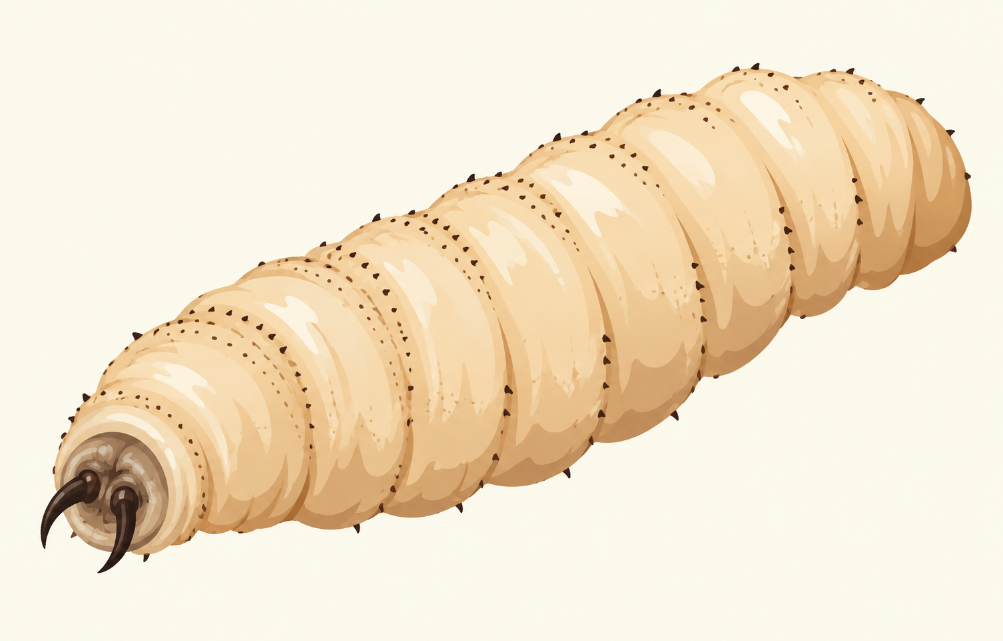
In 2024, reports emerged from Chiapas, Mexico, of screwworm infestations—a pest once thought vanquished—ravaging livestock again. Known scientifically as Cochliomyia hominivorax, these flesh-eating larvae cause severe damage to livestock, triggering economic and public health concerns. The pest had been eradicated in Mexico for over 30 years, primarily through the sterile insect technique, which involves releasing sterilized male flies to interrupt the breeding cycle.
Yet, the current outbreak challenges existing controls. With over 11,000 cases reported, screwworm has now reached Tamaulipas near the U.S. border. The situation demands a fresh approach—enter Reyes and Barrio’s mathematical model.
Modeling the Path to Control
Reyes and Barrio designed a model that incorporates the peculiar biology of Cochliomyia hominivorax, focusing on adults rather than eggs or larvae. Their approach uses a feedback control function to determine how many sterile males to release to effectively reduce the pest population.
What They Discovered
Their simulations suggest that with precise control, eradication of the screwworm could be achieved within 60 to 100 weeks, largely dictated by the pest’s biology rather than infestation scale. They found that deploying sterile males not only at outbreak locations but also extending up to 120 km can significantly confine pest spread.
A breakthrough feature of the model is the use of a Luenberger observer, which allows for estimation of wild fly populations based on observed infected animals, making it practically deployable in the field.
Implications for the World
The repercussions of this research extend globally, particularly for regions facing similar pest issues. By adapting pest control based on mathematical modeling and spatial strategy, resource-limited regions could optimize their control efforts, reducing costs and environmental impacts.
This model not only offers a targeted approach but also emphasizes the critical role of biosecurity measures in areas where human activity accelerates pest spread.
Challenges Ahead
While the results are promising, several questions remain. How will this model hold when scaled to a national level in Mexico or adapted to other regions? What will be the cost of implementing such a detailed and responsive control system? Moreover, can the reproduction capacities of sterile insect production units meet the model’s predictions in practice?
Let’s Explore Together
This exploration into mathematical pest control leaves us with intriguing paths to follow. As we ponder these possibilities, consider these questions:
- Could this model be applied to other pest species beyond the New World screwworm?
- What resources would be needed to deploy this system in other countries facing outbreaks?
- How might controlling pests this way change traditional pest management strategies?
Join the conversation and help shape the future of sustainable pest control.