
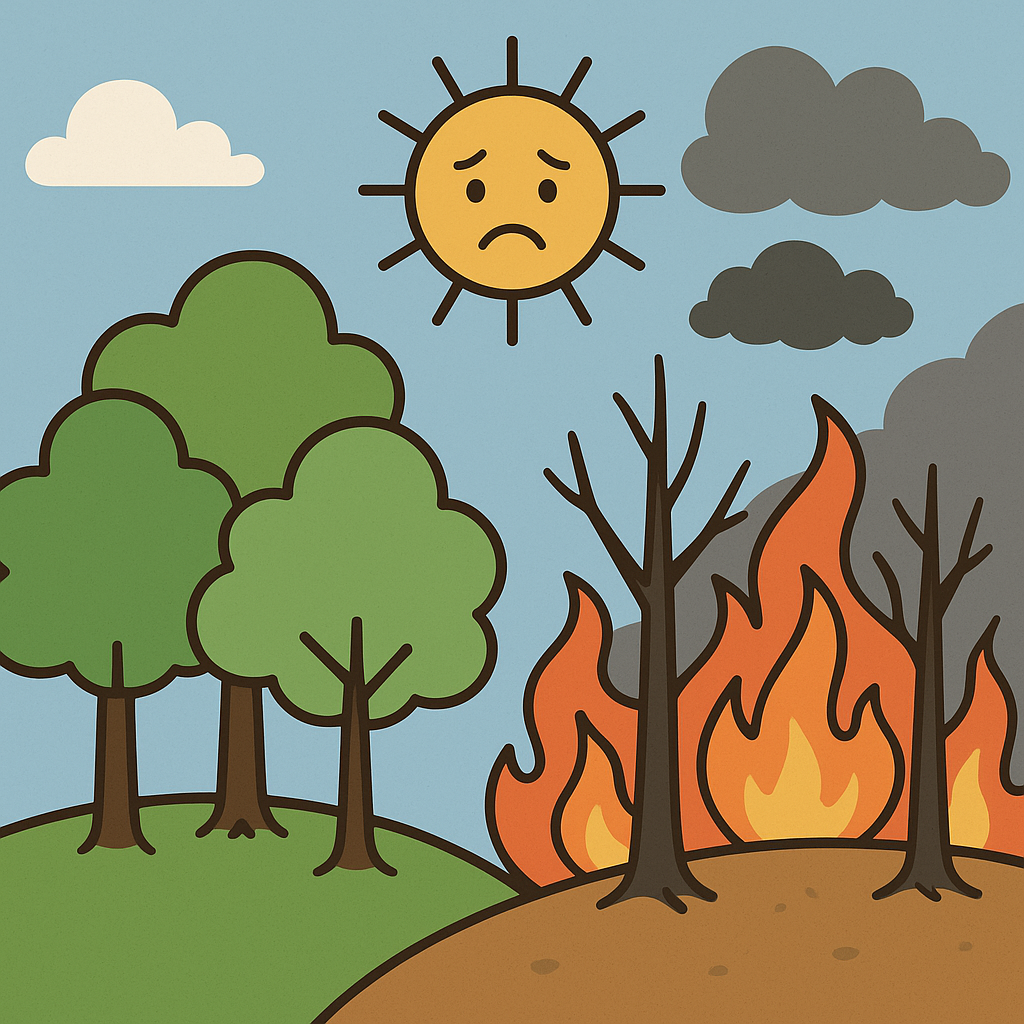
Is Global Forest Loss Slowing — Or Just Paused?
How El Niño and Wildfires Could Reverse Gains
This week brought a cautiously upbeat picture: analyses show global tree loss eased in the most recent reporting year. But climate-driven fire risk, intensifying weather extremes, and persistent land‑use pressures mean that apparent progress may be temporary. Scientists warn that an emerging El Niño and record wildfire emissions in 2025 could erase gains unless policy and practice change quickly.
What the data actually says
Two major news reports covered the same core finding with different emphasis. The World Resources Institute analysis, reported by The New York Times, found that in 2025 the world lost less forest than in any year of the last decade. The BBC similarly described global tropical rainforest loss as having ‘eased last year’ while adding an urgent caveat: scientists are warning that fires associated with a developing El Niño could threaten the progress (BBC).
Why the nuance matters
Slower loss in one year does not necessarily mean the problem is solved. Forest loss is driven by multiple forces — agricultural expansion, logging, infrastructure, and climate extremes that make forests more flammable. The weeks and months after a single assessment can shift the trajectory dramatically if weather patterns, human activity, or fire seasons change.
Wildfires: the immediate wildcard
Evidence from Europe and other regions shows how fast climate extremes can amplify emissions and ecological damage. The New Scientist recapped findings that extreme weather in 2025 produced unprecedented wildfire emissions across Europe. Those same meteorological shifts are linked to the strong El Niño patterns scientists are now tracking, where El Niño produces drier, hotter conditions, and fire risk rises sharply.
How an El Niño can reverse progress
- El Niño alters rainfall and temperature patterns worldwide, creating drought and heat in regions that would otherwise stay moist and fire-resistant.
- Drier forests and accumulated deadwood create the fuel conditions for large, high‑intensity fires that burn biomass and release carbon quickly.
- Wildfires not only emit CO2 but also damage soil, reduce regeneration capacity, and open the forest to invasive species and further human encroachment.
Why one-year improvements can be misleading for policy
Single-year reductions can reflect a patchwork of influences: temporary enforcement, shifts in commodity markets, or the natural variability of land‑use change. Policymakers and funders can be tempted to treat a fall in headline numbers as proof of structural success. The risk this week is that celebratory narratives obscure the continuing vulnerability documented by scientists and reporters.
What the science recommends — and what we can watch next
Based on the trends surfaced in the reporting, these are the sensible short-term and systemic priorities to avoid backsliding:
- Strengthen fire early‑warning and rapid response systems in forests and buffer zones, especially in regions expected to experience drought under El Niño.
- Prioritize landscape‑level interventions that reduce fuel loads and restore degraded forest patches so they are less prone to high‑severity fire.
- Maintain and expand deforestation monitoring with transparent, frequent updates so that one‑year gains can be assessed against multi‑year trends.
- Lock short‑term reductions into durable policy by tying incentives, supply‑chain rules, and enforcement to verified, multi‑year outcomes rather than single-year declines.
What this means for climate and biodiversity
Forests are both carbon sinks and living ecosystems that support biodiversity. When fires surge, they become net carbon sources for years and harm species that cannot escape rapidly changing landscapes. The reporting this week underscores that modest wins in slowing gross forest loss are not the same as securing forests’ long-term function for climate mitigation and species protection.
How to follow developments
If you want to track whether the temporary easing of forest loss becomes a durable trend, look for:
- Follow‑up updates from monitoring groups such as WRI and the Global Forest Watch platforms that publish near‑real‑time tree‑cover data.
- Reports of early fire seasons and verified wildfire emissions assessments for 2026, especially in tropical and boreal regions.
- Policy signals: new laws, enforcement actions or commodity‑chain commitments that move beyond pledges to measurable multi‑year reductions.
Bottom line
This data offers a window on what might be the start of a positive trend — but that window is small, and the view is clouded. Climate variability, especially the prospect of an El Niño‑driven fire surge, is an immediate threat that could erase recent declines in forest loss. The practical choice for governments, financial institutions, and NGOs is clear: convert ephemeral gains into structural resilience through fire preparedness, landscape restoration, and policies that reward long‑term forest stewardship.
Further reading: NYTimes coverage of WRI forest findings, BBC on tropical forest loss and El Niño fire risk, New Scientist on 2025 wildfire emissions.